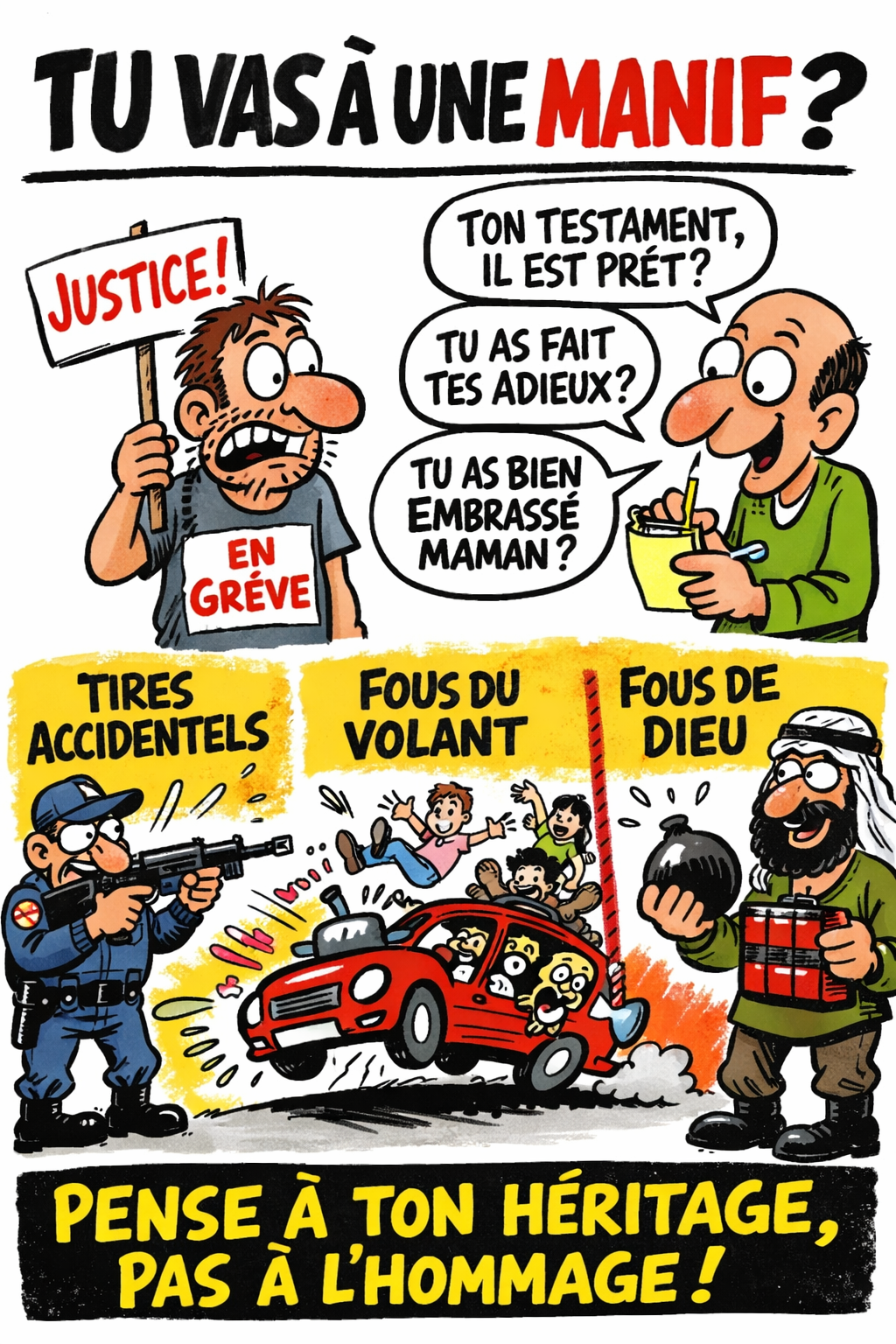
Well people are lying out their bottoms left and right—it’s shameless and amazing and I’m so impressed. I’m so proud to be professionally propaganda adjacent.
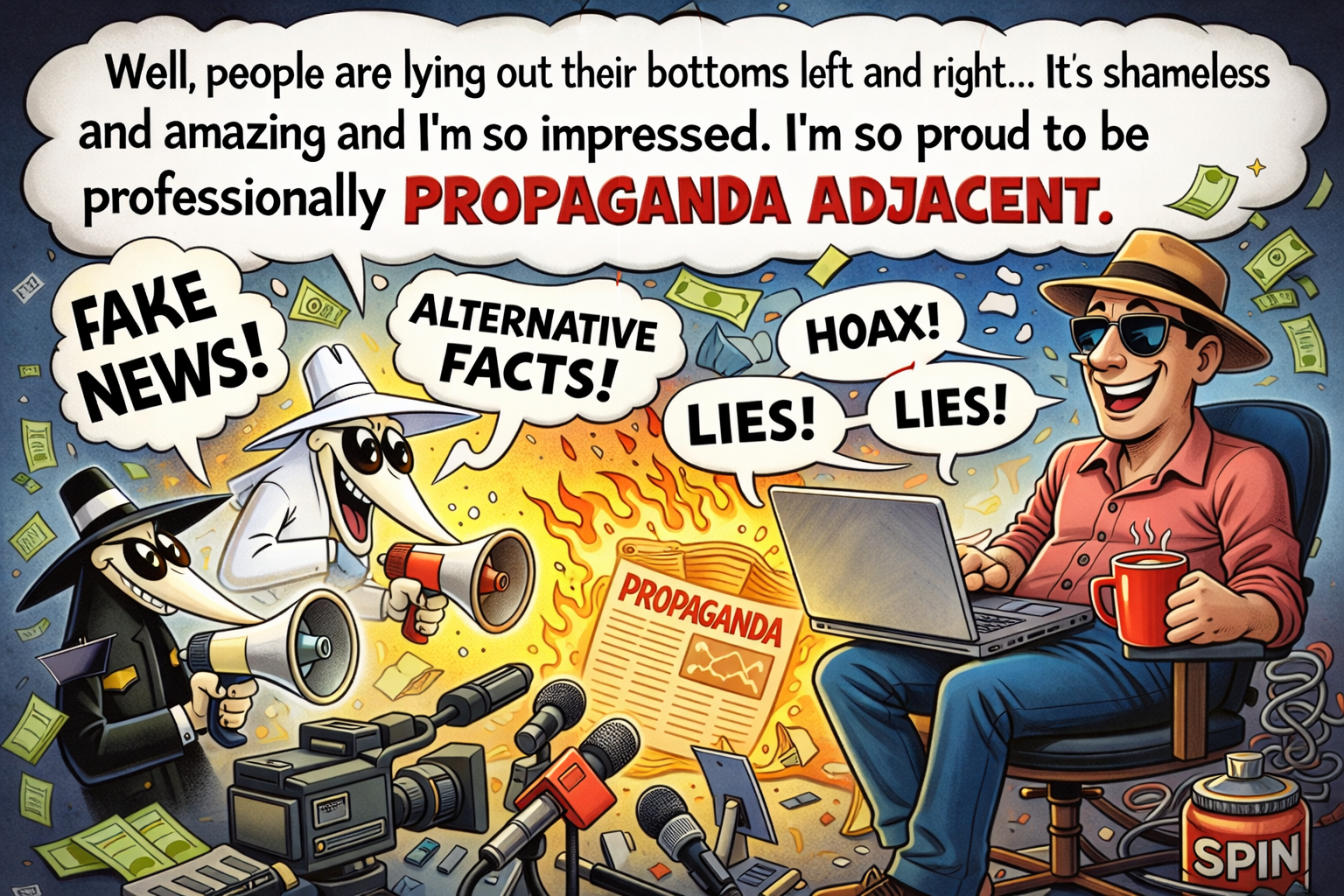
Heel, or Die
People are reacting to masked federal agents as proof that the rule of law is ending. That fear is legitimate. History shows how quickly unaccountable armed power can turn brutal and unjust.
But what keeps getting missed is why this does not trigger universal rejection. Many Americans believe the rule of law already failed in their daily lives. Not in theory, but on the street. Open drug markets. Encampments. Repeat violent offenders cycling through courts. Borders that feel unenforced. Police constrained. Institutions frozen. From their perspective, disorder won first.
So when Trump signals force, even ugly force, they do not hear tyranny. They hear reassertion. They hear someone finally willing to make the law real again.
This is not about loving chaos. It is about believing chaos already took over and that only pressure can push it back.
That is what I mean by the resettlement of America. It is a frontier instinct. When a place feels lost, people do not reach for process. They reach for sheriffs. They want the ground retaken, the lines redrawn, and the rules enforced again, even if the method is harsh and risky.
None of this makes it moral. History is full of innocent people being crushed when states use force to reassert control. That danger is real.
But politically, this is not a coup against America. It is America expressing what it thinks it needs to survive. A majority voted for friction because they think polite legalism failed and unmanaged disorder was tearing the country apart.
If that diagnosis is wrong, the answer is not panic. It is rebuilding real order that does not require men in masks. Until then, fear of state power will keep losing to fear of collapse.
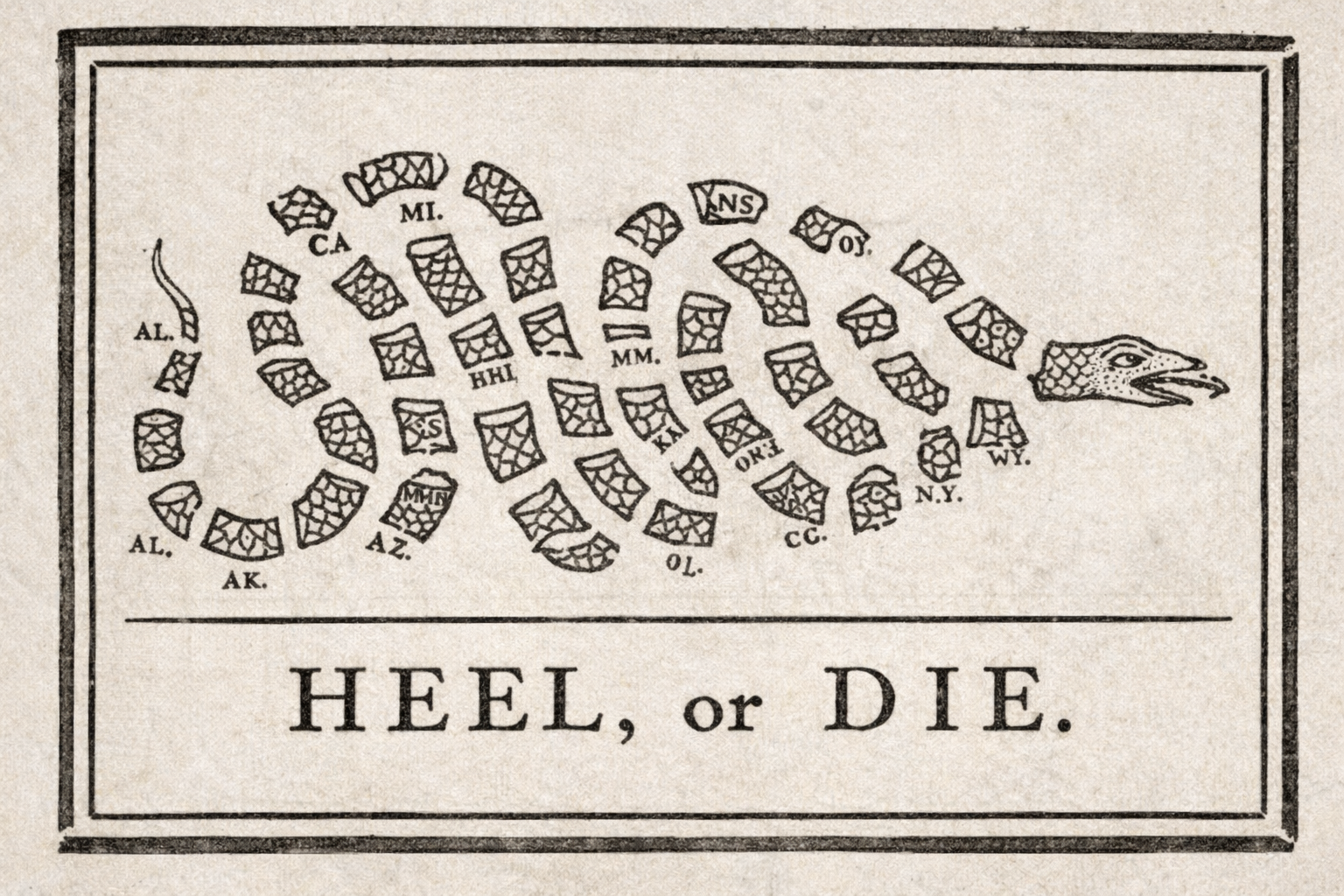
Low key this is the BEST WAY to flush out service members who won’t take orders.
Sen. Mark Kelly - “I’m Not Backing Down” youtube.com/watch
This was inspired by my amazing friend Mike Signer.
American Exemplarism vs Exceptionalism: A New Paradigm in US Foreign Policy chrisabraham.com/blog/amer…
It’s a tough lift to prove to people that these times are the most fruitful, comfortable, privileged times, globally, than any other time on all of human history. youtube.com/watch
This is all based on the assumption that most Americans think being an empire is bad. I don’t think that’s true at all. A lot of Americans are perfectly happy being the global hegemon and sole superpower. Trying to make them feel guilty or ashamed about it mostly lands on empty air.
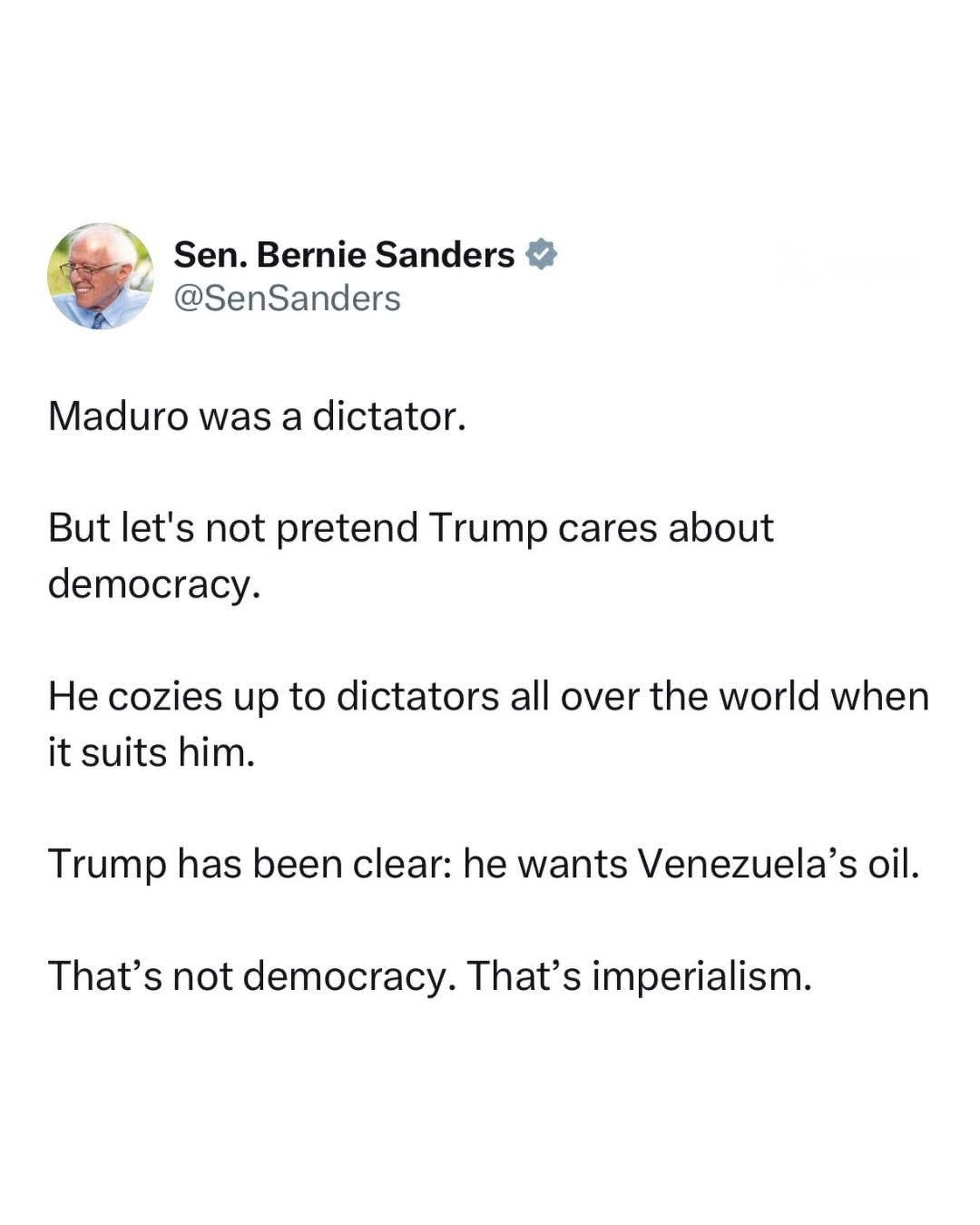
Russia is escalation retaliations.
Russia uses its new ballistic missile in a major attack on Ukraine and a warning to West www.ujyaalonepal.com/2026/3359…
Reasoning Rarely Works
When a child is in a full-blown tantrum, reasoning rarely works. Many parenting models recommend staying nearby but not engaging, so the child can burn off the emotional storm safely. This teaches self-regulation. You’re not abandoning them, you’re giving their nervous system space to reset. After they calm down, that’s when connection and guidance actually land.
Ukraine took attention away from Climate Change, Palestine took attention away from Ukraine & Good is taking attention away from Palestine. Coincidence, I’m sure.
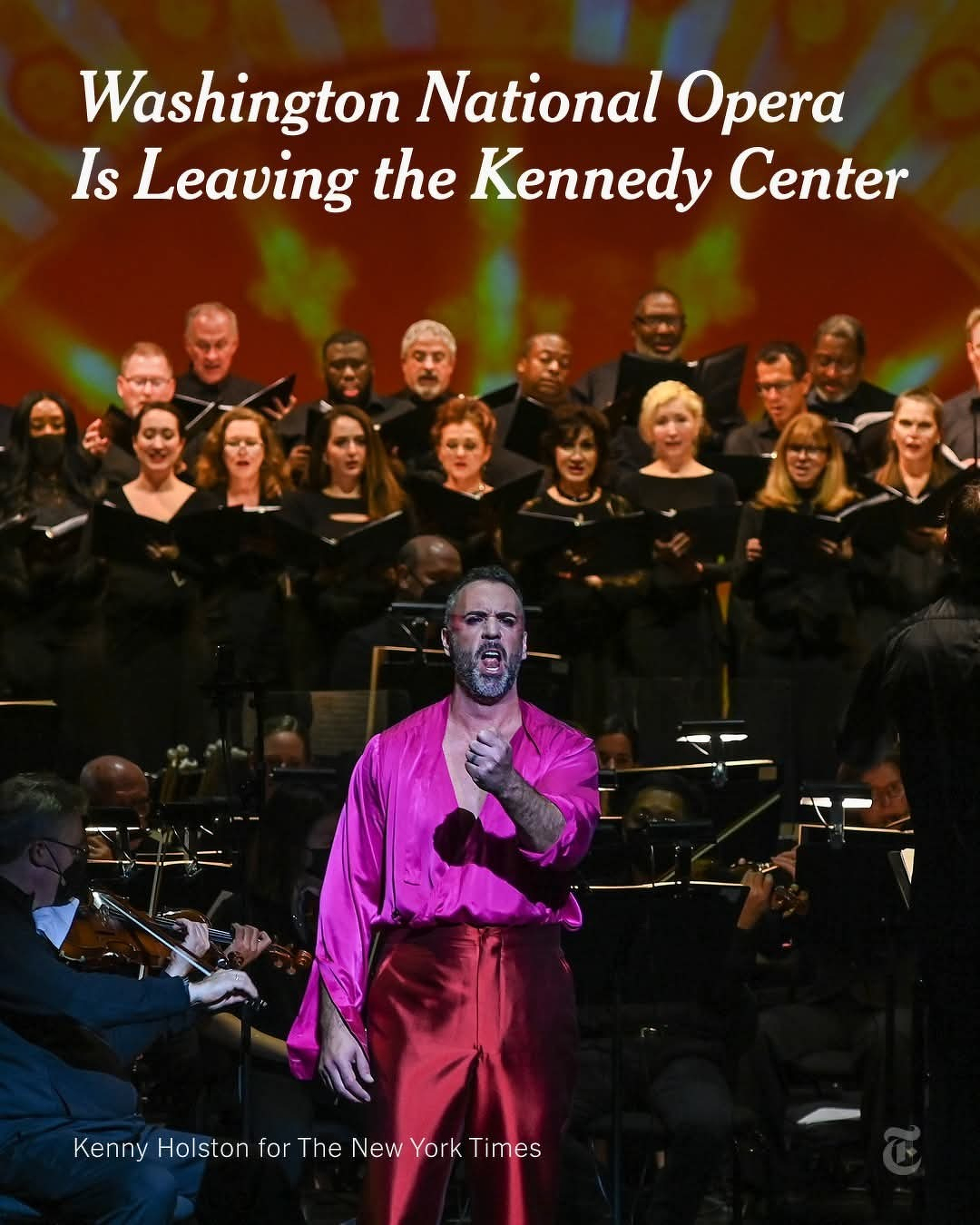
This really only bothers the Radical Chic people of Washington. When your president represents Populist Nationalism nobody really cares about an opera leaving the Kennedy Center. I assume Donald Trump will move in the Grand Ole Opry instead.
Asimov’s Three Feds
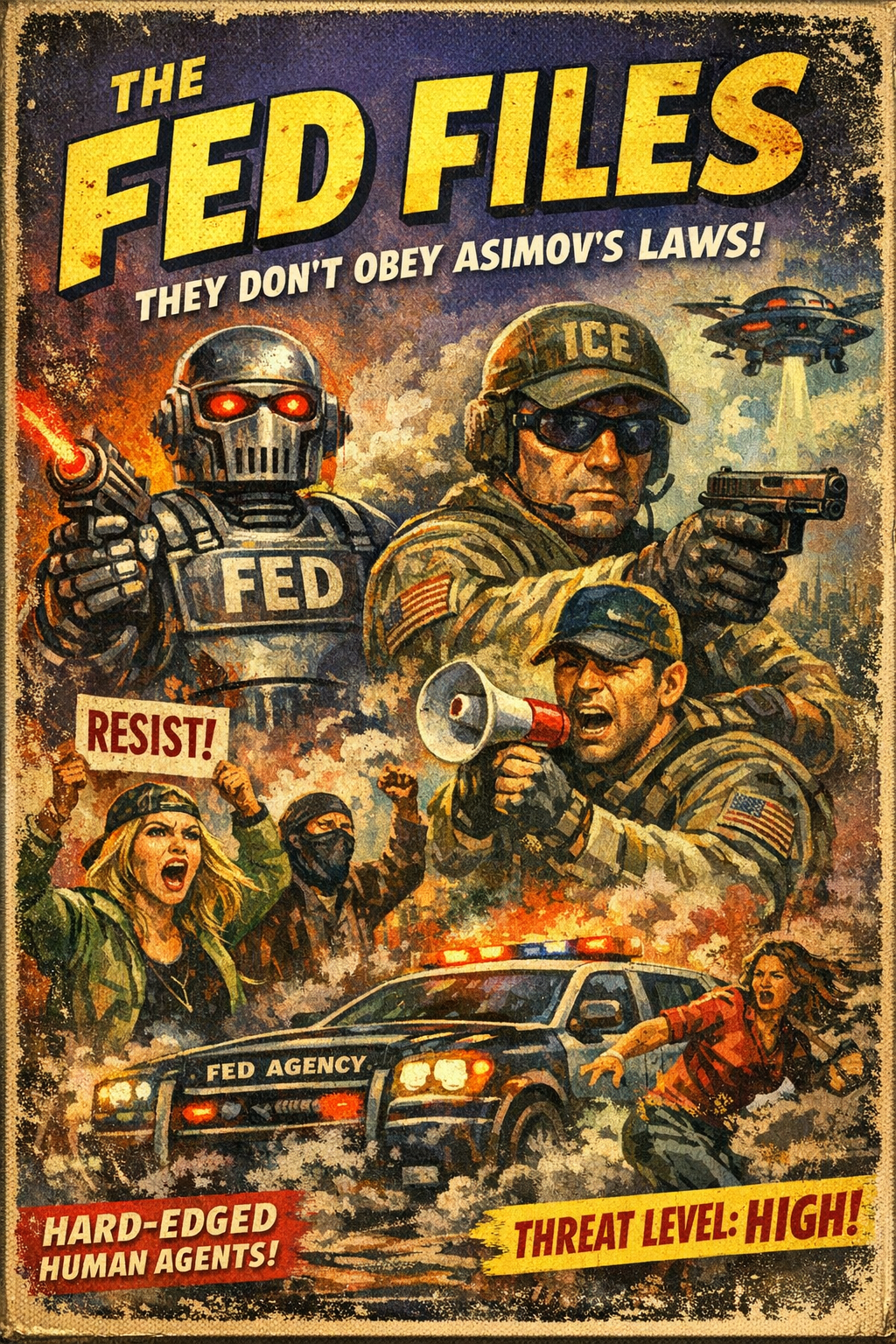
People keep arguing this like federal agents are governed by Asimov’s Three Laws.
Like they’re hard-coded to never harm a human, always de-escalate, and sacrifice themselves before using force.
That’s science fiction.
In the real world, armed federal agents are governed by a threat model, not a morality chip. When a crowd blocks a vehicle, when someone suddenly moves, reverses, or refuses commands, that gets filtered through self-preservation and mission protection, not idealized restraint.
Activists keep acting like ICE, Marshals, or DHS are robots running a pacifist firmware update. They aren’t. They’re humans with guns, adrenaline, and rules that prioritize control over negotiation when things go off-script.
That doesn’t make every outcome just.
It makes pretending they operate like Star Trek security tragically naïve.
Good shit. Must listen.
Environmentalism is Anti-Humanism pocketcasts.com/podcast/m…
The Dem is terrible at this. Can’t argue herself out of a paper bag. It’s embarrassing.
Jasmine Crockett breaks down on House floor over MN shooting, Vance rips MSM, Letitia James under investigation again, And More: 1.9.26 pocketcasts.com/podcast/r…
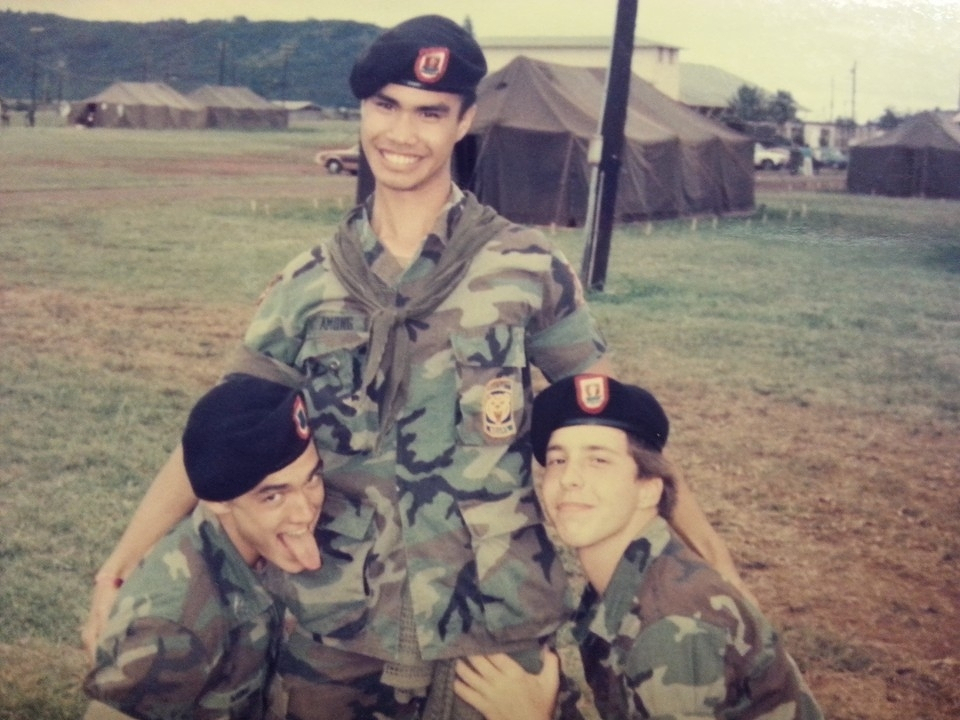
If I got three wishes from a genie, my first would be that Americans learn when to use I, me, we, and us. ‘Jim and me went to the store’ should not be this common.

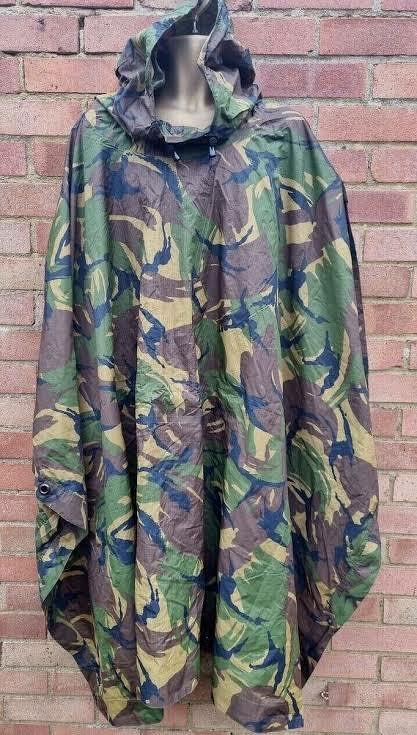
It’s going to be 57°F today here in Washington. But it’s also going to rain. So, today, I’m packing my CAMOMUʻUMUʻU. Dutch military pattern. Brush stroke surplus. Goes over everything, including a ruck and a hat. Envy me!
The Man Knows Where You Are
One of the strangest parts of modern protest culture is that everyone shows up carrying a tracking device on their wrist and another one in their pocket. Not because they’re being careless. Because that’s just what a phone and a watch are now.
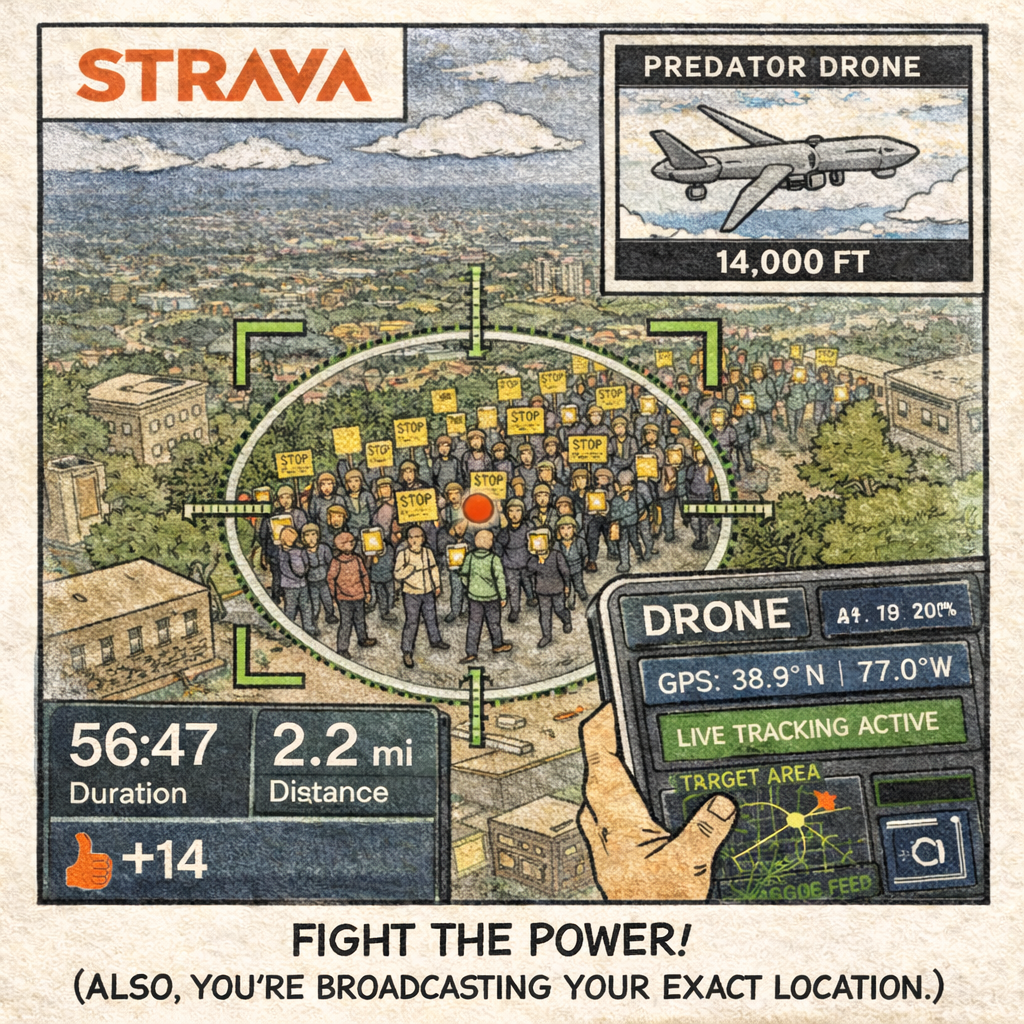
We already know how this plays out, because the military learned it the hard way. Strava heat maps once revealed secret bases overseas, not through espionage but through jogging. Soldiers went on their morning runs, their watches logged GPS tracks, and suddenly “empty” deserts lit up like Christmas trees. Nobody was spying on anyone. The pattern itself was the leak.
Crowds work the same way. One Apple Watch is just a heartbeat. Ten thousand Apple Watches moving down the same street at the same time is a signal. Phones, carriers, Apple, Google, ad networks, and analytics systems all see density, motion, and clustering in near real time. They don’t need to know who you are to know something is happening.
There are systems that trigger on this. Not sci-fi, just logistics. Too many devices in one area, moving together, staying together, dispersing suddenly. That’s how traffic apps detect jams. It’s also how authorities, companies, and emergency systems detect large gatherings. A protest has a different fingerprint than a parade, a commute, or a concert. The machines can tell.
This is why military gear works the way it does. I own a Garmin Instinct 2 Tactical. It has a kill switch for radios and tracking because in the real world, emitting location data gets people killed. That doesn’t make me Jason Bourne. It just means the risk is real enough that engineers design around it.
Of course, it’s almost funny, because I still carry a phone. Most people do. But the principle matters. If you’re going to “fight the power,” you are doing it while broadcasting your coordinates to dozens of networks. This isn’t paranoia. It’s math.
Every protest today creates two crowds. One in the street, and one in the data. And the data crowd never stops being watched.
Strava or It Didn’t Happen
Somewhere in every modern protest there is a man whose face looks like it has been gently erased by ten thousand steps. He is not angry, exactly. He is… aerated. His pores are open. His calves are telling a long, detailed story. He has walked for justice and possibly also for a personal best.
We used to measure protest in slogans, in signs, in whether the cops looked nervous. Now we measure it in miles.
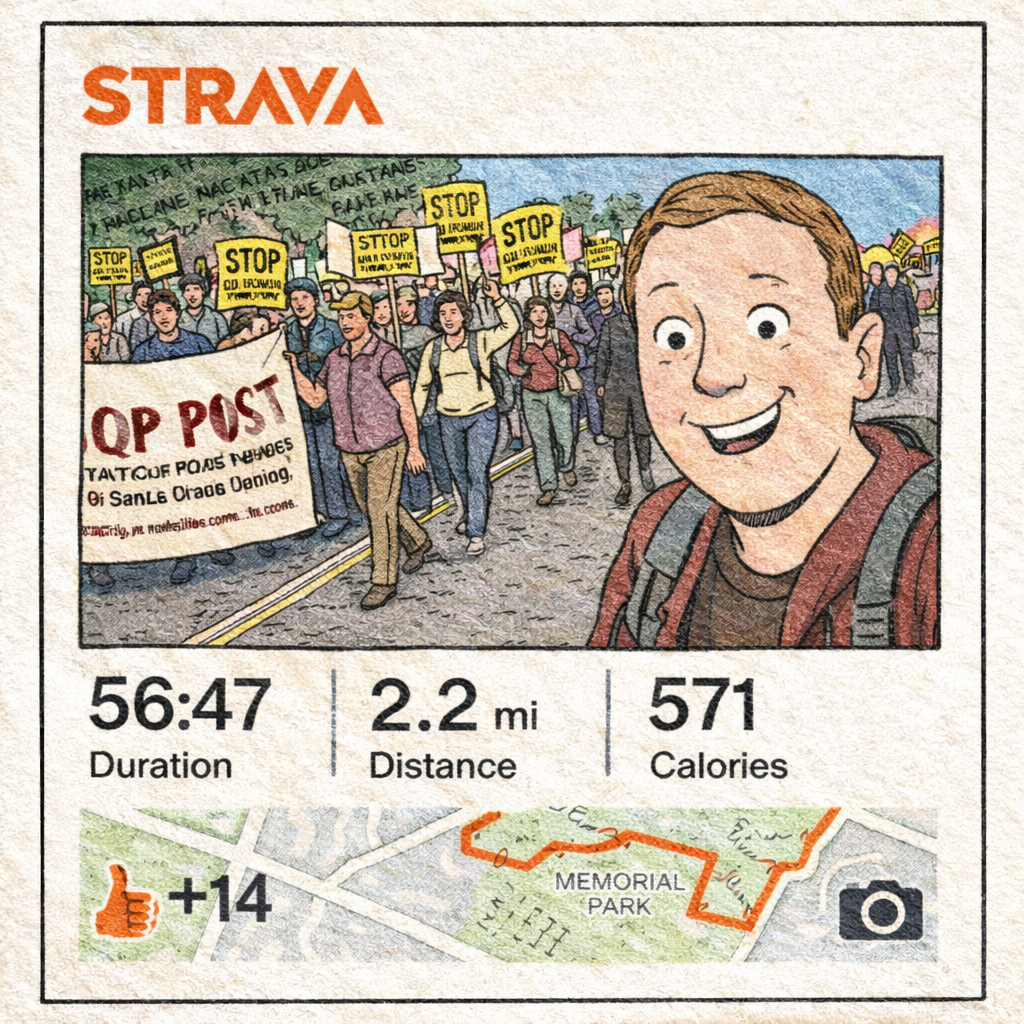
The other night I watched a river of activists flow down the avenue, cardboard signs bobbing like nervous lilies. Their chants rose and fell, their feet slapped the asphalt, and all I could think was, wow, somebody just closed a ring. Somewhere, a smartwatch vibrated with the quiet, religious thrill of achievement.
This is the age of Strava.
If you are not yet part of this amber-glowing hive of endurance worship, Strava is a social network for people who believe that movement must be recorded or it was merely theoretical. It is Facebook for quads. Instagram for hamstrings. A place where you can upload your run, your ride, your walk to get oat milk, and receive small digital pats on the head called kudos from people who also have sore hips.
Strava does not care why you moved. It only cares that you moved, and preferably in a clean, continuous line.
This makes it perfect for modern activism. A march is, after all, just a very political long walk. A protest is a parade that refuses to clap. And every parade, even an angry one, is a chance to rack up some delicious, righteous mileage.
I like to imagine the secret life of the crowd. The signs say Stop This, Justice Now, End That. But the watches say 2.3 miles, 412 calories, moderate heart rate, new personal record on Constitution Avenue. One activist is yelling into a megaphone while quietly hoping the route takes a little detour past the park, just to get a round number.
There is something almost beautiful about it. The marriage of moral urgency and Fitbit piety. The idea that you can fight the system and also beat your neighbor Dave from Silver Spring in weekly distance. We used to talk about “showing up.” Now we talk about “logging it.”
Because if it’s not on Strava, did you really resist? Or did you just sort of… stroll? I picture the future historian. Not poring over manifestos or news footage, but scrolling through heat maps. Here, in red, is the great march of 2026. Here, a smaller but very efficient rally, notable for its tight pacing and low elevation gain. Here, an outlier who walked fourteen miles for a cause and then, tragically, forgot to hit “record.”
The tragedy is real. To walk for justice and leave no data behind is to become a ghost. There is a certain democratic poetry in all this. Strava doesn’t care who you are. It doesn’t care what you believe. It just wants your steps. A billionaire and a broke college kid are equal in the eyes of the GPS. You are all just blinking dots on a map, sweating toward something.
In a world where everything is argued, counted, and disputed, it is oddly comforting that at least your feet are telling the truth.
So yes, I admire them. The marchers with their flattened sneakers and their digitally immortalized routes. The activists who fight power and chase their step goals at the same time. They are not just moving history. They are moving at 3.1 miles per hour, with a heart rate that suggests decent cardio health.
And somewhere tonight, as the chants fade and the streets empty, a hundred phones will glow in the dark. A hundred little victory screens will appear.
Activity saved.
Kudos earned.
Revolution logged.
Last Protest Will and Protest Testament
Whenever a friend tells me they’re going to a protest, I ask if their will is up to date and if they’ve said their goodbyes. People think I’m joking. I’m not.
That question exists because protests rely on a fragile assumption: that everyone else involved will behave rationally and with restraint. That armed authorities will always exercise perfect judgment. That no one will panic, overreact, misread a moment, or escalate. That no unrelated actor will see a crowd as an opportunity.
Even if you personally do everything right—don’t engage, don’t escalate, don’t shout, just stand there holding a sign—you’re still stepping into an environment you don’t control. Protests concentrate risk. They attract tension, attention, and unpredictability. You don’t have to be the instigator to be the casualty.
History is full of moments where people assumed the line wouldn’t be crossed—until it was. Kent State wasn’t supposed to happen. Neither were countless other moments where bystanders paid the price for other people’s fear or bad decisions.
So yes, I ask my friends about their wills and their goodbyes. Not because I think they’re reckless—but because I think they’re human, and they’re walking into a situation where the outcome depends on everyone else being perfect.