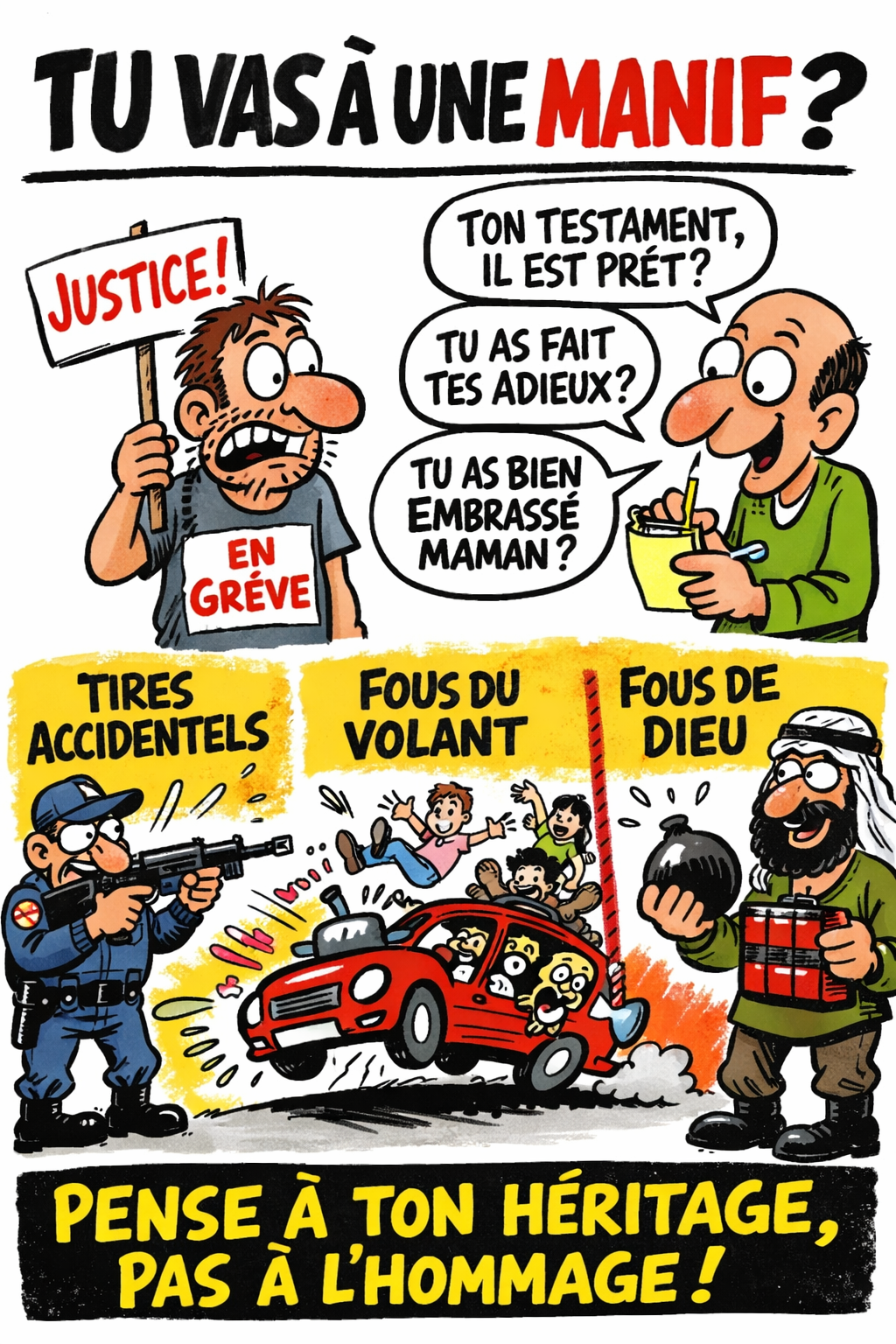
Last Protest Will and Protest Testament
Whenever a friend tells me they’re going to a protest, I ask if their will is up to date and if they’ve said their goodbyes. People think I’m joking. I’m not.
That question exists because protests rely on a fragile assumption: that everyone else involved will behave rationally and with restraint. That armed authorities will always exercise perfect judgment. That no one will panic, overreact, misread a moment, or escalate. That no unrelated actor will see a crowd as an opportunity.
Even if you personally do everything right—don’t engage, don’t escalate, don’t shout, just stand there holding a sign—you’re still stepping into an environment you don’t control. Protests concentrate risk. They attract tension, attention, and unpredictability. You don’t have to be the instigator to be the casualty.
History is full of moments where people assumed the line wouldn’t be crossed—until it was. Kent State wasn’t supposed to happen. Neither were countless other moments where bystanders paid the price for other people’s fear or bad decisions.
So yes, I ask my friends about their wills and their goodbyes. Not because I think they’re reckless—but because I think they’re human, and they’re walking into a situation where the outcome depends on everyone else being perfect.