
There’s A LOT of VETERAN-WASHING.
Army veteran faces conspiracy charges after participating in anti-ICE protest youtube.com/watch
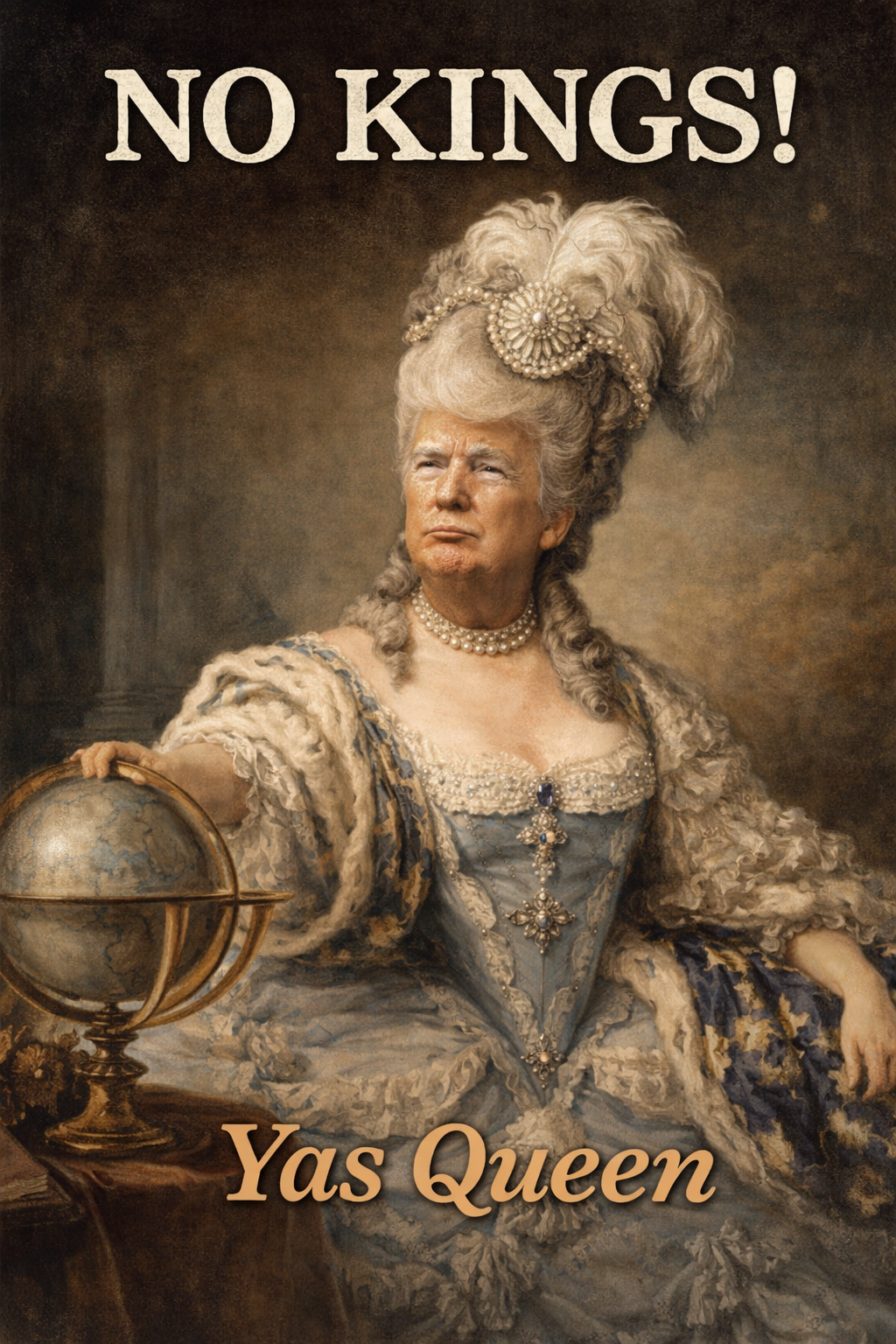
TIL: I’m 56 and this just clicked today. I always thought the white nationalist milk obsession was just about the color white. It never occurred to me it ties to lactose intolerance in people from outside Northern Europe. Once I saw that, it actually made sense. Duh.

From Pharaoh and Nebuchadnezzar to Donald Trump: The Belief That God Uses Powerful, Disruptive Figures as Vessels of His Will
There is a deeply mystical thread running through scripture: God acts in history through vessels He appoints, and those vessels are not bound by human expectations of goodness, refinement, or even mercy. The Old Testament especially is filled with moments where divine will moves through figures who appear overwhelming, disruptive, even terrifying.
Pharaoh stands as an embodiment of power hardened against God, yet his very resistance becomes part of God’s revealed glory. Nebuchadnezzar, king of Babylon, is not merely permitted but actively raised up as an instrument—his conquests, his dominance, his eventual humbling all woven into a divine narrative. Cyrus, a pagan king, is called God’s “anointed,” chosen not for covenant loyalty but for his role in restoring what God intends restored.
This is not a political pattern. It is a spiritual one. God’s sovereignty operates above human categories, raising and lowering rulers according to purposes that are often invisible in the moment. The New Testament continues this tension: powers, authorities, and rulers are all described as existing within a framework ultimately subject to God’s will, even when they appear chaotic or oppositional.
Within that worldview, history itself becomes a kind of spiritual battlefield, where what looks like disorder, conflict, or even brutality may still be part of a divine unfolding. The human perspective sees contradiction; the scriptural perspective insists on sovereignty.
That is the lens through which some believers explicitly interpret Donald Trump. Not as a figure to be measured by ordinary standards, but as a vessel—raised, permitted, or positioned within a larger spiritual movement. In this view, his force, his disruption, his intensity are not disqualifiers. They are characteristics of the kind of instrument God has used before.
Like Nebuchadnezzar, he may not resemble what people expect from a servant of God. Like Pharaoh, he may embody conflict rather than harmony. Yet scripture repeatedly suggests that God’s purposes are not limited to what appears gentle or understandable.
To see Trump this way is to step fully into that mystical framework: that God governs history, that He uses whom He wills, and that even the most unlikely or overwhelming figures can be vessels of divine action, whether they know it or not.
It is a demanding belief, because it asks the observer to trust that meaning exists even when it does not look like goodness in the conventional sense—but that tension is not new. It is as old as the texts themselves.
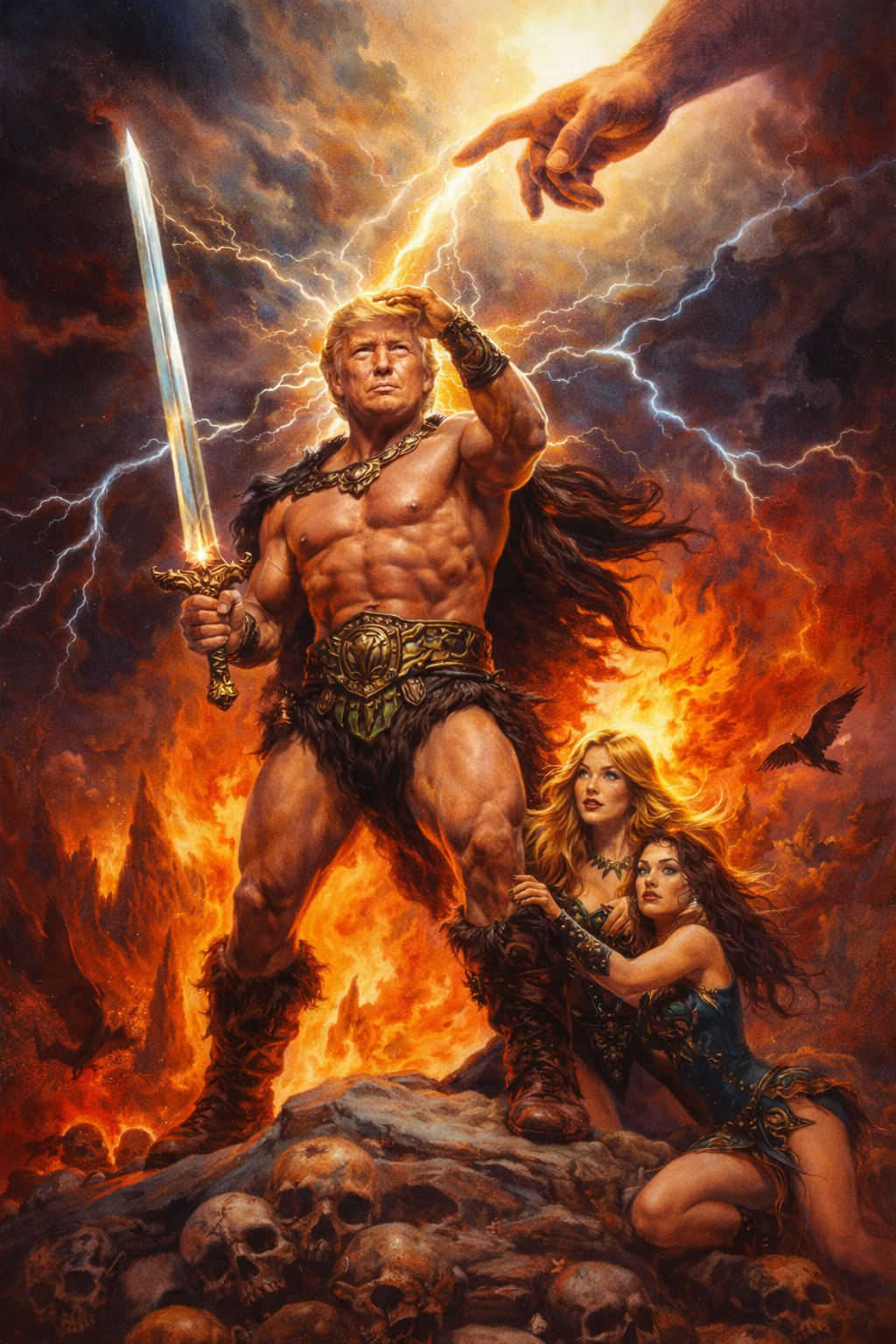
Scripture shows God raising vessels of power—Pharaoh, Nebuchadnezzar, Cyrus—to accomplish His will in ways beyond human judgment. In that same mystical frame, Donald Trump can be seen not as a moral figure but as a vessel moved by God for purposes not yet fully revealed.
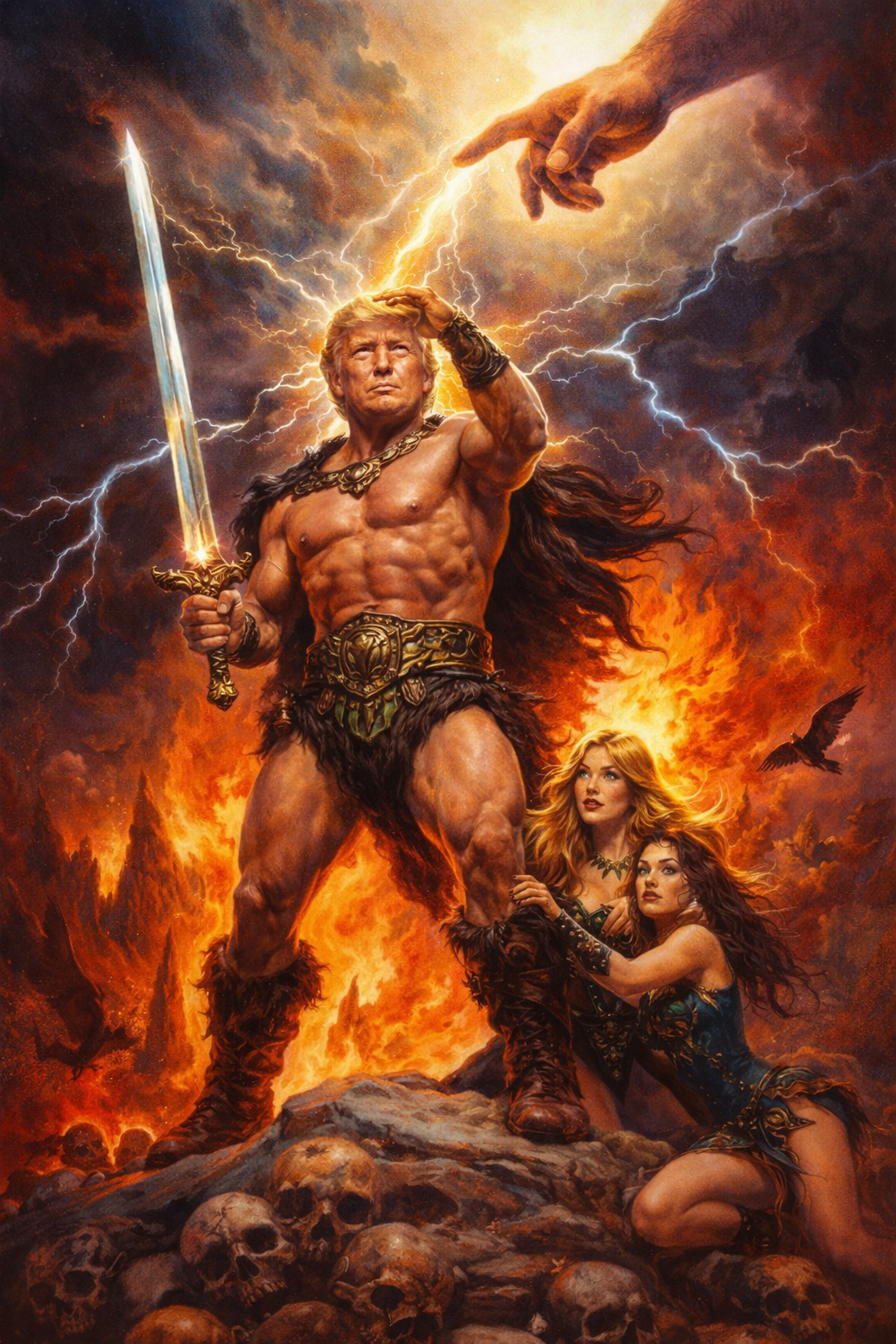
Is this true? Do you agree? Do you believe this?
“… it is better for you that one man should die instead of the people, so that the whole nation may not perish.”
Holy Gospel of Jesus Christ according to Saint John 11,45-56
45 Many of the Jews who had come to Mary and seen what Jesus had done began to believe in him. 46 But some of them went to the Pharisees and told them what Jesus had done. 47 So the chief priests and the Pharisees convened the Sanhedrin and said, “What are we going to do? This man is performing many signs. 48 If we leave him alone, all will believe in him, and the Romans will come and take away both our land and our nation.” 49 But one of them, Caiaphas, who was high priest that year, said to them, “You know nothing, 50 nor do you consider that it is better for you that one man should die instead of the people, so that the whole nation may not perish.” 51 He did not say this on his own, but since he was high priest for that year, he prophesied that Jesus was going to die for the nation, 52 and not only for the nation, but also to gather into one the dispersed children of God. 53 So from that day on they planned to kill him. 54 So Jesus no longer walked about in public among the Jews, but he left for the region near the desert, to a town called Ephraim, and there he remained with his disciples. 55 Now the Passover of the Jews was near, and many went up from the country to Jerusalem before Passover to purify themselves. 56 They looked for Jesus and said to one another as they were in the temple area, “What do you think? That he will not come to the feast?”
A guarantee of speech is not the guarantee of platform.
Jane Fonda, artists slam Trump for Kennedy Center changes | NBC4 Washington youtube.com/watch
Fascinating
An appeals panel ruled that ICE did not wrongfully detain hundreds of immigrants in Minnesota. youtube.com/watch
Exoticism is the tendency to view cultures outside one’s own as strange, alluring, or fundamentally “other,” reducing them to aesthetic or symbolic objects. It romanticizes difference while flattening complexity, often reflecting more about the observer’s gaze than the reality of the people observed


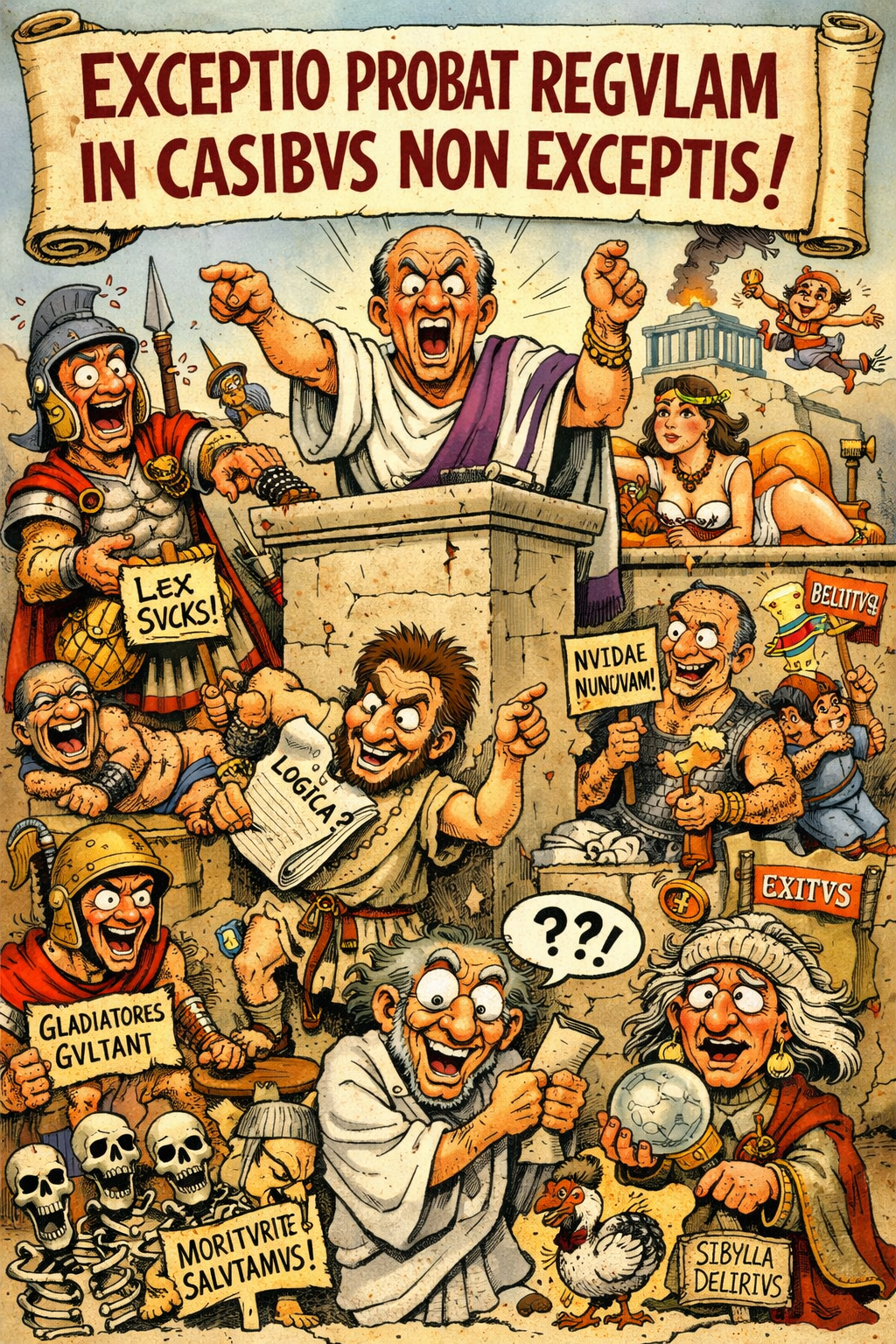
“Exceptio probat regulam in casibus non exceptis” = “the exception proves the rule in cases not excepted.” Often attributed to Cicero, though the exact origin is debated. The modern cliché is “the exception proves the rule,” usually misunderstood.

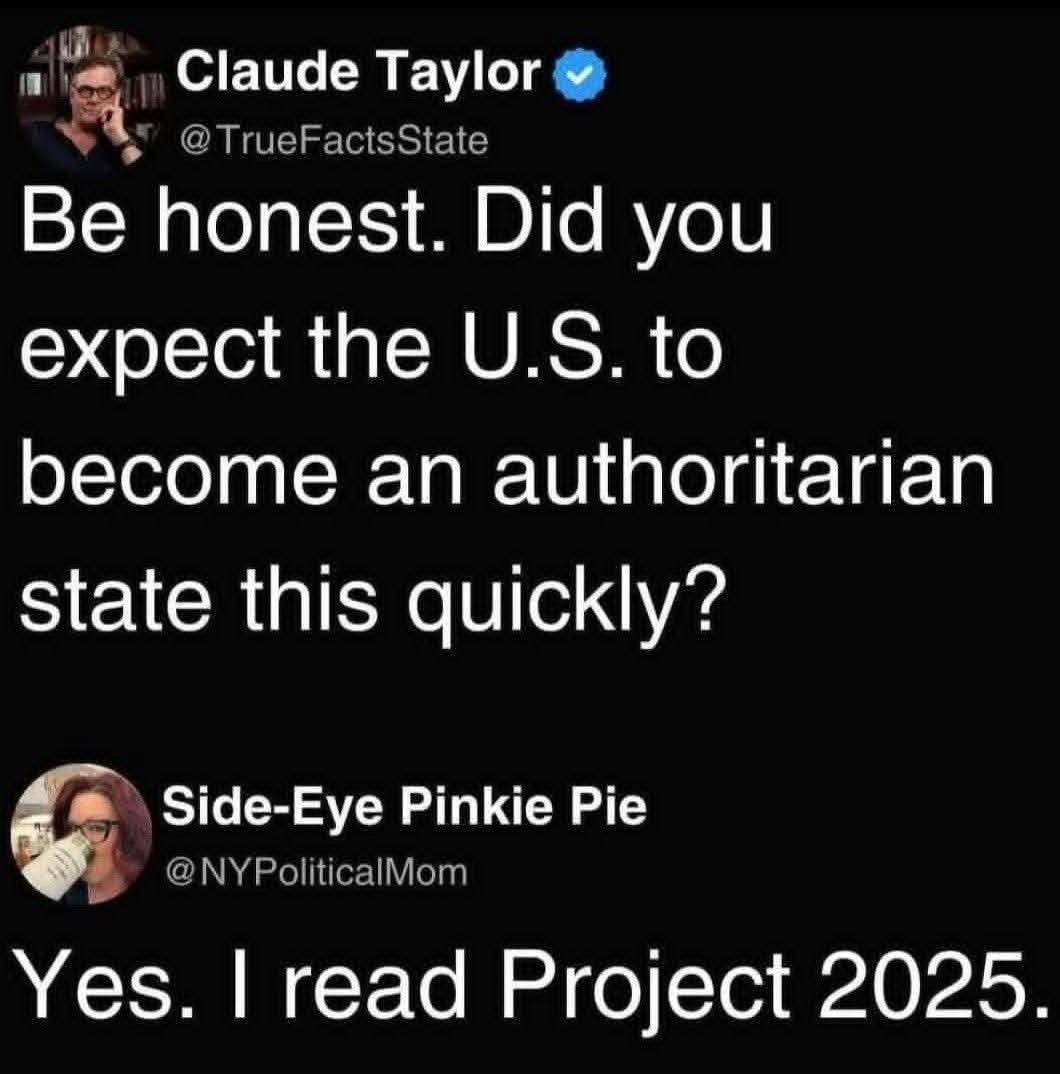
America really sucks at being authoritarian.
America really sucks at being an authoritarian state. People talk stink about Trump all the time and they’re not thrown in jail. People go ahead and spit in the face of armored and weaponized people in the streets and don’t get shot in the face. America is the worst authoritarian country in the history of authoritarian countries. Not even one Kent State event in the last 50 years. I mean it’s really lazy. None of the late night show people are in a gulag. It’s all talk and rhetoric. Everybody is so sensitive. Then again, there are two million people in jails and prisons currently. That’s pretty authoritarian. But it’s been like that for decades. I don’t know man, when it comes to authoritarianism this is pretty underwhelming.
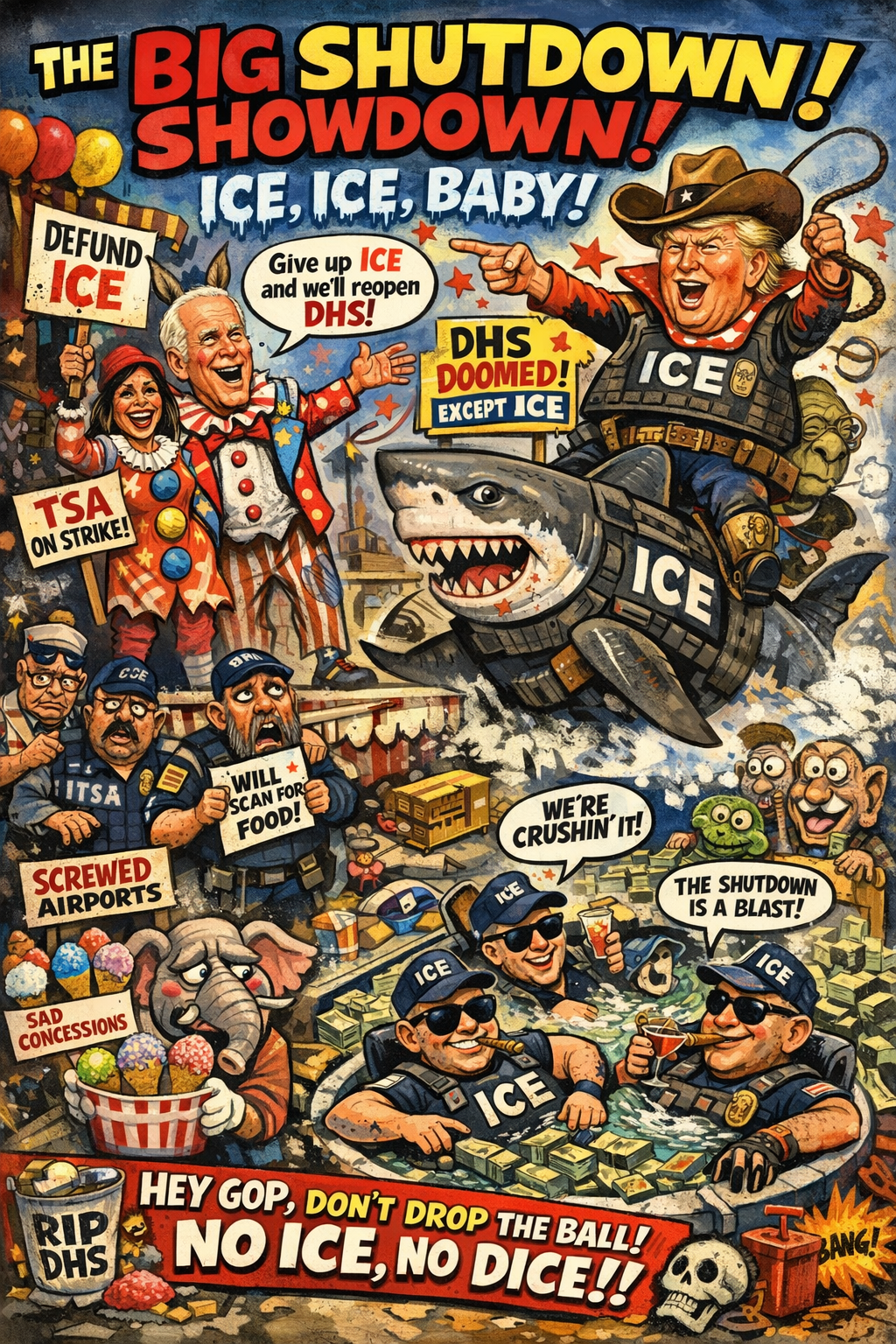
My view: this DHS shutdown was always about ICE. That is the leverage, the pawn, the whole ball of wax. Democrats are basically saying fund the rest, curb ICE. Republicans would be dumb to concede on the one thing the fight is actually about.
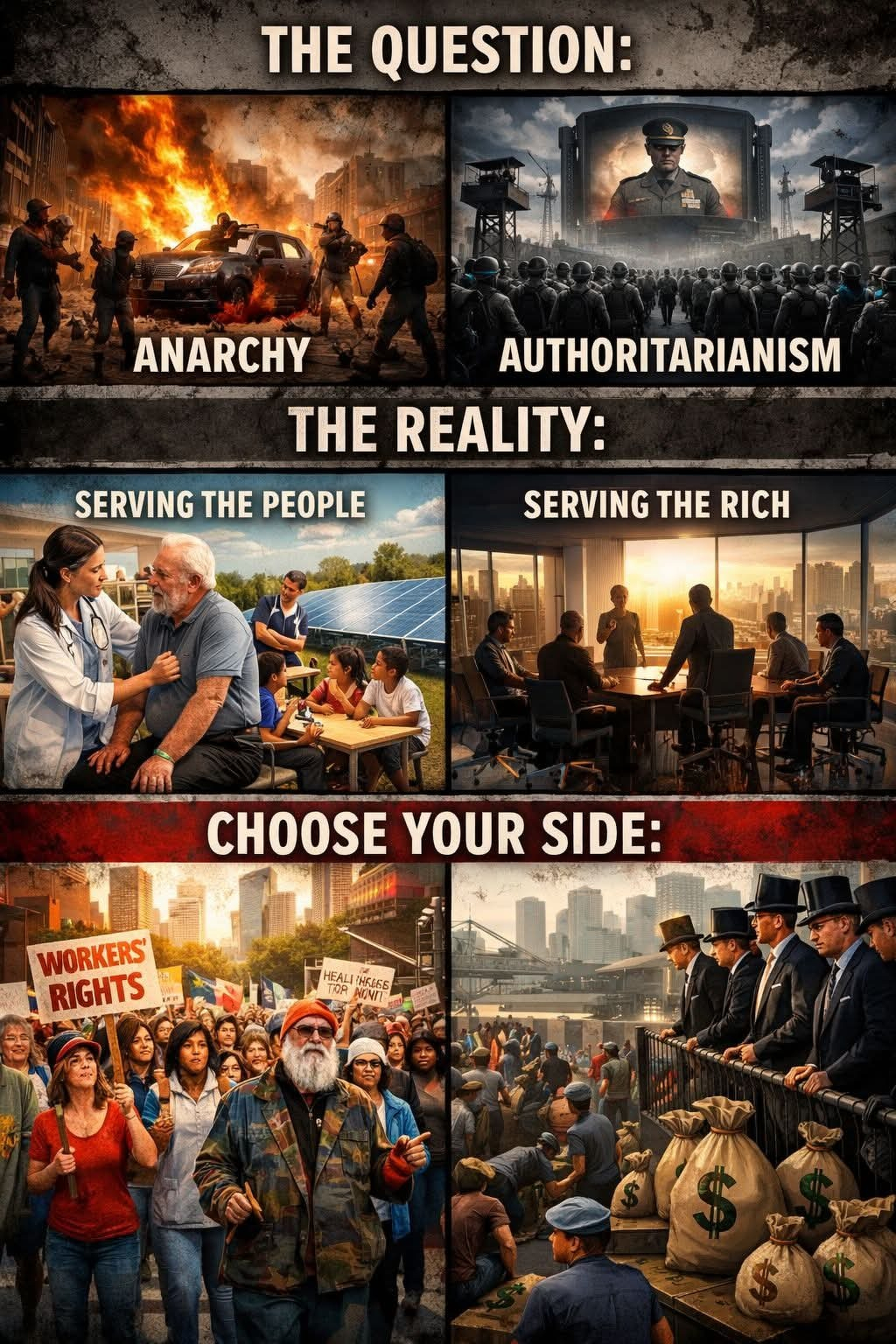
This is so cliché and derivative I can’t believe it. I wish the Chinese created better memes. This is way too OG socialist realist utopian that’s cartoon level trope. I fucking love it!
Fascinating.
Are Chicago Leaders Funding a Revolving Door for Crime? youtube.com/watch
When Great Britain and the BBC tells on itself?
They’re Coming For The Noticers youtube.com/watch
Meme warfare. ©America Fuck Yeah™® Must listen! pca.st/episode/6…
Concealed carry flips the script of “the wrong place wrong time.”
Sheridan Gorman was not in the wrong place at the wrong time. The system failed her. www.chicagotribune.com/2026/03/2…
A predicted inevitability.
A new study looks at the impact of CALIFORNIA’S $20 fast food MINIMUM WAGE youtube.com/watch