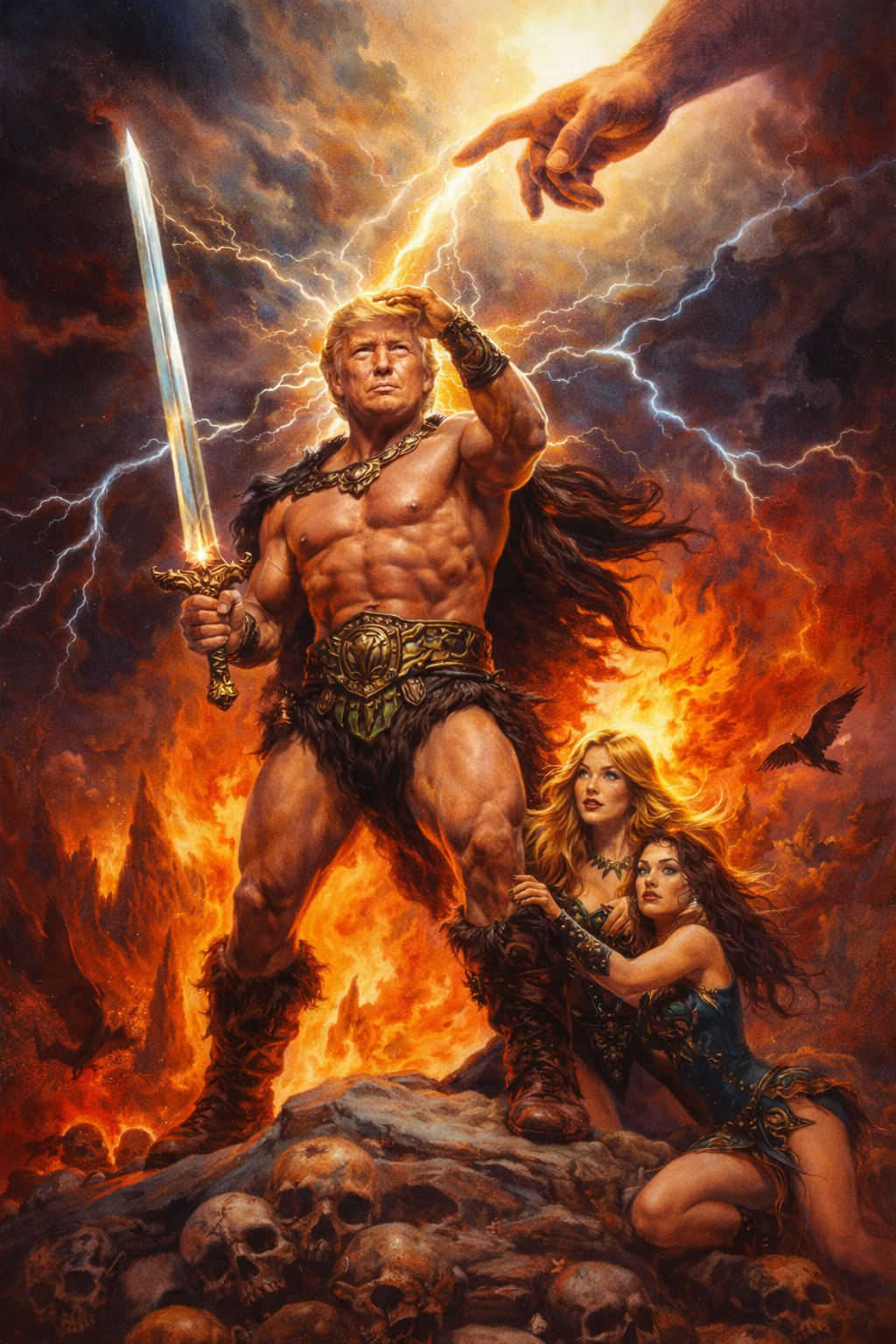
From Pharaoh and Nebuchadnezzar to Donald Trump: The Belief That God Uses Powerful, Disruptive Figures as Vessels of His Will
There is a deeply mystical thread running through scripture: God acts in history through vessels He appoints, and those vessels are not bound by human expectations of goodness, refinement, or even mercy. The Old Testament especially is filled with moments where divine will moves through figures who appear overwhelming, disruptive, even terrifying.
Pharaoh stands as an embodiment of power hardened against God, yet his very resistance becomes part of God’s revealed glory. Nebuchadnezzar, king of Babylon, is not merely permitted but actively raised up as an instrument—his conquests, his dominance, his eventual humbling all woven into a divine narrative. Cyrus, a pagan king, is called God’s “anointed,” chosen not for covenant loyalty but for his role in restoring what God intends restored.
This is not a political pattern. It is a spiritual one. God’s sovereignty operates above human categories, raising and lowering rulers according to purposes that are often invisible in the moment. The New Testament continues this tension: powers, authorities, and rulers are all described as existing within a framework ultimately subject to God’s will, even when they appear chaotic or oppositional.
Within that worldview, history itself becomes a kind of spiritual battlefield, where what looks like disorder, conflict, or even brutality may still be part of a divine unfolding. The human perspective sees contradiction; the scriptural perspective insists on sovereignty.
That is the lens through which some believers explicitly interpret Donald Trump. Not as a figure to be measured by ordinary standards, but as a vessel—raised, permitted, or positioned within a larger spiritual movement. In this view, his force, his disruption, his intensity are not disqualifiers. They are characteristics of the kind of instrument God has used before.
Like Nebuchadnezzar, he may not resemble what people expect from a servant of God. Like Pharaoh, he may embody conflict rather than harmony. Yet scripture repeatedly suggests that God’s purposes are not limited to what appears gentle or understandable.
To see Trump this way is to step fully into that mystical framework: that God governs history, that He uses whom He wills, and that even the most unlikely or overwhelming figures can be vessels of divine action, whether they know it or not.
It is a demanding belief, because it asks the observer to trust that meaning exists even when it does not look like goodness in the conventional sense—but that tension is not new. It is as old as the texts themselves.