
The Pentagon Kicks the Press Out … Again | On the Media | WNYC Studios www.wnycstudios.org/podcasts/…
I’m amazed that child abuse has suddenly become a major issue for the left to wield against the right.
I’m amazed that child abuse has suddenly become a major issue for the left to wield against the right. Just yesterday, anti-trafficking, anti-child abuse, anti-grooming, and anti-sexualization were causes the right loudly claimed as its own, aimed almost entirely at the left. From Pizzagate to QAnon to “Save the Children,” the right spent years centering this rhetoric through the Trump years and into Biden. “Groomer” became a political weapon tied to schools, drag, and curriculum fights. Now the narrative has flipped, and the right is being branded as the threat. It feels less like discovery than mirror-fighting: same accusations, new target. That said, I’m on team protect the children, period. If the left accuses the right, and the right accuses the left, fine. Good. Keep the pressure on. Just make sure it leads to actual protection and real consequences, not just slogans, hysteria, and partisan theater.
When a Rightist issue becomes the Leftist issue.
I’m amazed that the whole child abuse thing has become an issue by the left against the right. It was just yesterday that anti-trafficking anti-child abuse was an issue only heralded by the right against the left. From Pizzagate to QAnon to “Save the Children,” the right spent years centering anti-grooming, anti-trafficking, and anti-sexualization rhetoric, especially through the Trump years and into Biden. “Groomer” became a political weapon tied to schools, drag, and curriculum fights. Now the narrative flips, with the right branded as the threat. It feels less like discovery and more like mirror-fighting: same accusations, new target. Turn-around.
Someone said I look as old as dirt and my response was sure I look as old as dirt but you are as old as dirt. I’m such a classy guy.
Honor culture is a social system where reputation, respect, and perceived strength are central. Individuals are expected to defend status and respond to slights to maintain standing. It often emerges where formal institutions are weak or trust is uncertain.
That objectively is a delicious sandwich. But I’m a Gen X kid who grew up in the ’70s and that’s all my parents ever fed me.

“Catching print” used to be only a concealed carry (CCW) conversation. [Content Warning] youtube.com/watch
Amazing media and propaganda analysis. Brilliant. youtube.com/watch
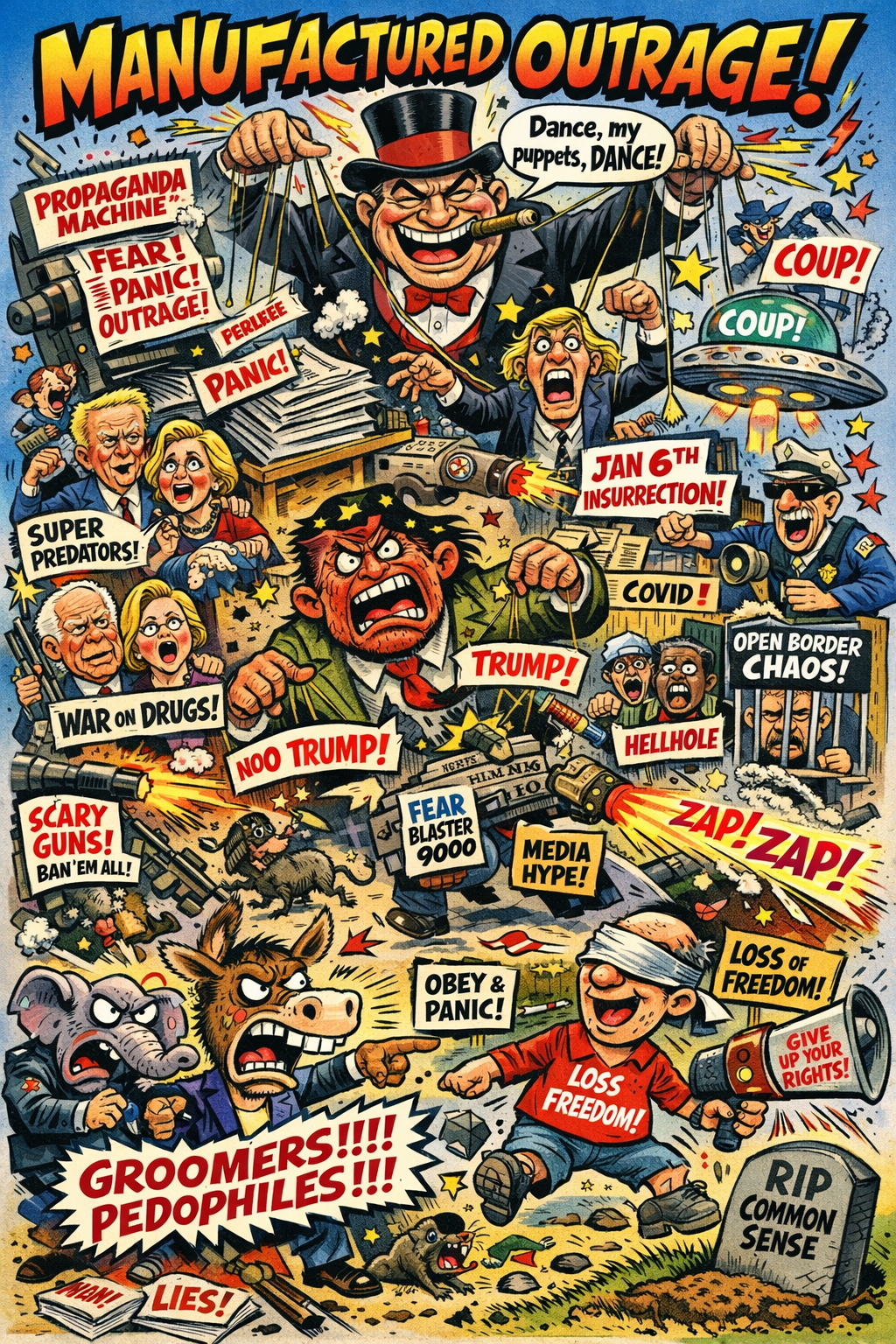
Manufactured outrage is the dark art of turning low-frequency events into high-intensity consensus.
Manufactured outrage is the dark art of turning low-frequency events into high-intensity consensus. You take something real but statistically rare, remove context, widen definitions, and repeat it until it feels ambient—like it could happen anywhere, anytime. Fear does the rest. Once people feel under siege, they’ll accept almost any “solution,” even if it quietly rewrites the rules.
The pattern is consistent. Step one: find a visceral anchor—something involving children, safety, identity, or betrayal. Step two: blur categories so edge cases count as the norm. Step three: saturate attention until perception detaches from probability. Step four: present a preloaded fix that just happens to expand authority or restrict behavior. The outrage isn’t accidental; it’s the delivery system.
This isn’t partisan. The right has done it. The left has done it. Moral panics about crime, drugs, culture, elections—you name it. Each wave reframes the same mechanism: define a threat broadly enough, repeat it loudly enough, and people will trade precision for protection. Once fear is the lens, nuance looks like denial and skepticism looks like disloyalty.
Statistics get bent in the process. Categories get bundled. Context gets buried. A complex mix of causes becomes a single, emotionally satisfying villain. And once that villain is installed, policy debates stop being about trade-offs and start being about urgency. “Do something” replaces “do the right thing.”
The result is a kind of civic autopilot. People think they’re responding to reality, but they’re often responding to a curated version of it—one optimized for reaction. It’s not that the underlying problems are fake; it’s that their scale, framing, and meaning are engineered.
If you want to resist it, you don’t need to pick a team—you need better optics. Ask what’s being counted, what’s being bundled, what’s missing, and who benefits from the emotional spike. Outrage can be justified, but when it arrives prepackaged, synchronized, and oddly convenient, it’s worth checking whether you’re seeing the fire—or the spotlight.
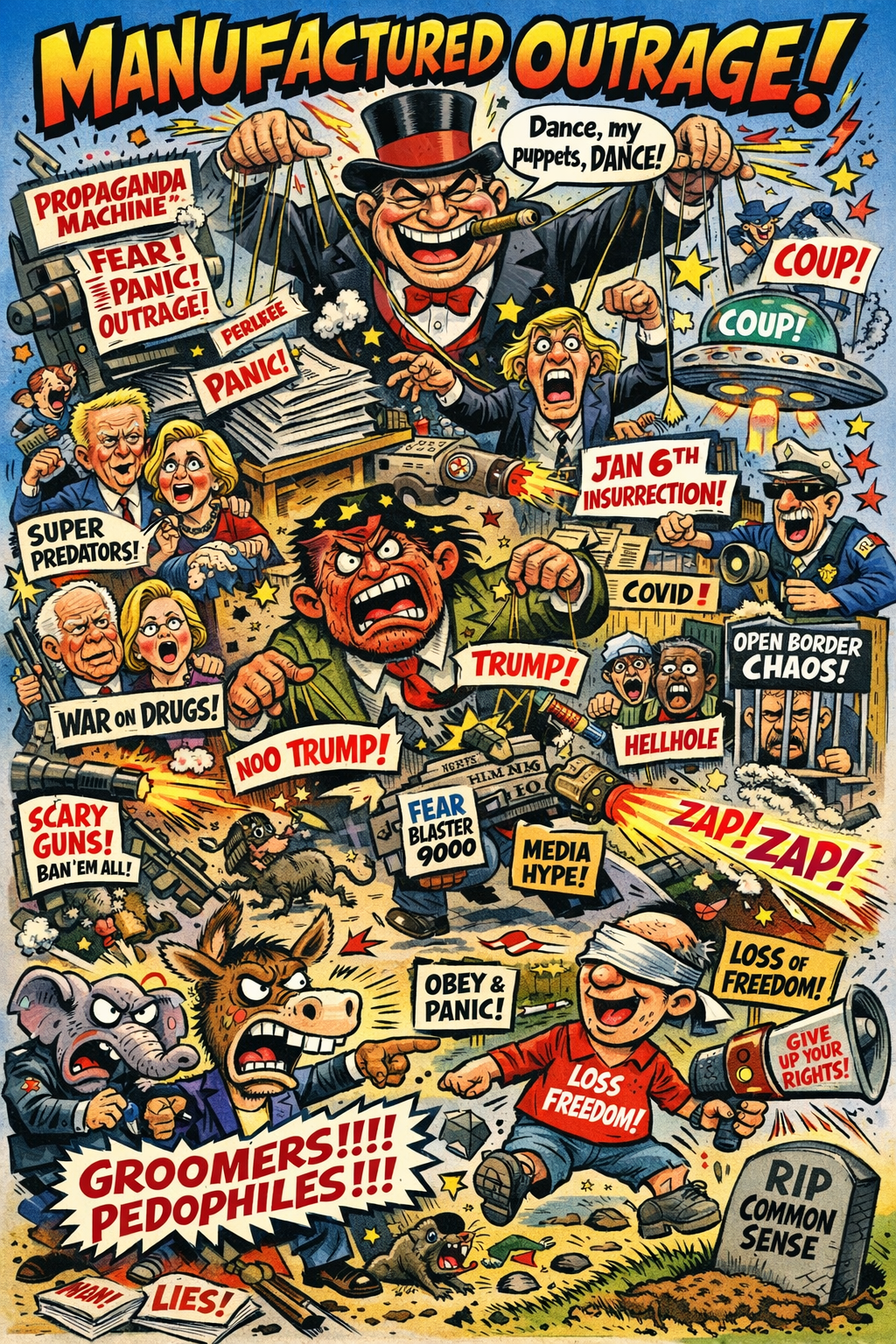
Manufactured outrage is political fuel. Amplify rare horrors, strip context, spike fear, then trade panic for power—new laws, fewer rights, tighter control. Left or right, same playbook: curate the threat, inflame the crowd, then “solve” it by moving the goalposts.
What started as shitposting has turned into a kind of accidental field study.
What started as shitposting has turned into a kind of accidental field study.
By posting across Facebook, Threads, Instagram, and beyond, I’m no longer just talking to the same familiar circle. I’m pulling in responses from people I would never encounter in my day-to-day life in Arlington. And what’s striking is not just disagreement—it’s intensity. I’m hearing arguments, language, and levels of certainty from both the left and the right that I genuinely didn’t know were this widespread or this raw.
Early on, I would delete posts when the reactions got too heated or uncomfortable. There was still a reflex to manage perception, to smooth things over, to retreat. That’s mostly gone now. I leave the posts up. I let people come in hot. I let the reactions stand. Over time, that has made me less fragile, less defensive, and more curious. I’m not doing it because I think I’m above any of it. I’m doing it because repetition changes your tolerance. You stop flinching. You stop cleaning up the evidence.
Facebook lightly monetizing the whole thing also changed my psychology more than I expected. Not because the money matters that much, but because it gives the whole enterprise a weird little mercenary honesty. Fine. I sold out. Fine. The capitalist system is giving me a tiny reward for stirring the pot. That somehow feels less embarrassing than pretending every post is a noble act of conscience. It makes me bolder, not more righteous.
And the strange thing is that people on both sides read me as belonging wholly to the other side. Some Democrats think I have knee pads for Trump. Some people on the right think I’m basically a communist with my head up Mao’s ass. That split is part of the point. I’m not trying to join a camp. I’m testing what happens when you say something vivid, sensory, unpopular, or unstable enough to make people reveal themselves.
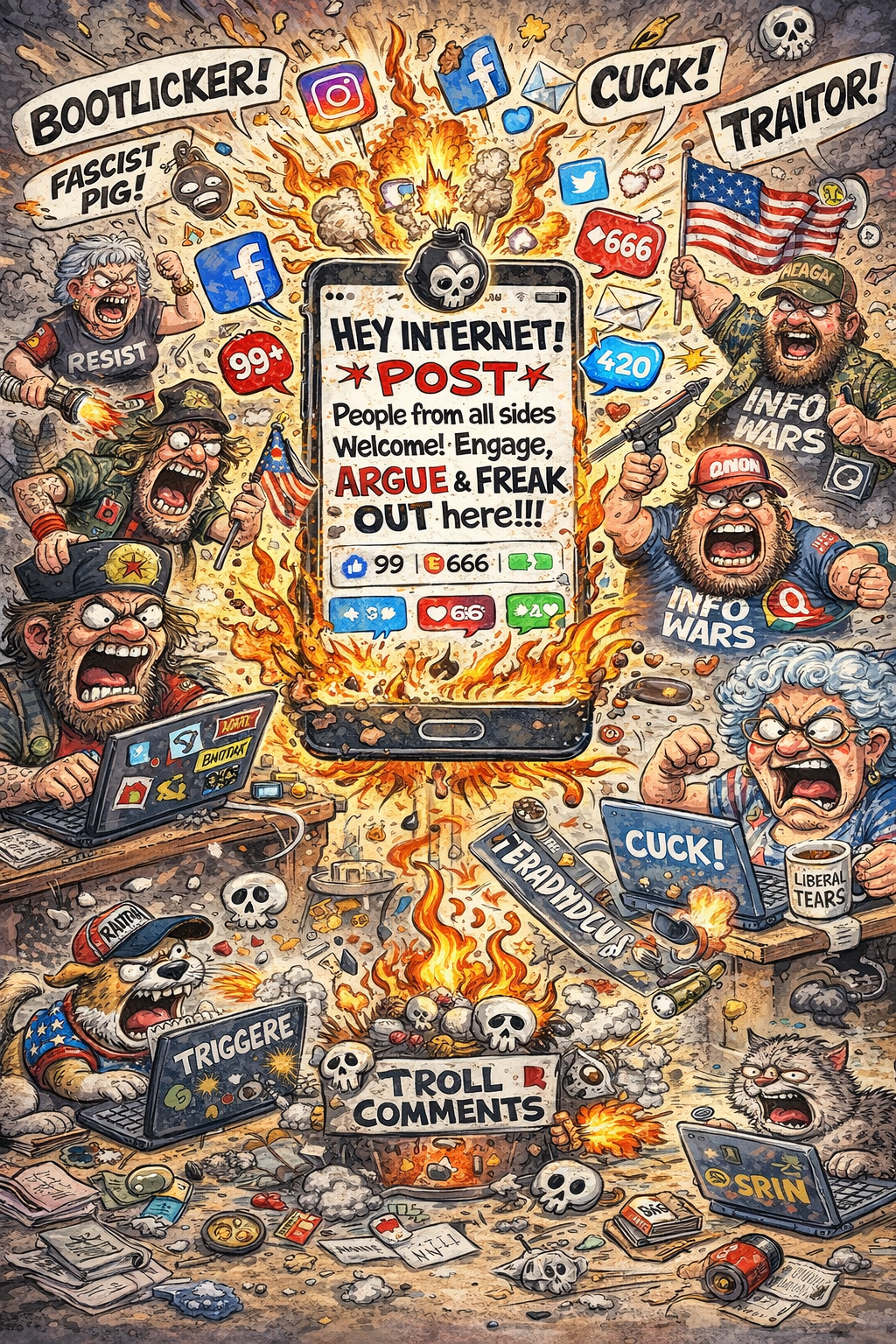
That’s the real value of it. I’m hearing voices I never used to hear. I used to think only the right had the real potty mouths, the real edge, the real appetite for calling everyone traitors and degenerates. Now I’ve seen how fast parts of the left collapse into the same kind of single-track moral bullying, except with words like “bootlicker” doing all the heavy lifting. Different dialect, same missionary certainty.
So this isn’t an apology and it isn’t a defense. It’s closer to a thesis: shitposting, especially when cross-platform and lightly monetized, can function as an unintentional social experiment. It exposes submerged voices, tests tribal reflexes, and toughens the poster. I used to delete. Now I observe. That’s the method.
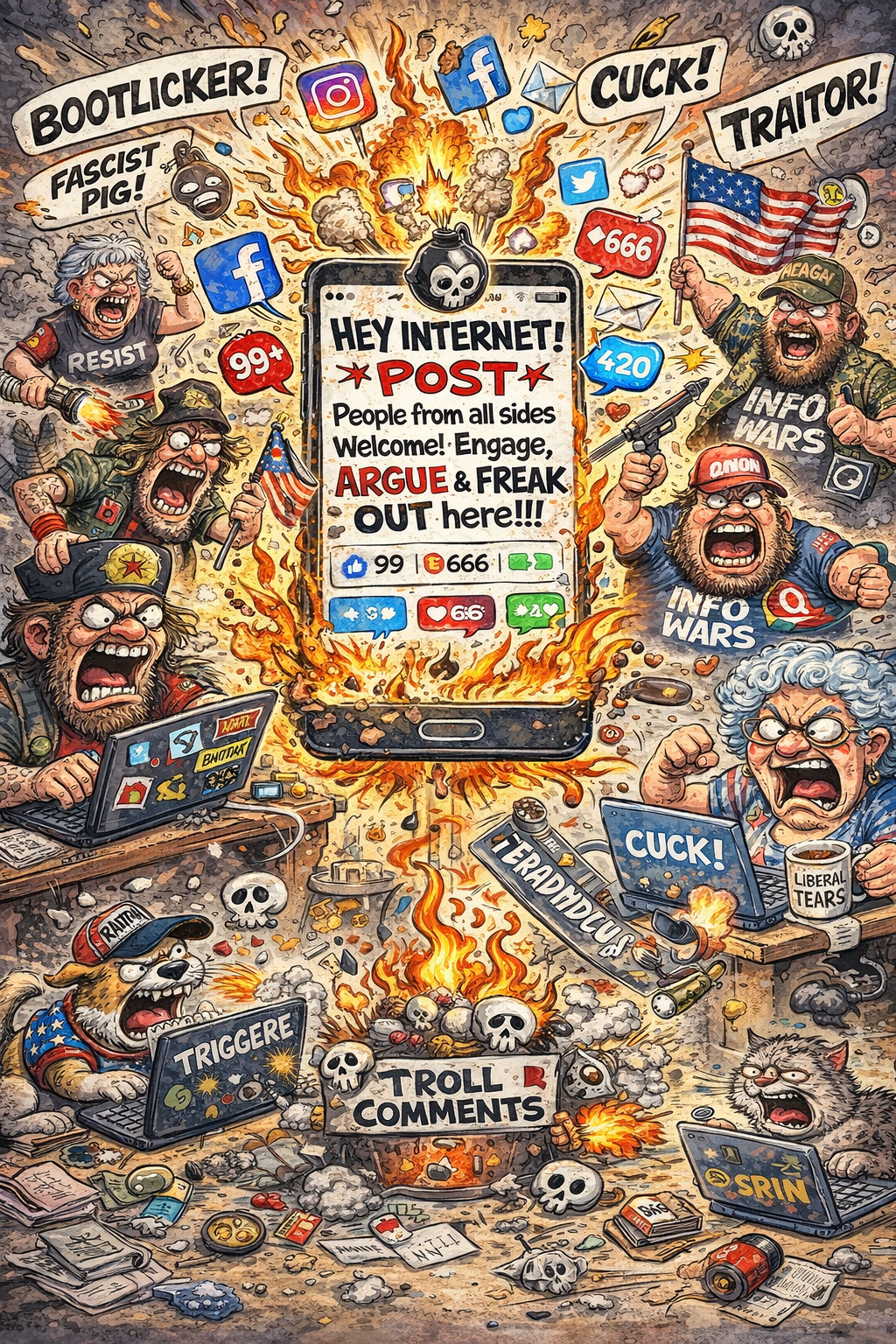
I started shitposting and accidentally built a social experiment. Pulling in voices from Facebook, Threads, IG—people way outside my Arlington bubble. I used to delete posts; now I let them ride. Monetization weirdly made me braver.
There’s A LOT of VETERAN-WASHING.
Army veteran faces conspiracy charges after participating in anti-ICE protest youtube.com/watch
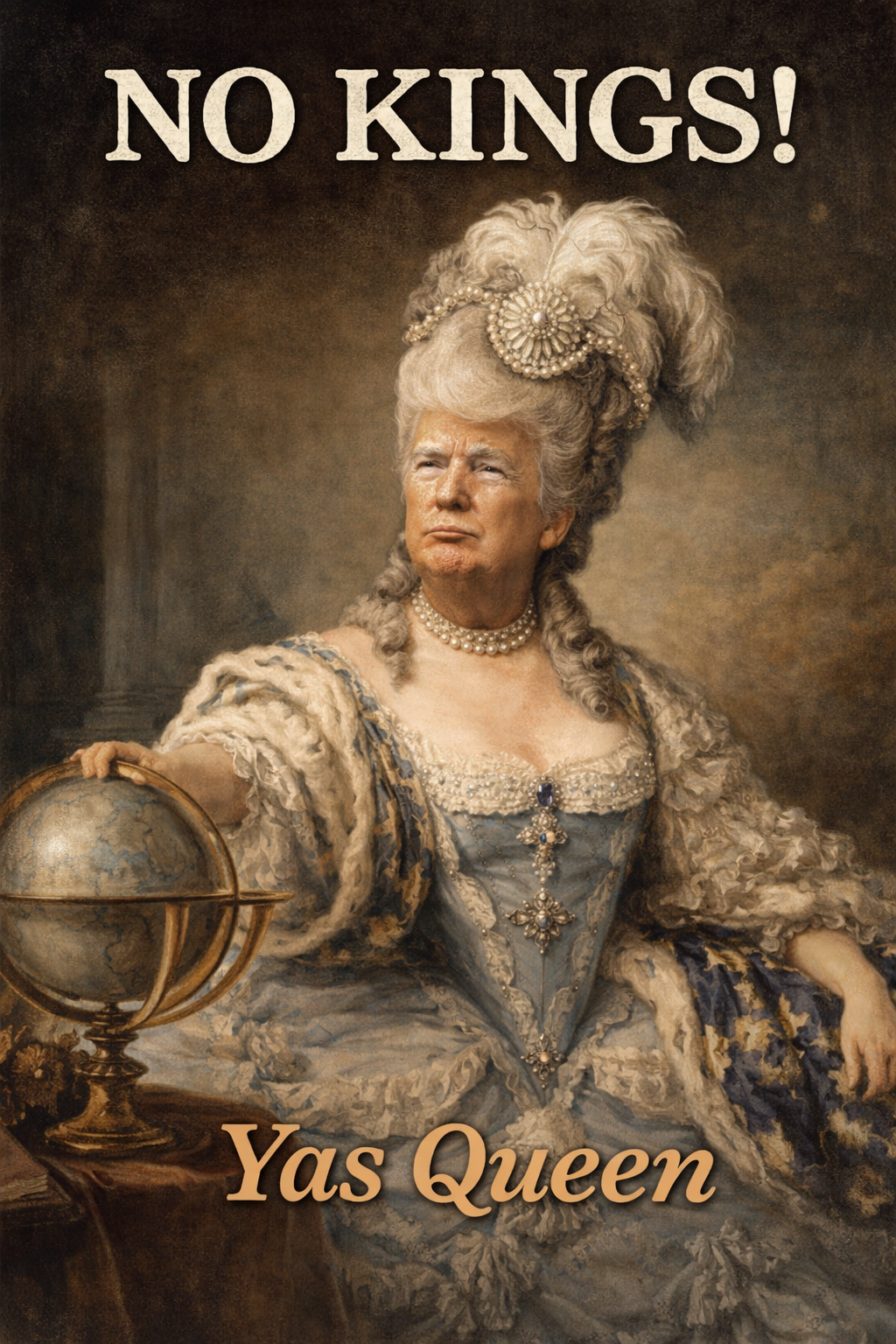
TIL: I’m 56 and this just clicked today. I always thought the white nationalist milk obsession was just about the color white. It never occurred to me it ties to lactose intolerance in people from outside Northern Europe. Once I saw that, it actually made sense. Duh.

From Pharaoh and Nebuchadnezzar to Donald Trump: The Belief That God Uses Powerful, Disruptive Figures as Vessels of His Will
There is a deeply mystical thread running through scripture: God acts in history through vessels He appoints, and those vessels are not bound by human expectations of goodness, refinement, or even mercy. The Old Testament especially is filled with moments where divine will moves through figures who appear overwhelming, disruptive, even terrifying.
Pharaoh stands as an embodiment of power hardened against God, yet his very resistance becomes part of God’s revealed glory. Nebuchadnezzar, king of Babylon, is not merely permitted but actively raised up as an instrument—his conquests, his dominance, his eventual humbling all woven into a divine narrative. Cyrus, a pagan king, is called God’s “anointed,” chosen not for covenant loyalty but for his role in restoring what God intends restored.
This is not a political pattern. It is a spiritual one. God’s sovereignty operates above human categories, raising and lowering rulers according to purposes that are often invisible in the moment. The New Testament continues this tension: powers, authorities, and rulers are all described as existing within a framework ultimately subject to God’s will, even when they appear chaotic or oppositional.
Within that worldview, history itself becomes a kind of spiritual battlefield, where what looks like disorder, conflict, or even brutality may still be part of a divine unfolding. The human perspective sees contradiction; the scriptural perspective insists on sovereignty.
That is the lens through which some believers explicitly interpret Donald Trump. Not as a figure to be measured by ordinary standards, but as a vessel—raised, permitted, or positioned within a larger spiritual movement. In this view, his force, his disruption, his intensity are not disqualifiers. They are characteristics of the kind of instrument God has used before.
Like Nebuchadnezzar, he may not resemble what people expect from a servant of God. Like Pharaoh, he may embody conflict rather than harmony. Yet scripture repeatedly suggests that God’s purposes are not limited to what appears gentle or understandable.
To see Trump this way is to step fully into that mystical framework: that God governs history, that He uses whom He wills, and that even the most unlikely or overwhelming figures can be vessels of divine action, whether they know it or not.
It is a demanding belief, because it asks the observer to trust that meaning exists even when it does not look like goodness in the conventional sense—but that tension is not new. It is as old as the texts themselves.
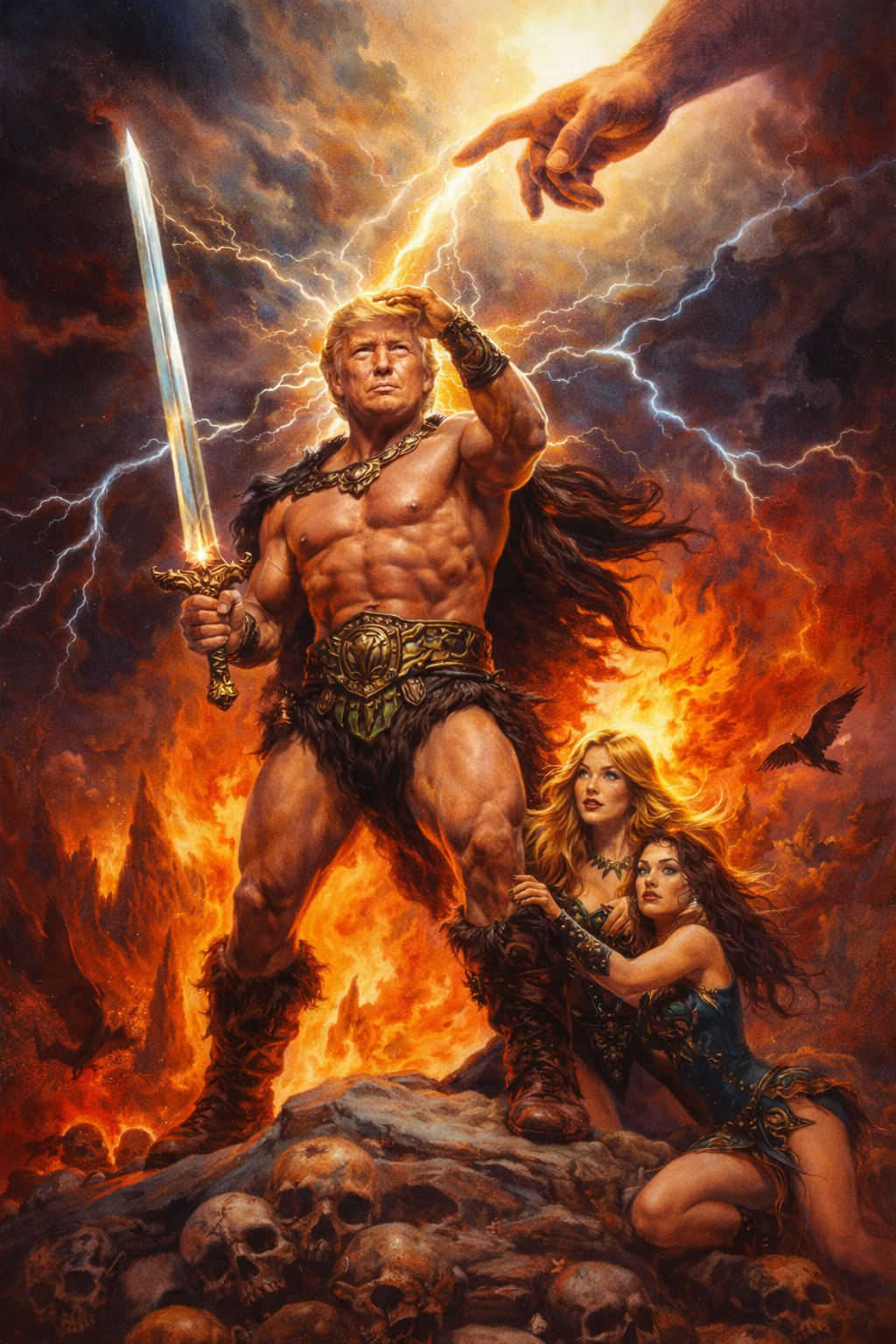
Scripture shows God raising vessels of power—Pharaoh, Nebuchadnezzar, Cyrus—to accomplish His will in ways beyond human judgment. In that same mystical frame, Donald Trump can be seen not as a moral figure but as a vessel moved by God for purposes not yet fully revealed.
Is this true? Do you agree? Do you believe this?
“… it is better for you that one man should die instead of the people, so that the whole nation may not perish.”
Holy Gospel of Jesus Christ according to Saint John 11,45-56
45 Many of the Jews who had come to Mary and seen what Jesus had done began to believe in him. 46 But some of them went to the Pharisees and told them what Jesus had done. 47 So the chief priests and the Pharisees convened the Sanhedrin and said, “What are we going to do? This man is performing many signs. 48 If we leave him alone, all will believe in him, and the Romans will come and take away both our land and our nation.” 49 But one of them, Caiaphas, who was high priest that year, said to them, “You know nothing, 50 nor do you consider that it is better for you that one man should die instead of the people, so that the whole nation may not perish.” 51 He did not say this on his own, but since he was high priest for that year, he prophesied that Jesus was going to die for the nation, 52 and not only for the nation, but also to gather into one the dispersed children of God. 53 So from that day on they planned to kill him. 54 So Jesus no longer walked about in public among the Jews, but he left for the region near the desert, to a town called Ephraim, and there he remained with his disciples. 55 Now the Passover of the Jews was near, and many went up from the country to Jerusalem before Passover to purify themselves. 56 They looked for Jesus and said to one another as they were in the temple area, “What do you think? That he will not come to the feast?”
A guarantee of speech is not the guarantee of platform.
Jane Fonda, artists slam Trump for Kennedy Center changes | NBC4 Washington youtube.com/watch