
2026
Progress becomes dangerous when it stops being a tool and starts acting like a secular religion
Most of human history did not treat “progress” as the engine of the human condition. Many societies were organized around continuity, sacred order, ancestral duty, hierarchy, and survival, not permanent reinvention. The modern idea that history moves in a single forward direction toward greater freedom, rationality, and liberation is not a universal human instinct. It is a historically specific worldview that became dominant through Western power, institutions, and global reach.
That matters because what the West calls “progress” is often experienced elsewhere as disruption. When democracy, rights language, development policy, or social reform is exported, it often carries a double message: “We honor your dignity” and “your inherited norms must be remade.” Even when the goals are humane, the method can feel like moral intervention backed by money, media, NGOs, diplomacy, and sometimes force. From the receiving end, it can look less like partnership and more like a civilizational rewrite.
This is why progressive politics can function imperially, even when it sees itself as anti-imperial. Older imperial projects spoke in the language of civilization, order, and empire. Newer ones often speak in the language of rights, inclusion, democracy, and public health. Different vocabulary, same temptation: to assume one moral framework is universal and that history itself authorizes intervention.
That does not mean all universal claims are fake, and it does not mean every local tradition deserves protection from criticism. Some traditions are cruel. Some anti-imperial rhetoric is just a shield for local elites preserving power. The point is not “tradition good, progress bad.” The point is legitimacy.
Who decides what changes? By what means? At what pace? With what consent?
Progress becomes imperial when it is imposed from outside, accelerated beyond social legitimacy, tied to humiliation, or enforced selectively. It becomes credible when it is argued locally, translated into local moral language, adopted through consent, and allowed to emerge at a pace a society can absorb.
So my view is not that progress is a lie. It is that progress becomes dangerous when it stops being a tool and starts acting like a secular religion, complete with missionaries, heretics, and a mandate to remake the world.
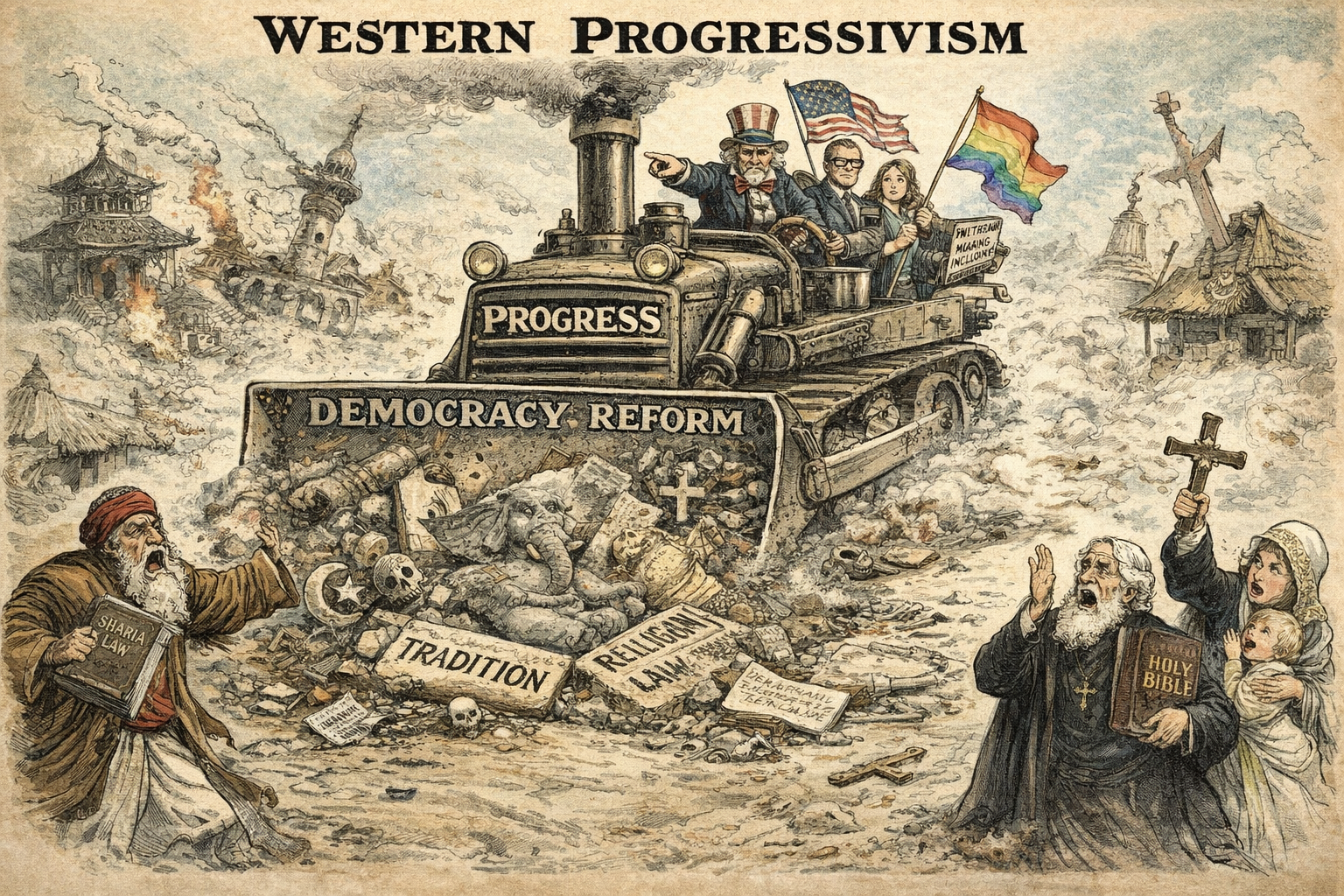
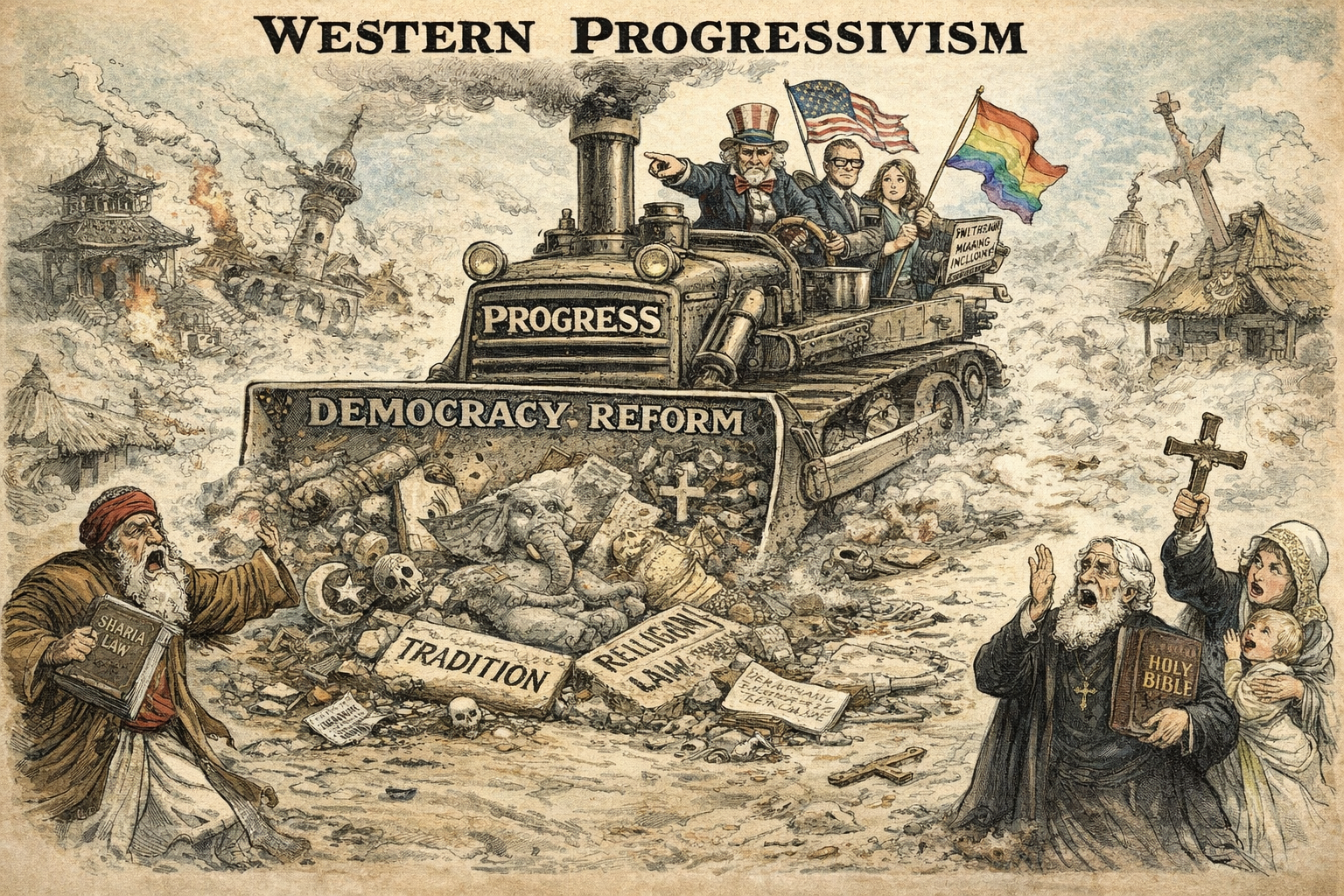
Progress as a universal human destiny is mostly a modern Western idea, not a timeless human one. Many societies prized order, continuity, and sacred tradition over constant reinvention. That is why democracy/progress rhetoric can feel like liberation to some and cultural intervention to others too.!
Lionel Shriver spits truths
Lionel Shriver joins the Winston Marshall to discuss immigration, the nation state, borders, and the cultural consequences of rejecting national identity youtube.com/watch
People mash together Republican, conservative, right-wing, Trump, and MAGA like they’re identical. They’re not. Republican is a party. Conservative is a philosophy. Right-wing is a broader tribe. Trump is a person. MAGA is a populist coalition. Overlap, yes. Same thing, no.



Why does SNAP really exist in America?
Here’s what I actually think. SNAP isn’t some Hallmark Channel compassion program. It survives because it moves money. Fast. Direct. Predictably.
Benefits can only be spent on food, and they get spent immediately. That’s straight pass-through revenue to grocery stores — Kroger, regional chains, independents, convenience stores. In low-income or rural areas where margins are thin, predictable monthly demand changes the math. If you know a certain volume of food spending is federally backed, opening or staying open becomes less risky. That’s not charity. That’s revenue certainty.
Food deserts don’t disappear because people care. They disappear when the numbers work. SNAP makes the numbers work more often.
Same logic with remittances. I’m not saying immigration policy is secretly designed as a master plan to stabilize Latin America. I’m saying the effect is real. Remittances often exceed foreign aid and flow directly to households. That stabilizes local economies without IMF bureaucracy. Whether intentional or not, it functions as decentralized economic support.
My broader point is about incentives. Programs endure when they align with economic throughput. SNAP pushes money through retail food infrastructure. Remittances push money into origin economies. These are structural effects.
You don’t have to romanticize it. You don’t have to demonize it either. Just follow the money.
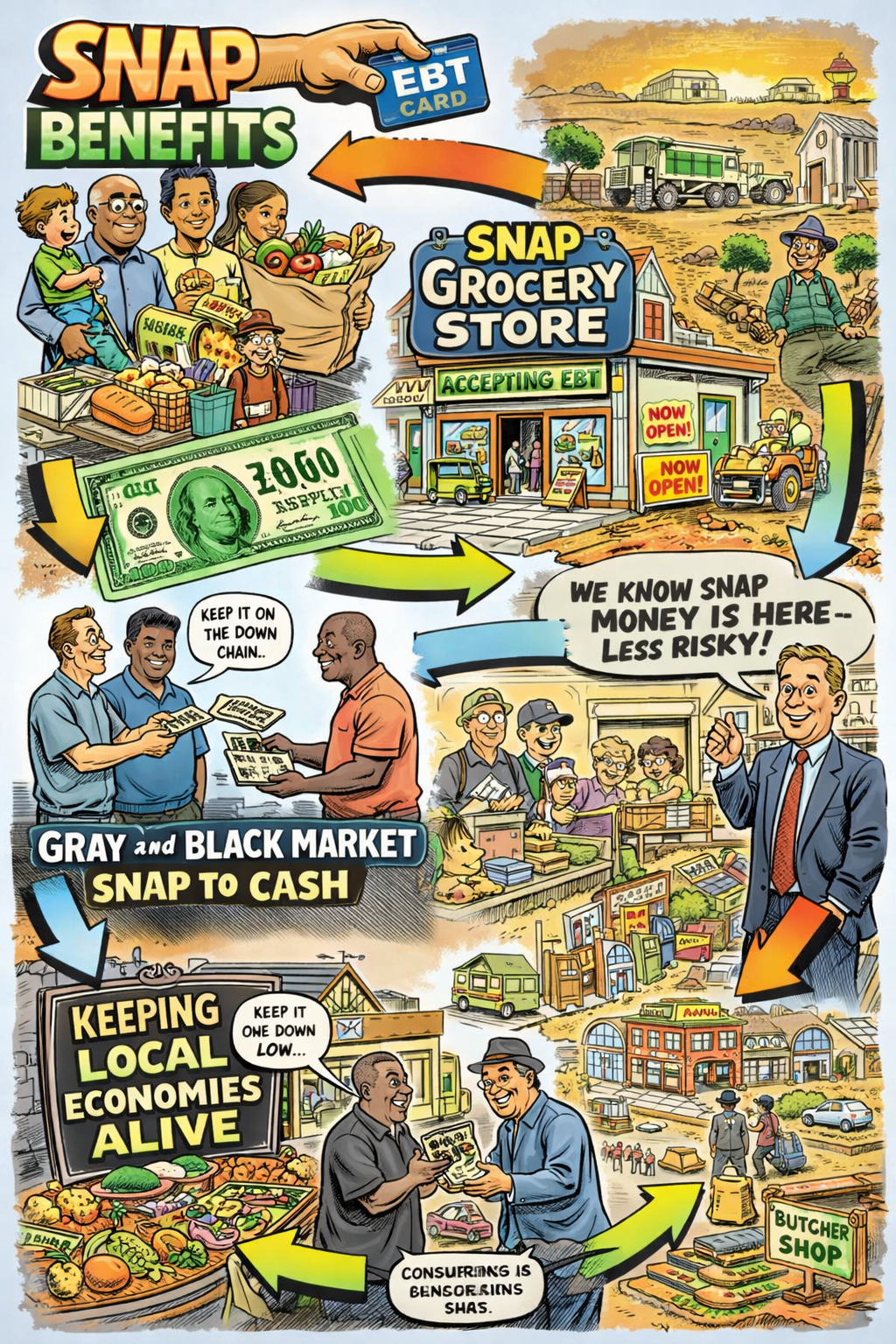
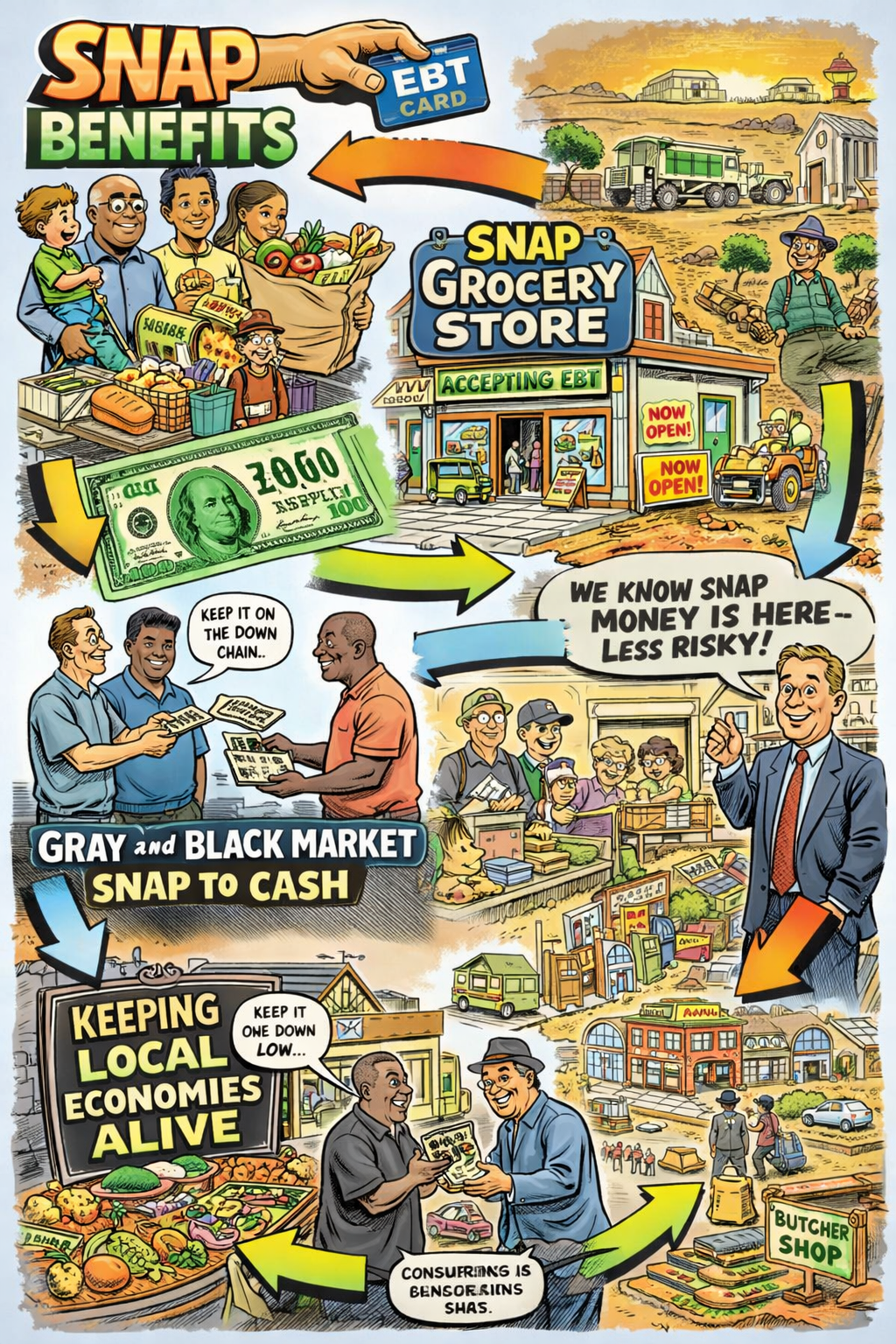
Here’s my theory: SNAP quietly functions as rural and low-income grocery stimulus. Because benefits can only be spent on food and get used fast, they inject steady demand into thin-margin stores. That keeps food deserts from getting worse and smooths out local economic volatility.
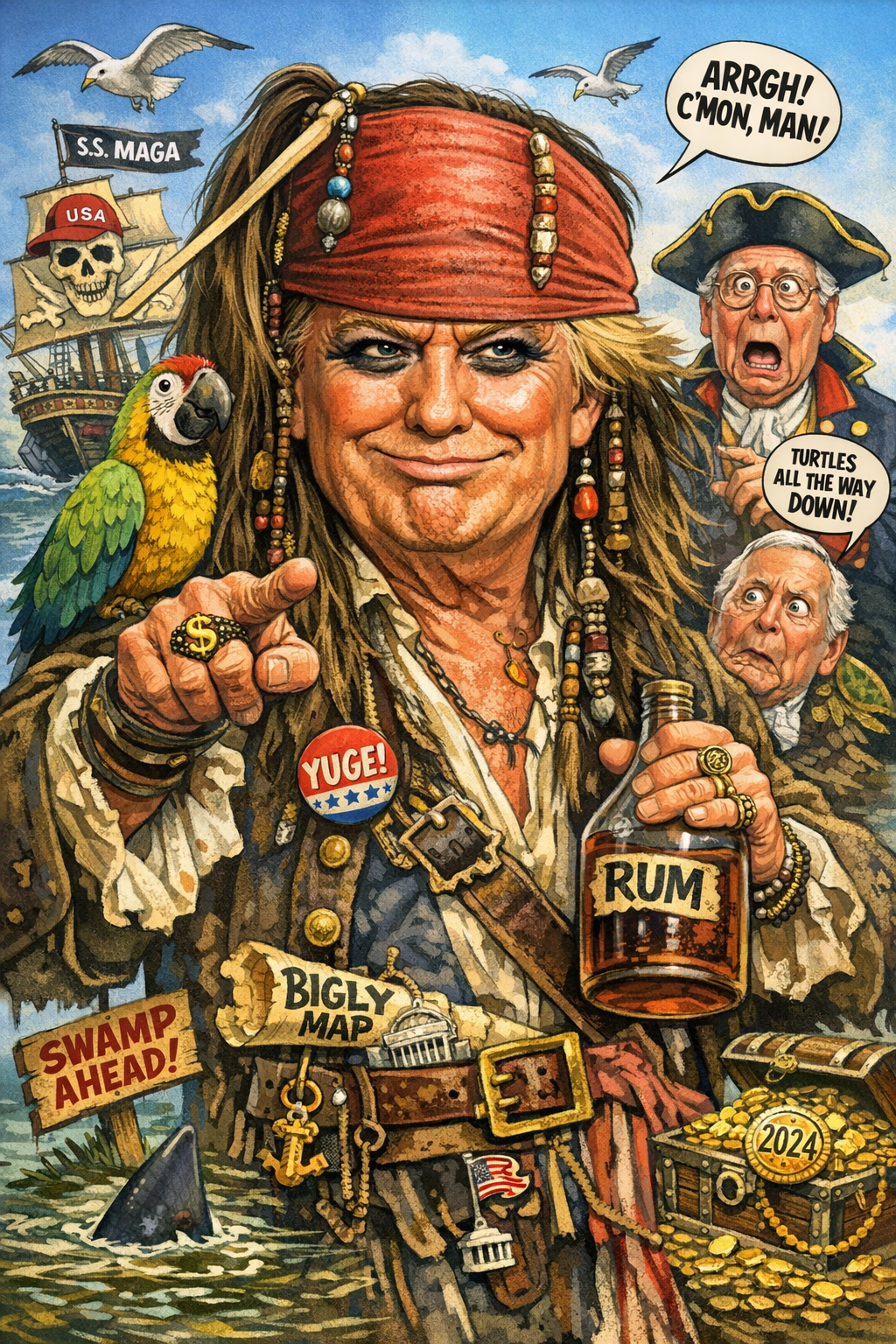
Trump is not a pirate exactly. He is a mutiny captain. He took the ship with mass support, force, and timing, not consensus. He won the deck: popular vote, electoral vote, swing states. But much of the old crew never accepted the mutiny and has been trying to seize the wheel back ever since.
Marijuana users have ALWAYS been barred from legally purchasing firearms through an FFL with a background check if you fill out the forms honestly. www.vox.com/policy/47…
How the Left’s 250th Birthday Op to Reclaim Patriotism Backfires into Conversion open.substack.com/pub/chris…
Jesus' dinner dates were not endorsements
“Love your neighbor” is often reduced to sentimental approval or moral surrender. In the Gospels, it is neither. It does not mean liking someone, agreeing with them, dissolving boundaries, or abandoning truth. It means refusing to dehumanize. It means recognizing the image of God in someone even when you reject their choices, arguments, or worldview.
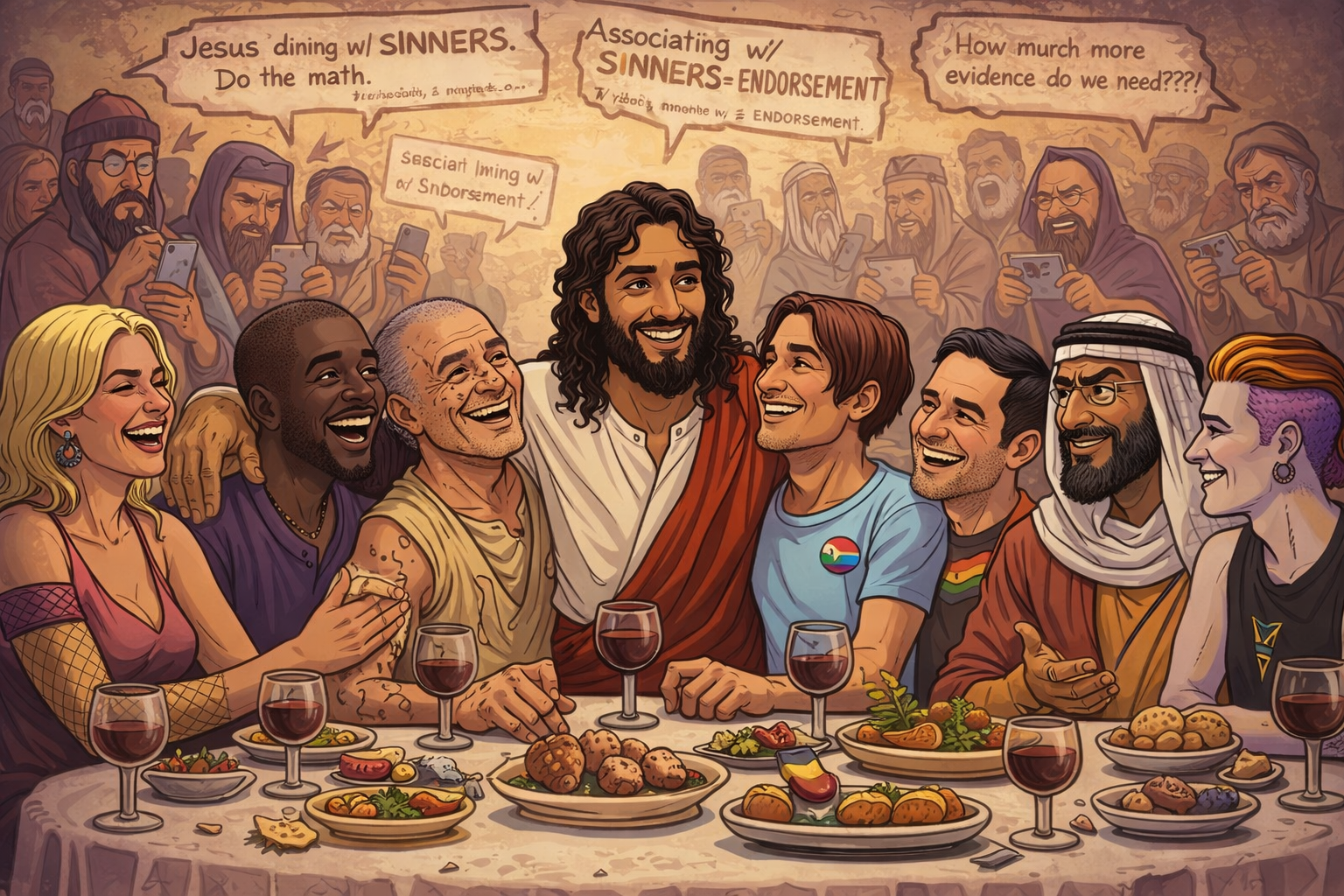
Jesus modeled this clearly. He ate with tax collectors and prostitutes, and the Pharisees interpreted that proximity as endorsement. They assumed that sitting at the table meant signing off on the lifestyle. It did not. Presence was not affirmation. Dignity was not validation. He extended mercy without redefining sin. He loved people without collapsing moral distinctions.
That distinction matters. Love in the Christian sense is not coerced sentiment and it is not ideological compliance. It is a chosen posture of restraint and regard. It refuses contempt. It refuses caricature. It refuses to reduce a human being to a category.
The New Testament also shows that love coexists with boundaries. Jesus walked away from hostile towns. He confronted hypocrisy. He spoke hard truths. The apostles warned against destructive behavior and divisiveness. None of that contradicted love, because love is not the absence of disagreement. It is the absence of hatred.
When “love your neighbor” is weaponized to demand surrender of conscience or silence of conviction, it ceases to be love and becomes leverage. Love does not insist on its own way. It does not manipulate. It does not coerce. It acts without contempt.
Christians, especially during Lent, would do well to read the Gospels directly rather than rely on simplified childhood summaries. The red text is more demanding and more nuanced than the slogans. It calls for humility without erasing moral agency. It calls for charity without collapsing truth.
To love your neighbor is not to endorse everything about them. It is to refuse to deny their dignity while you live, speak, and decide in accordance with your own conscience before God.
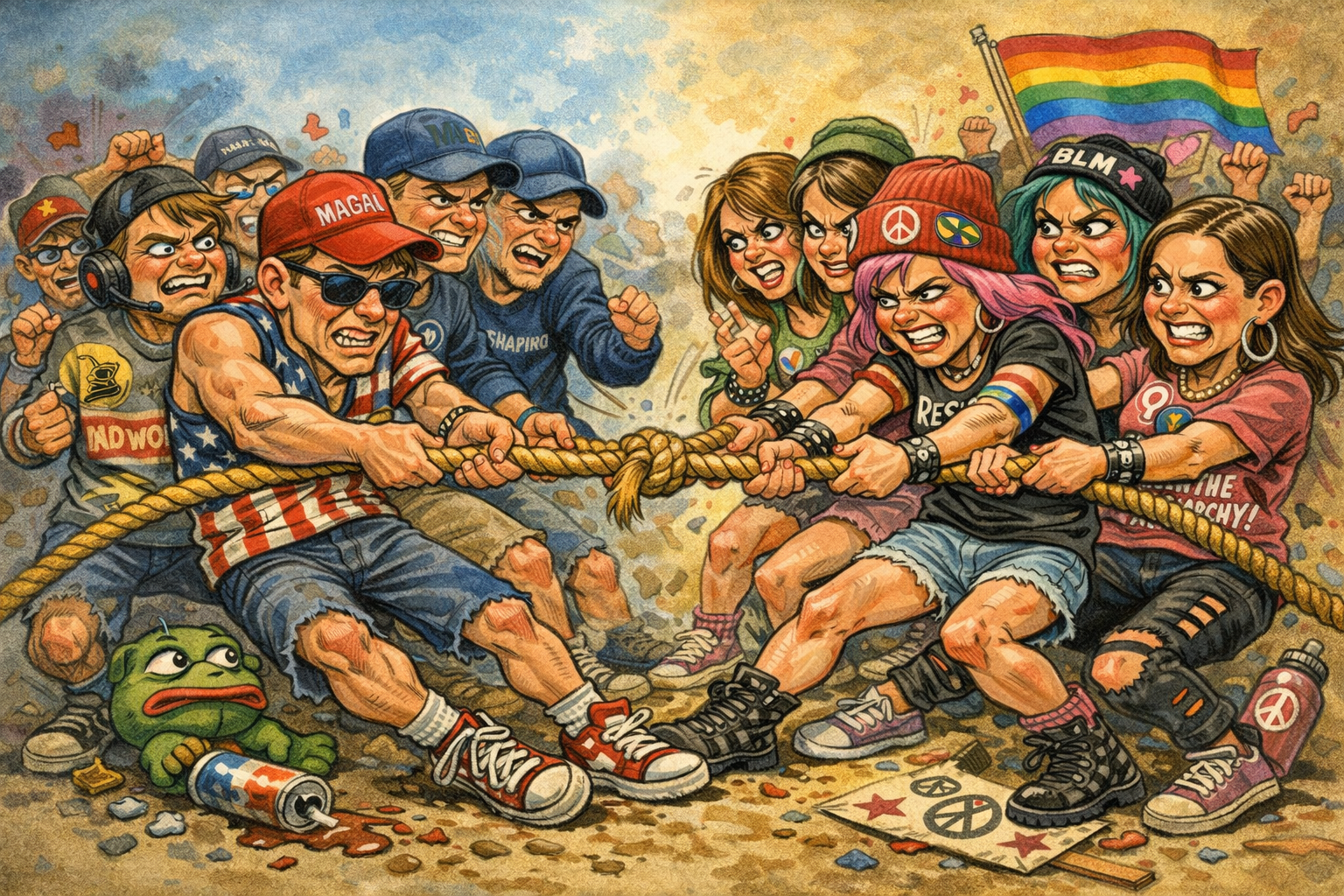
There’s been an inversion. The people who once saw themselves as countercultural now defend moderation, advertiser safety, and institutional norms. If your views are platformed on the evening news and protected by brand managers, you’re not punk. You’re establishment—whether you admit it or not.

This reporting makes me excited about Musk. When a US president can be removed by a US tech company, that’s a baseline problem. An internet that bans Alex Jones, Fuentes, Tate, Tucker, etc isn’t “free,” it’s curated. You can call it moderation; others call it narrative control. Funny how this lands opposite Oliver’s take.
“John Oliver discusses how an already flawed Twitter got worse under Elon Musk” youtube.com/watch
If you are not a liberal (or socialist) when you are young, you have no heart; if you are not a conservative when you are old, you have no brain
We all heard the line in some form: if you’re young and not liberal, you have no heart. If you’re older and not conservative, you have no mind. It gets pinned on Winston Churchill, though historians can’t find proof he ever said it. The quote probably predates him. But the idea stuck because it felt intuitive. Youth burns with moral clarity. Age cools into calculation.
For decades, the life-cycle theory of politics suggested that people drift right as they acquire mortgages, families, and tax bills. You start with ideals. You end with spreadsheets. Heart first. Head later.
But 2024 complicates that story.
Gen Z is not moving as a bloc. The gender gap is historic. Young women are identifying as liberal or leftist at higher rates than previous generations of women at the same age. Issues like reproductive rights, climate, gun policy, and economic precarity are not abstract to them. Politics feels personal and urgent.
Meanwhile, young men are trending more conservative or at least more right-leaning than their female peers. Some frame it as a reaction against progressive cultural norms. Some see it as populist defiance. Some simply distrust institutions across the board. Whatever the cause, the divergence is real.
Instead of a generation starting liberal and aging conservative together, we’re seeing parallel tracks form early. The old adage assumed a shared cultural baseline. Today’s young adults are building political identities in different online ecosystems, with different media diets and different threat perceptions. So is the saying still true?
Maybe the “heart versus mind” framing was always too neat. It assumes compassion lives on the left and realism on the right. Reality is messier. There are idealistic conservatives and hard-nosed liberals. There are young pragmatists and older revolutionaries.
The more interesting question might be whether people still change predictably with age at all. In an era of identity politics, algorithmic media, and hardened partisan brands, it’s possible that political orientation is stabilizing earlier and shifting less.
The old proverb imagined politics as a journey. 2024 looks more like a fork in the road that appears at 18.
Heart and mind may no longer take turns. They may just be choosing different tribes.
We grew up hearing: if you’re young and not liberal, you have no heart; if you’re older and not conservative, you have no mind. But in 2024, Gen Z isn’t aging into the same arc. Young women are moving further left. Young men are drifting right. The old political life-cycle story may be cracking.
“Women’s empathy is universal no matter how culpable or guilty the person” —fascinating
The Rise of Cry Bullies with Heather Heying & Bret Weinstein youtube.com/watch
C'est Normal, Non ?
Here’s my Gen X confession: I’m not wide-eyed about Epstein because I’ve been marinating in this storyline my entire life.
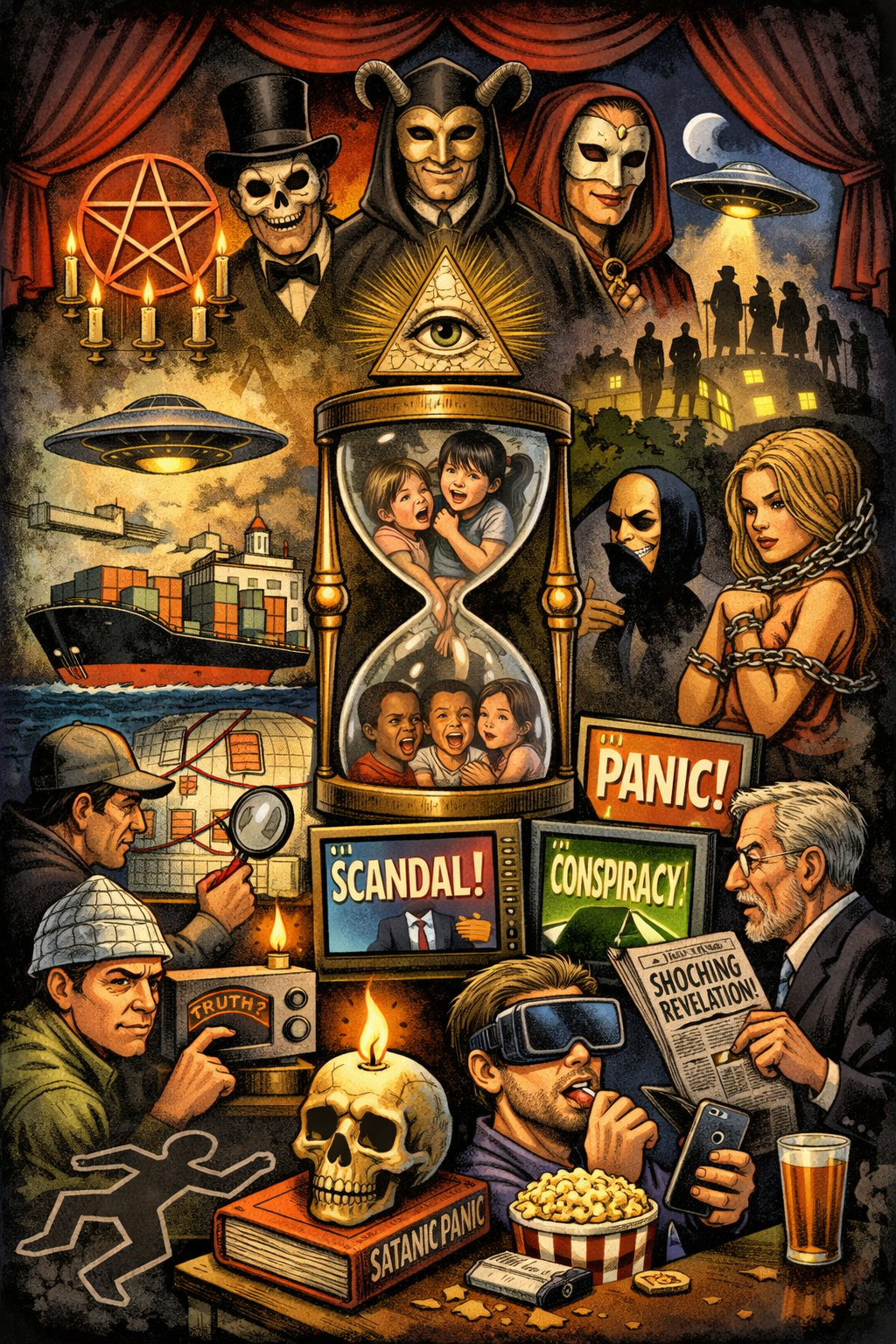
I saw Eyes Wide Shut and understood the metaphor immediately. I grew up during the satanic panic era. I watched decades of crime TV where every season ended in a warehouse, a shipping container, or some shadow network moving terrified people around like inventory. I’ve heard Alex Jones talk about occult elites. I’ve watched QAnon build cinematic universes out of trafficking rumors. I’ve listened to No Agenda break down elite hypocrisy. I’ve read the “more slavery now than ever before” statistics for decades.
By the time Epstein became front-page news, it didn’t feel like a genre shift. It felt like the latest episode in a very long series about power, secrecy, vice, and the fact that when people operate without constraint, they often slide toward appetite.
That doesn’t make it acceptable. It makes it unsurprising.
We’ve also lived through decades of cultural contradictions. People dismiss the satanic panic of the 1980s as hysteria but insist that modern revelations are categorically different, as if exploitation was invented in 1995. Meanwhile, everyone quietly understands that wealth plus insulation plus status equals access, and access plus lack of accountability creates rot.
On top of that, I’ve seen enough of the social climbing ecosystem to know how proximity works. There are always “tests.” Always blurred lines. Always a gradient from harmless indulgence to moral compromise. Power circles are rarely wholesome summer camps.
And culturally, we’ve never exactly been naive about age gaps, sexual scandal, or hypocrisy. America pretends to be shocked while simultaneously producing endless narratives about the older executive and the barely-legal assistant. Europe shrugs at age differences that would light up American cable news for weeks. Hawaii’s age of consent was 14 until 2001. The world has always had wildly inconsistent norms.
So when people clutch pearls as if they’ve just discovered that powerful men can be grotesque, I feel less outrage theater and more weary recognition.
The revelation isn’t that depravity exists. The revelation is that some people thought it didn’t.
That’s my Gen X baseline.
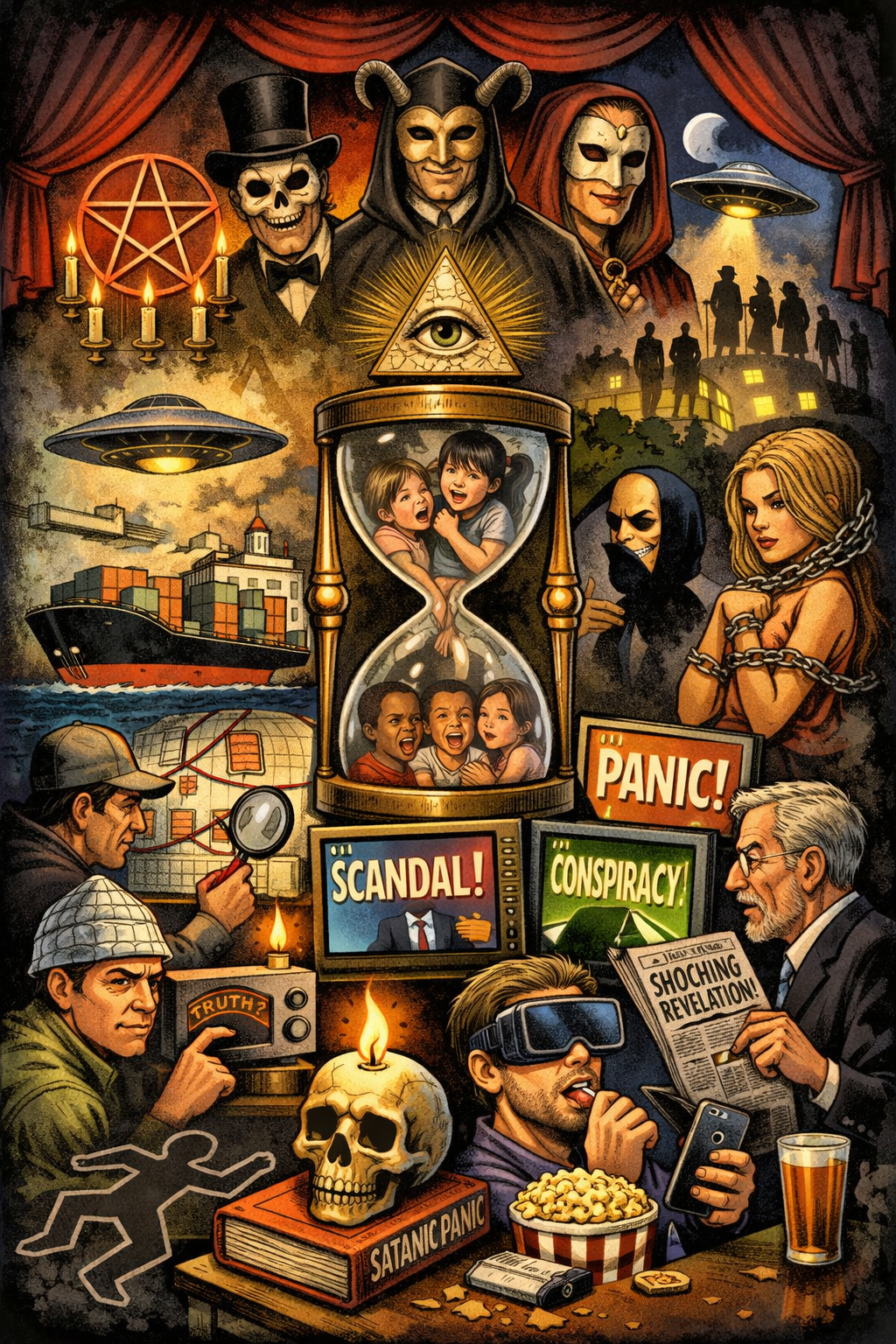
I’m not nonchalant about Epstein because I think it’s fine. I’m nonchalant because I’m Gen X. I saw Eyes Wide Shut. I’ve heard 30 years of trafficking exposés, satanic panic, Alex Jones rants, Q threads, Law & Order plots. Powerful people abusing power was never a shock plot twist.
This is really very insightful—great stuff!
“Liberals don’t want tedemption: “Trevor Noah on why liberals struggle with forgiveness with John Stewart youtube.com/watch
This is where I live. This is my home.
If you are Gen X, formerly liberal-left, but now feel like the liberal-left has lost its mind — you might want to listen to this and see if it resonates youtube.com/watch
Ukraine's 4 year anniversary of war. Happy anniversary?
Yeah, strong talk. I mean, The UK and Europe can still intervene and break NATO limitations and go in there with boots anyway. Europe is being a wuss. They should have risked nuclear oblivion and global escalation with talk like this. www.gov.uk/governmen…