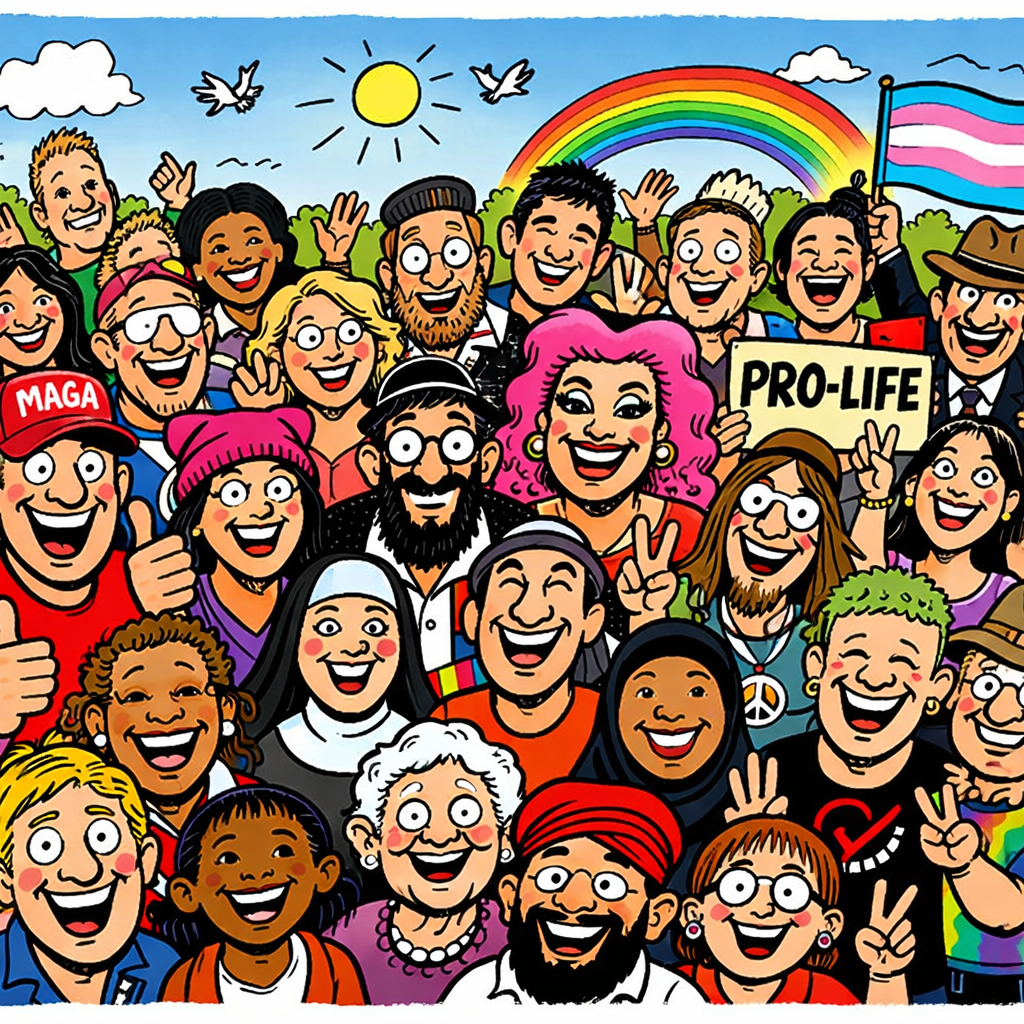
Laws always eventually bite the hand that fed it
When societies respond to conflict by over-legislating, it’s important to remember that law is a two-sided blade. Statutes created to restrain one group or behavior do not permanently belong to their original target. As political and social power shifts, the same legal tools can—and often do—cut in the opposite direction. Laws designed to punish or deter “the other side” rarely stay pointed in only one direction.
Public discussion of protest often treats the First Amendment as an absolute shield, but U.S. law has never worked that way. The First Amendment protects speech and assembly, but it does not protect conduct that crosses into threats, intimidation, obstruction, or interference with the lawful rights of others. After the Civil War, Congress passed enforcement statutes—later codified in civil-rights laws—to address violence and intimidation that deprived people of constitutional rights.
During the 1960s, additional civil-rights and hate-crime statutes were enacted. These laws do not criminalize speech or political beliefs. They focus on conduct: using force, threats, or intimidation, or intentionally obstructing protected activities such as voting, travel, or religious worship.
A critical but often ignored point is that these laws are written to be facially neutral. They protect categories of rights and protected characteristics, not political ideologies. Courts do not ask whether the accused is progressive or conservative; they ask whether the statutory elements are met. If conduct satisfies those elements, the political motivation behind it is legally irrelevant.
Because of that neutrality, civil-rights and hate-crime laws are not one-way protections. A statute designed to prevent discrimination or intimidation against one group can, under different facts and enforcement priorities, be applied to others. This has happened repeatedly in U.S. history with civil-rights laws, public-order statutes, and national-security legislation.
The more a law relies on intent, motive, or subjective interpretation—rather than purely objective acts—the more flexible and powerful it becomes. That flexibility cuts both ways. It allows the law to address real abuses, but it also means the same legal framework can be used against actors who originally supported it when circumstances change.
This does not mean such laws are illegitimate. It means they are tools, not moral guarantees. In a legal system built on neutrality and precedent, no group permanently owns a statute, and no protection is immune from future reinterpretation or application.