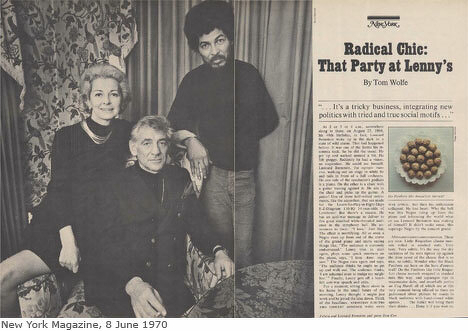
Is it revolutionary fervor or radical chic?
Radical Chic complicates any serious attempt to assess whether America is approaching genuine collapse or merely experiencing a period of heightened rhetorical extremism.
When revolutionary language is expressed most loudly by people whose material security, social status, and physical safety are effectively guaranteed, it introduces a credibility gap that cannot be ignored.
This doesn’t mean warnings of instability should be dismissed outright. It means they must be evaluated differently.
Historically, revolutionary rhetoric coming from insulated elites has often functioned as moral signaling, aesthetic rebellion, or social positioning rather than as a reflection of imminent systemic failure.
That pattern makes it reasonable—necessary, even—to question whether today’s rhetoric is driven by clout, conformity, and status within elite networks rather than by concrete indicators of collapse.
At the same time, dismissing everything as performance would be reckless. Societies rarely announce their breaking points cleanly, and cultural elites have sometimes sensed instability before institutions acknowledged it.
The difficulty lies in separating genuine risk assessment from symbolic posturing, especially when both use the same language of urgency, inevitability, and moral absolutism.
Skepticism here is not denial, and caution is not complacency.
It is an attempt to read signals accurately in an environment saturated with incentives to exaggerate. When revolution becomes fashionable, discernment becomes harder—but also more important.