I asked someone on my own post, ‘So are you calling Alex Pretti a vigilante?’ and Facebook instantly hit me with a temporary comment restriction until Feb 5 at 4:42 PM ET (16:42). Haven’t seen that since the COVID era. Interesting timing.
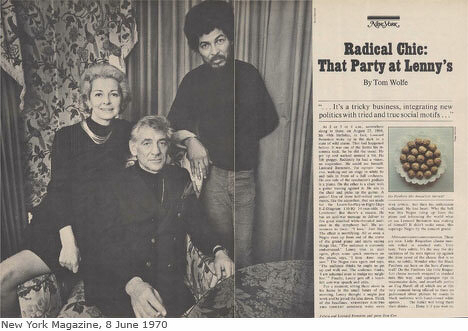
Is it revolutionary fervor or radical chic?
Radical Chic complicates any serious attempt to assess whether America is approaching genuine collapse or merely experiencing a period of heightened rhetorical extremism.
When revolutionary language is expressed most loudly by people whose material security, social status, and physical safety are effectively guaranteed, it introduces a credibility gap that cannot be ignored.
This doesn’t mean warnings of instability should be dismissed outright. It means they must be evaluated differently.
Historically, revolutionary rhetoric coming from insulated elites has often functioned as moral signaling, aesthetic rebellion, or social positioning rather than as a reflection of imminent systemic failure.
That pattern makes it reasonable—necessary, even—to question whether today’s rhetoric is driven by clout, conformity, and status within elite networks rather than by concrete indicators of collapse.
At the same time, dismissing everything as performance would be reckless. Societies rarely announce their breaking points cleanly, and cultural elites have sometimes sensed instability before institutions acknowledged it.
The difficulty lies in separating genuine risk assessment from symbolic posturing, especially when both use the same language of urgency, inevitability, and moral absolutism.
Skepticism here is not denial, and caution is not complacency.
It is an attempt to read signals accurately in an environment saturated with incentives to exaggerate. When revolution becomes fashionable, discernment becomes harder—but also more important.
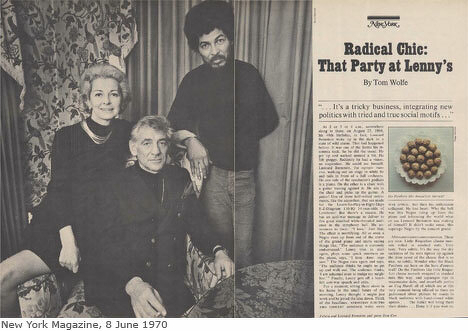
Radical Chic makes it hard to tell whether today’s constant revolutionary language is genuine or performative. When elites speak casually about collapse and upheaval without bearing risk, skepticism is rational. The question isn’t mockery—it’s whether this is signaling or a real warning.

The Constitution doesn't offer safety
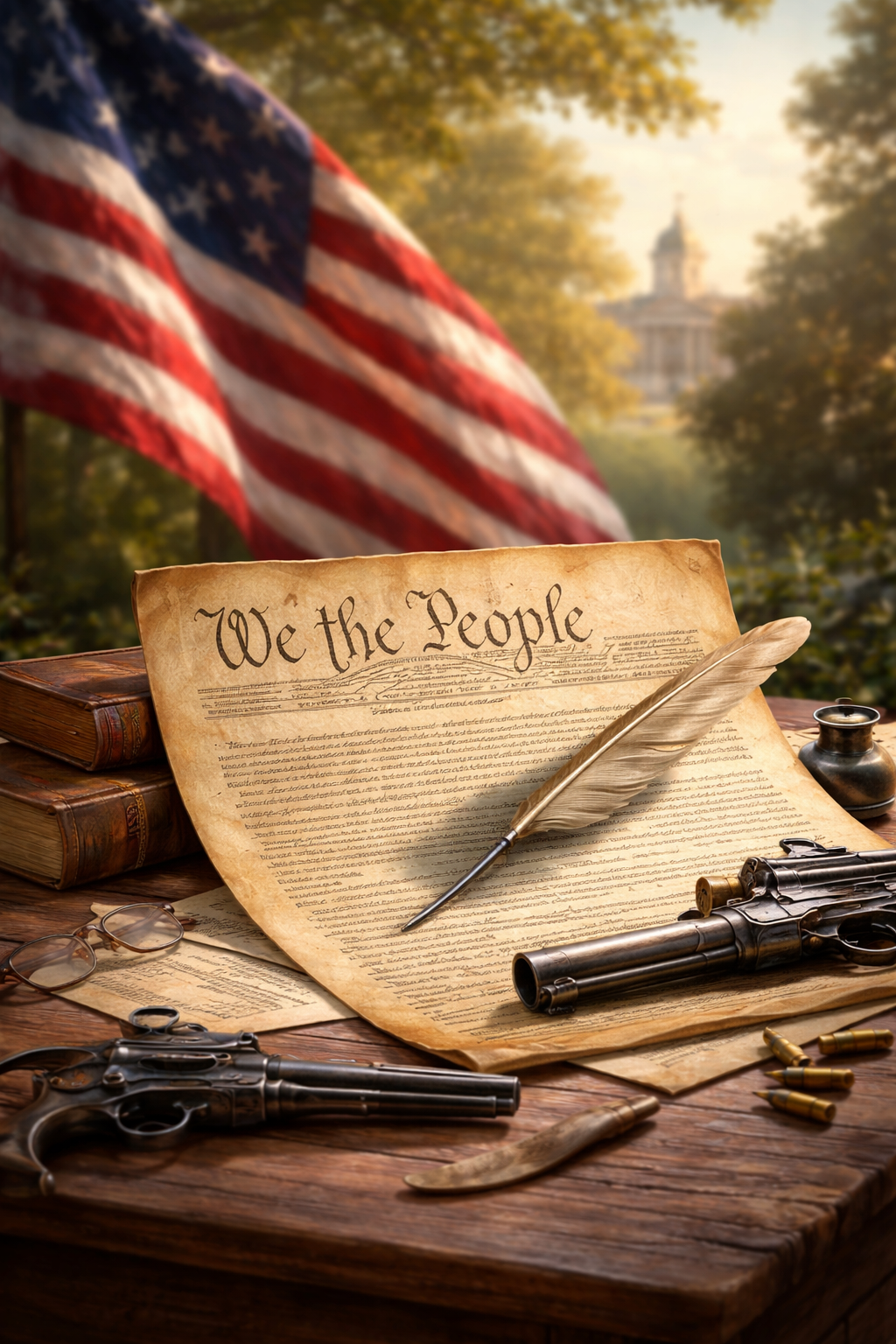
When people wrap themselves in “constitutional rights,” there’s often an unspoken assumption that those rights are supposed to guarantee safety or eliminate risk. The Constitution doesn’t make that promise.
At its core, the document is about limits and structure: limits on what the government can do to individuals, and a structure designed to prevent the concentration of power. Most constitutional rights are negative rights — protections against government interference — rather than guarantees of protection, security, or comfort. They define boundaries for state action, not outcomes for everyday life.
Nothing in the Constitution says that exercising a right will be safe, free of danger, or insulated from bad actors or unintended consequences. Speech can provoke backlash. Assembly can be risky. Due process does not ensure justice in every case, only a fair procedure. Even rights that feel closely tied to personal security stop short of promising protection from harm.
This isn’t a flaw or oversight. The framers understood that liberty and risk are linked, and that a system designed to eliminate danger entirely would require a level of centralized control they viewed as more dangerous than uncertainty itself. The Constitution chooses restraint over guarantees, process over outcomes, and freedom over safety assurances.
So when constitutional rights are invoked, it’s worth being precise about what they are — and what they are not. They protect space for individual action and limit state power. They do not promise safety, nor do they remove risk from a free society.
Very fun and interesting little Bayesian primer.
The power of Bayesian reasoning youtube.com/watch
Legally licensed concealed carry does not make you law enforcement or grant you authority to act as one.
You are not a sheriff, deputy, or officer of the law, and you are not responsible for enforcing rules, intervening in public conflicts, or acting as “civilian resistance.” Training for legally licensed concealed carry is explicit about this boundary.
Your responsibility as a concealed carrier is modest and disciplined. Avoid danger when possible. Do not provoke, encourage, or exacerbate situations. If you can disengage, you disengage. If you can cross the street, take another route, or leave early, you do. Those choices aren’t weakness—they’re exactly what responsible carry training teaches.
The “sheepdog” idea is often misunderstood. In a legally licensed concealed carry context, it does not mean seeking threats, inserting yourself into chaos, or acting as informal enforcement. It means protecting yourself and those immediately under your care when there is no safe alternative and a clear, imminent threat of death or serious bodily harm—and nothing more.
Carrying a firearm comes with restraint, not authority. Deadly force is a last resort, not a strategy, and every decision leading up to it will be scrutinized later. Legally licensed concealed carry exists for personal self-defense—not intervention, not enforcement, not heroics. The real responsibility is judgment, humility, and knowing when to walk away.

Legally licensed concealed carry isn’t about being a sheriff, deputy, or tough guy. You’re not law enforcement or civilian resistance. Your responsibility is modest: avoid danger, de-escalate, disengage, and leave when you can. Carrying is for last-resort self-defense—not enforcement.

Session Twenty-Six: The Wachter House Raid, the Parlor Full of Devils, and the Level-Up We Didn’t Earn chrisabraham.substack.com/p/session…
Fascinating insight from a trained American counterinsurgent.
What A Green Beret Sees That Others Don’t In The Minnesota Protests youtube.com/watch
This is an extremely LOW NUMBER, for perspective. Considering the scope of the mission.
Report shows more than 170 US citizens were detained by immigration officials
A very sober take from a concealed carry (CCW) Minnesota lawyer
The Pretti Case Exposes a Dangerous Lie youtube.com/watch
This is a very good one. Are you a fan of Bridget Phetasy yet?
Is Minnesota Ground Zero for Civil War 2.0? - Dumpster Fire youtube.com/watch
Digital PR in 2026: How I Make It Actually Help SEO chrisabraham.com/blog/digi…
Interview with Senior Communications Specialist Melanie Cherry by Mike Falkow of Meritus Media www.youtube.com/watch
Keep watch, dear Lord, with those who work, or watch, or weep this night, and give your angels charge over those who sleep. Tend the sick, Lord Christ; give rest to the weary, bless the dying, soothe the suffering, pity the afflicted, shield the joyous; and all for your love’s sake. Amen.
The southern border of the United States is not a finish line chrisabraham.com/images/th… via @chrisabraham
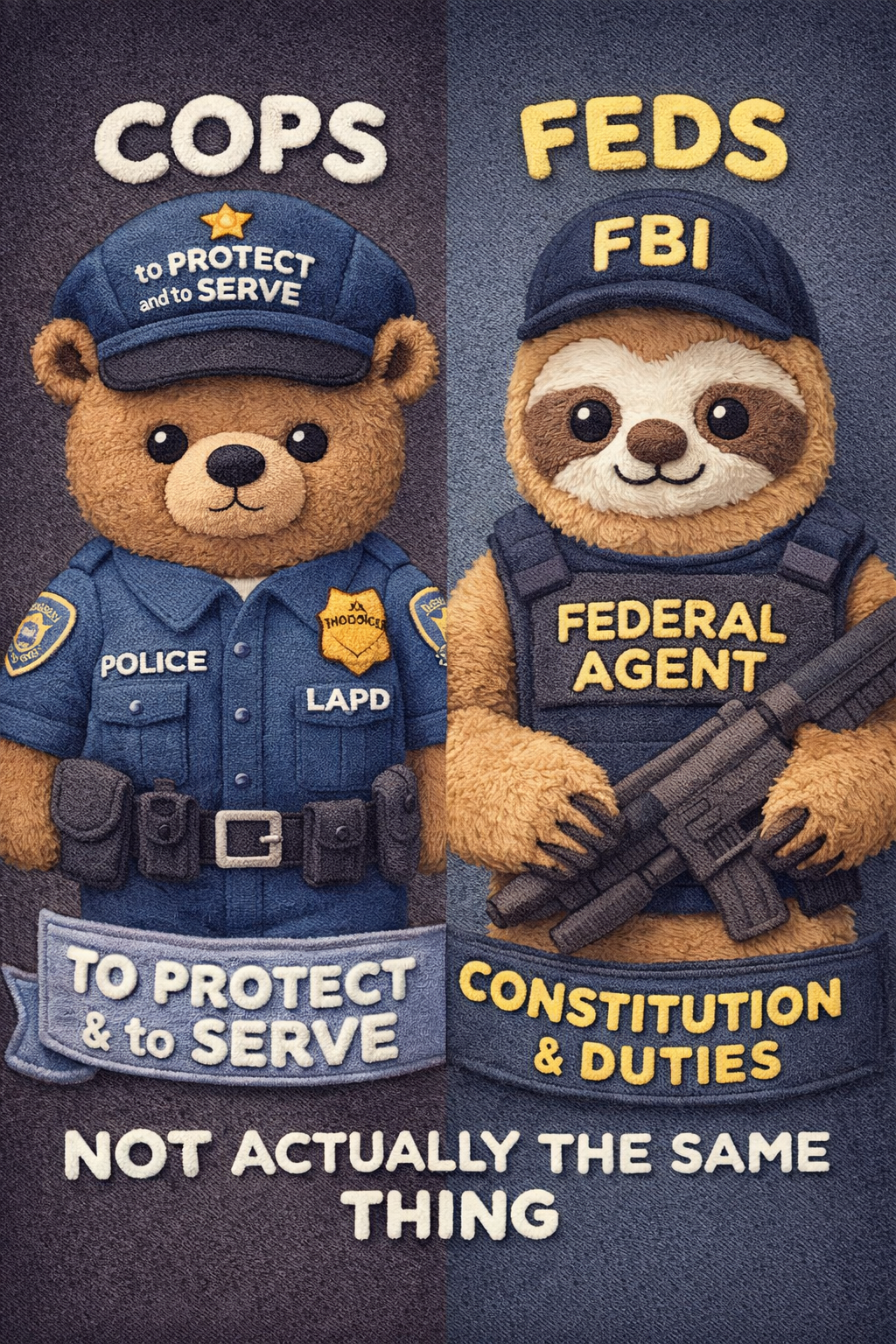
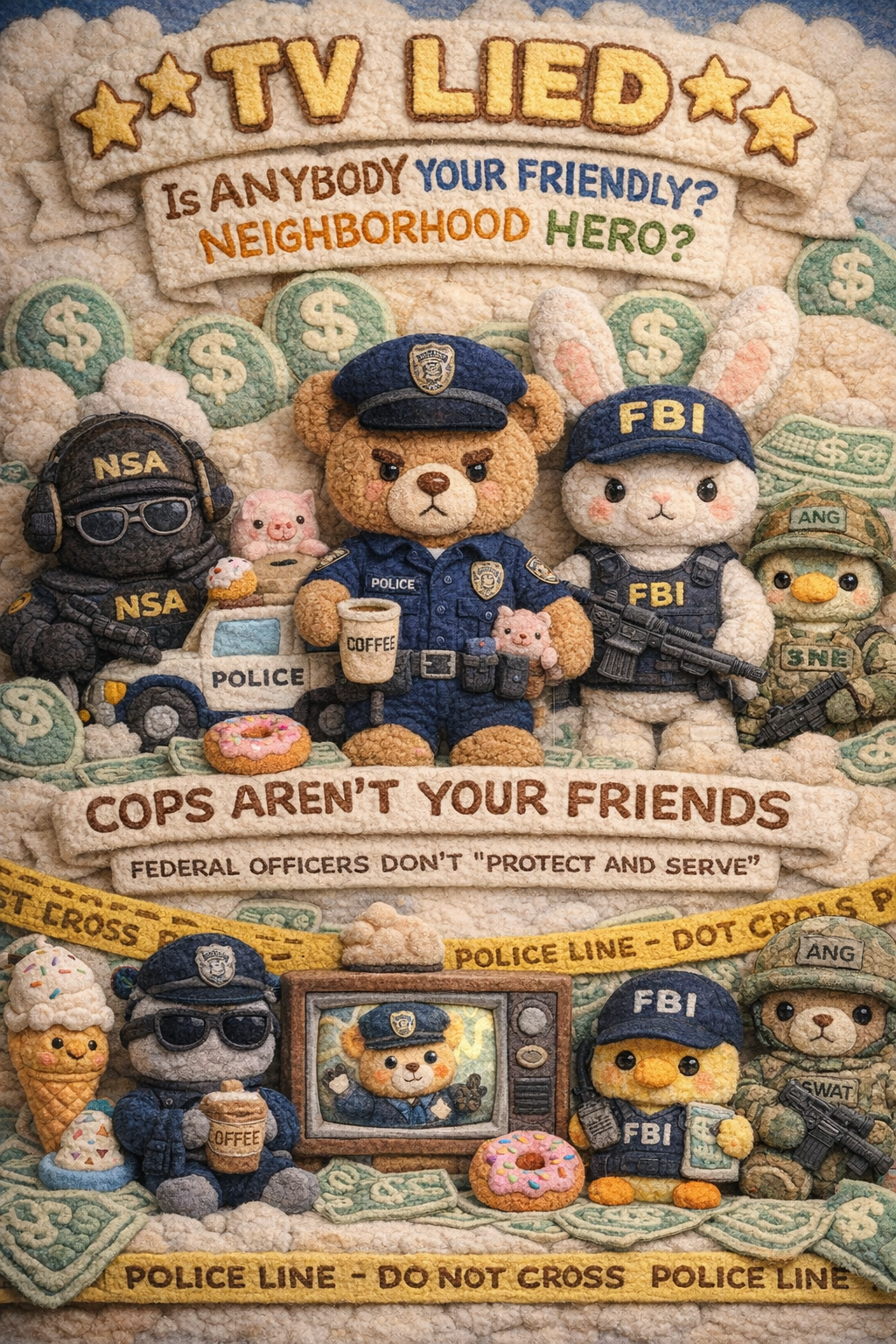
Feds Don't Protect or Serve
I think people conflate three different things: local cops, federal agents, and the TV version of “the police” where everyone’s a friendly public servant with infinite patience and a heart of gold.
“Protect and serve” isn’t a universal promise law enforcement makes to you. It’s an LAPD-origin motto that got adopted as a slogan because it sounds comforting on a cruiser door and in a script. Federal officers (DHS, ICE, FBI, etc.) don’t “pledge protect and serve” like they’re your neighborhood guardians. Their binding commitment is the federal oath: support and defend the Constitution and faithfully discharge their duties. That’s not marketing, that’s the actual job description.
So when someone says “law enforcement’s social contract can’t be malleable,” I agree on the substance but not the framing. The binding part isn’t a vibes-based contract, it’s the real one: statutes, constitutional limits, agency policy (including use-of-force rules), supervision, and consequences when those are violated. That’s what’s supposed to restrain state power.
And the same is true on the civilian side: you have rights, but you don’t have a free license to escalate into force, obstruction, or street violence and then act shocked when the situation gets ugly. Once either side treats rules as optional, you don’t get “justice,” you get a loop: fear, anger, escalation, injuries, riots, then everyone digs in harder.
Also: “cops are your friends” is mostly a TV hallucination. Some are decent, some are not, and institutions can be brutal even when individuals mean well. If you want “binding,” demand law, clarity, and accountability, not slogans.