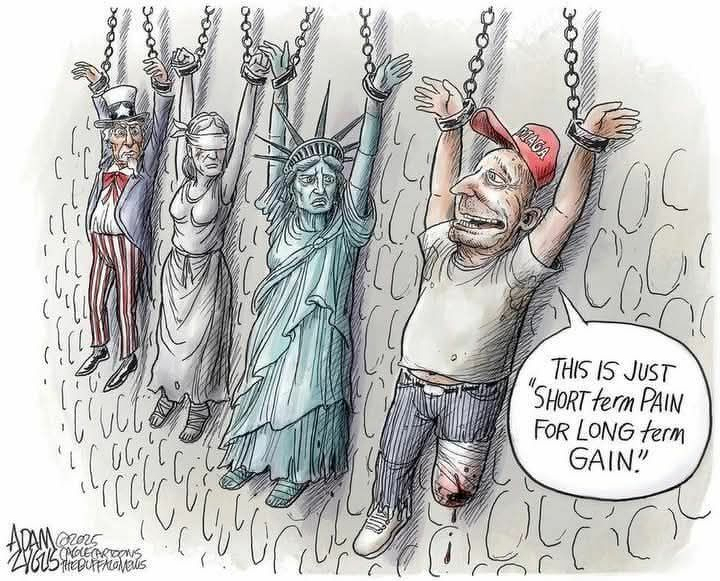
2026
Péter Magyar literally means Pete Hungary—too on the nose?
Europe is celebrating like Orbán’s Hungary just got exorcised. But take a breath.
Péter Magyar wasn’t some dissident writing samizdat in a basement. He was inside the tent—deep inside. Married to a cabinet minister. A true believer who became, very dramatically and very publicly, a convert. And converts make the most convincing revolutionaries precisely because they know the liturgy.
Magyar means Hungarian. Not metaphorically—literally, that’s the word. The man who just swept away the Orbán era is named after the thing Orbán spent 16 years claiming to exclusively represent. That’s either a beautiful accident or a very tidy piece of political theater.
The Soros-money crowd will say Western intelligence bought this election. That’s the lazy version. The more interesting read is that this wasn’t a foreign intervention—it was a succession. A baton pass. Orbán exits with 2.5 million loyal votes still banked, Fidesz survives as opposition, and the guy taking the keys already knows where every body is buried because he helped dig some of the holes.
Revolutions that produce 138 parliamentary seats on the first try, with a 79.5% turnout, with the outgoing strongman calling to concede before 30% of votes are counted—those aren’t usually revolutions. They’re handoffs.
Magyar has promised to break from Russia, cozy up to the EU, unlock frozen billions from Brussels, restore judicial independence. All the right words in the right order. But so did a lot of people before him, in a lot of countries, who then found governing considerably more complicated than campaigning.
The hope in Budapest last night was real. The crowds were real. The exhaustion with Orbán was absolutely real. None of that means Magyar is the antidote rather than the next chapter of the same book, written by many of the same hands.
Wait for the first budget. Watch who gets the ministerial appointments. See whether NER gets dismantled or just redecorated. That’s when you’ll know whether this was a revolution or a very well-executed pivot.

Magyar means Hungarian. Too on the nose? Peter was Orbán’s man for years. This isn’t a revolution — it’s a rebranding. Meet the new boss, grown in the same soil as the old one.

Anti-corruption movements routinely reproduce the corruption they displace.
Does Hungary ousting its far-right prime minister prove rightwing populists and autocrats can be beaten around the world? pca.st/episode/f…
Most of you are too young to remember the Nayirah testimony
In August 1990, Iraq invaded the neighboring country of Kuwait. The United States and its allies had to decide whether to send military forces to push Iraq out. American public opinion was divided and the congressional vote to authorize force was not certain.
On October 10, 1990, a fifteen-year-old girl testified before a congressional caucus in Washington. She gave only her first name: Nayirah. She said she had volunteered at a hospital in Kuwait during the Iraqi occupation and witnessed something terrible. Iraqi soldiers, she said, had entered the maternity ward, removed premature babies from their incubators, and left them on the cold floor to die.
The story spread immediately. Television news ran it repeatedly. President George H.W. Bush cited it in public speeches. Senators referenced it from the floor during the war authorization debate. The Senate passed that authorization by five votes.
After the war, journalists and human rights investigators went to Kuwait and looked for evidence. They interviewed hospital staff and reviewed records. No one who had actually been at the hospital confirmed the story. Amnesty International, which had initially repeated similar claims, later retracted them.
Then the full picture emerged. Nayirah was not an ordinary Kuwaiti teenager. She was the daughter of Kuwait’s ambassador to the United States and a member of the country’s ruling family. That had never been disclosed. Her testimony had been arranged and her appearance coached by Hill & Knowlton, a private American public affairs firm that had been paid by the Kuwaiti government to build support for U.S. military intervention. The front group they created for the campaign was called Citizens for a Free Kuwait—it sounded like an American grassroots movement but was almost entirely funded by the Kuwaiti government.
No charges were filed. No formal congressional investigation followed.
This episode is now studied as one of the most documented examples of how wartime public opinion can be shaped through organized campaigns. It is not a story about any one country being uniquely dishonest. It is a reminder that during conflicts, governments and their representatives have powerful incentives to influence what the public believes—and that private firms can be hired to help them do it.


In 1990, a teenage girl told Congress she watched Iraqi soldiers remove babies from incubators in Kuwait and leave them to die. The story helped build support for the Gulf War. She was the Kuwaiti ambassador’s daughter, and the whole appearance had been arranged by a private PR firm hired by Kuwait.


A lot of specific Americans are dancing on Eric’s grave right now.
In Swalwell v. Trump, the U.S. District Court for the District of Columbia considered whether former President Donald Trump is entitled to absolute presidential immunity from damages liability for allegedly inciting a riot at the U.S. Capitol. www.theusconstitution.org/litigatio…
What saving pagan babies looks like in 2026
When my mom was in Catholic girls school they had little boxes in church: donate your coins to save the pagan babies. Actual boxes. Printed label. Handed to eight-year-olds as a virtue exercise.
That’s not a metaphor. That’s the ideology made physical.
Nobody defends that framing anymore. Missionary colonialism, white man’s burden, noblesse oblige—we recognize those as paternalism dressed as generosity. The hierarchy was explicit: we have the truth, you don’t, your job is to receive salvation gratefully and not have inconvenient opinions about it.
The secular progressive version runs the same transaction with better branding. The Catholics became atheists but kept the bone structure. We care more about people than you do. We want things on your behalf because you don’t fully understand your own situation. It’s self-sealing—if you agree, you’re enlightened; if you disagree, that just proves you need saving.
Pagan babies got older. The box got bigger. The coins are now policy.

Noblesse oblige used to be recognized as the racist paternalism it is. Secularize it, rebrand it as allyship, and suddenly it’s a virtue. Same skeleton. The pagan babies just got older.

She’s the most Karen pca.st/episode/3…
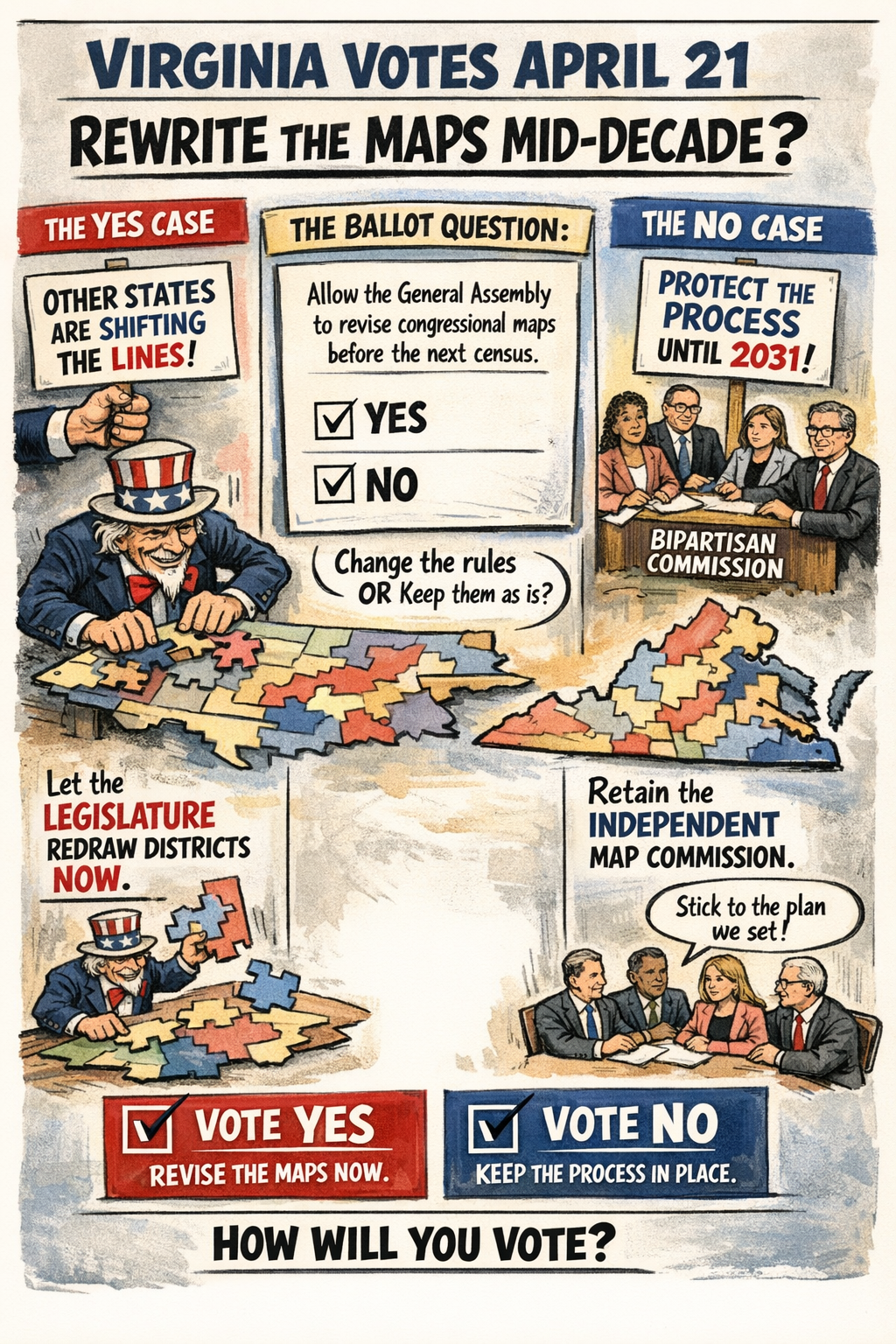
Virginia votes April 21 on whether to let the legislature redraw congressional maps mid-decade. The ballot language sounds tidy. The actual question is whether you fight partisan gerrymandering by doing it back. I voted no.
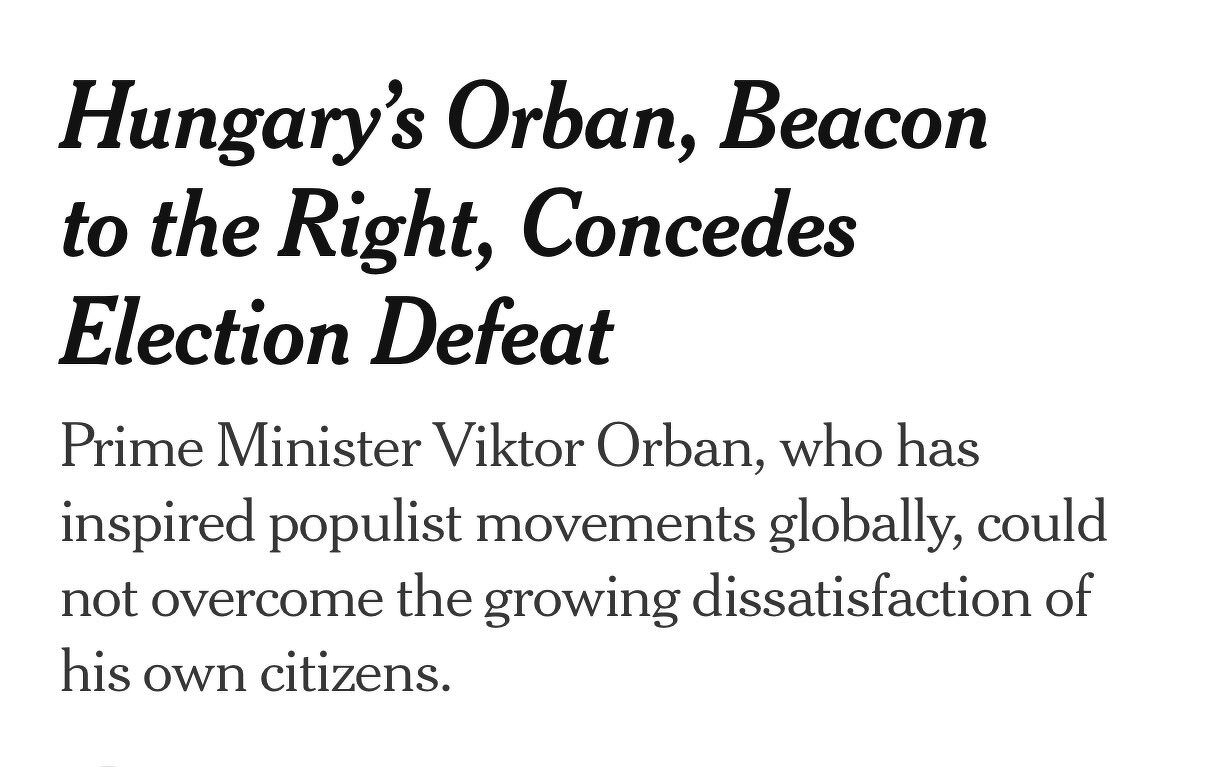
Painfully beautifully written and read. Lovely lilt.
Douglas Stuart reads his story “A Private View,” from the April 20, 2026, issue of the magazine. pca.st/episode/1…
You can always hack and adapt your tools to best work with your process. This is kludgy. I superglued the chopped top onto the shaft of the aluminum Bic.


I simply have always called this moral adaptation to local cultures. Seems simple & self-evident to me.
Today we talk about the book Three Rival Versions of Moral Enquiry by Alasdair Macintyre. pca.st/episode/4…
The Second Amendment doesn't grant you the right to bear arms. It prohibits the government from infringing on a right you already had. That's not a technicality—that's the entire point.
Here’s what the “your gun right is imaginary” crowd consistently gets wrong: they treat the Second Amendment as if it’s a permission slip. As if Congress sat down, invented a right out of nothing, and handed it to you. That’s not what the Bill of Rights is. That’s not what any of the first ten amendments are.
The Bill of Rights doesn’t grant rights. It restrains government from infringing on rights that already exist—rights that the founders understood to be natural, pre-political, given by God or inherent in human nature. The First Amendment doesn’t give you free speech. The Fourth doesn’t give you privacy. And the Second doesn’t give you the right to keep and bear arms.
What it does is tell the government: hands off.
The militia clause—“a well regulated Militia, being necessary to the security of a free State”—is prefatory. It provides context and rationale. It does not condition the right. The operative clause is what follows: the right of the people to keep and bear Arms, shall not be infringed.
That’s the command. That’s the prohibition. The comma between those clauses has been doing a lot of heavy lifting for people who want to read a limitation that isn’t there.
I’m a gun owner. I don’t carry because the government said I could. I carry because the right to defend myself and my family is mine by nature, and the Second Amendment exists specifically to stop the government from touching it.
You can disagree with that philosophy. But don’t tell me the right is imaginary. The infringement is the crime—not the ownership.
The Second Amendment doesn’t grant you the right to bear arms. It prohibits the government from infringing on a right you already had. That’s not a technicality—that’s the entire point. davisvanguard.org/2026/04/s…
Lena Dunham Is Still Trying to Figure Out Why People Hated Her So Much pca.st/episode/7…
Announcer pronounced omnipotence as omni-potence. What do you think about that?
NPR News: 04-11-2026 3PM EDT pca.st/episode/e…
I love paranoid hyperbole. As if Liberty and Freedom weren’t equally compromised during COVID and under Biden as well. And under Obama. That’s exactly why the kaiju Donald J Trump rose from the ocean. It’s a “freedom from” versus “freedom to” dichotomy.