
A student called Ted Cruz a racist and his 5 minutes long response silenced her and her entire audience. youtube.com/watch
Fascinating…
Confessions of a Former Climate Activist youtube.com/watch
The lady doth protest too much!
NPR investigative reporter Tom Dreisbach talks about how and why he led an ambitious team effort to preserve a comprehensive record of the events of January 6th, 2021. pca.st/episode/7…
Fascinating insight and reporting
The 24th of February will be the fourth anniversary of Russia’s full-scale invasion of Ukraine. pca.st/episode/5…
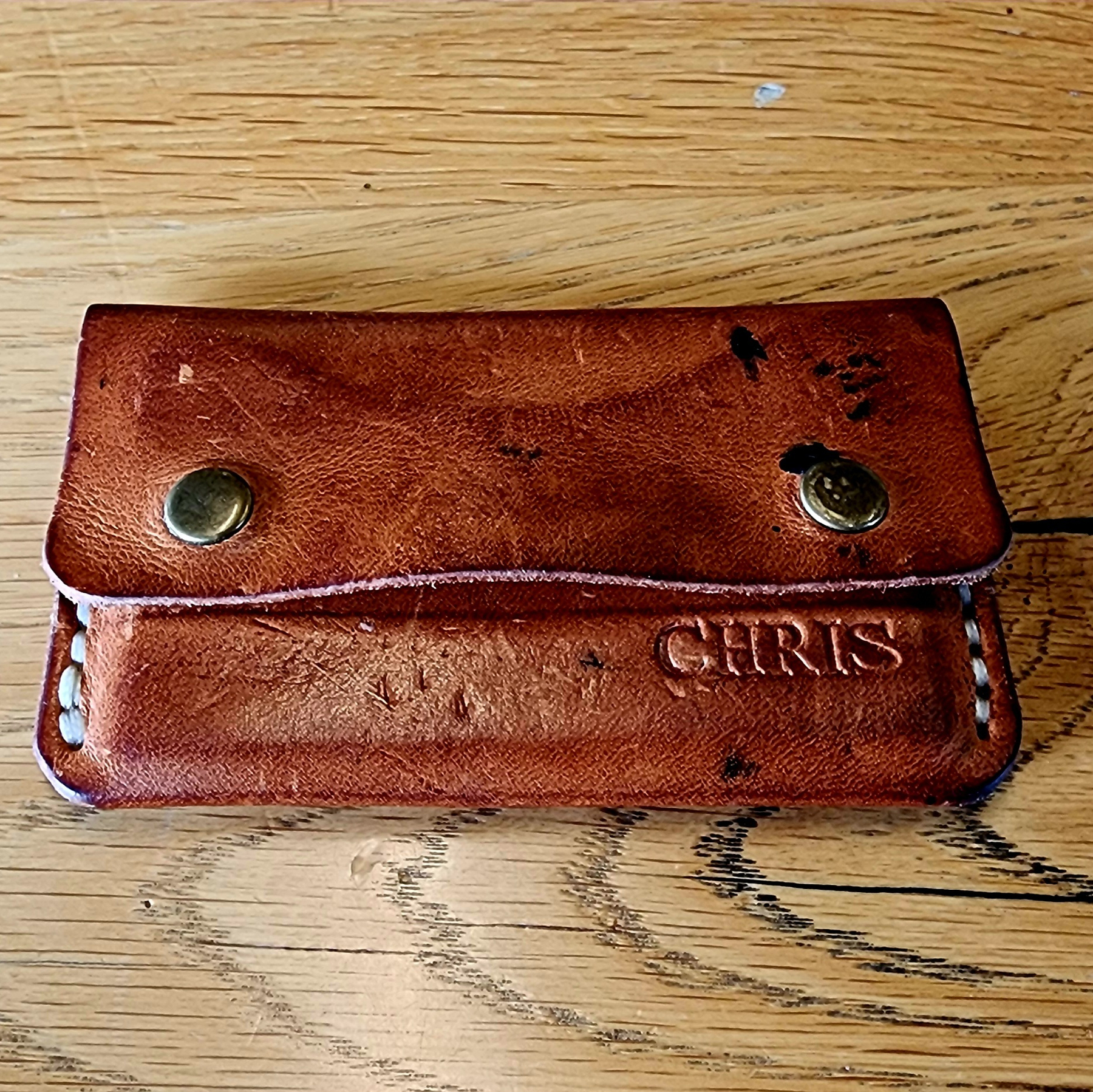
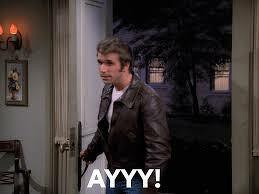
Working from Penrose Starbucks. When they called my name, Chris A, I walked up to the counter and said, “it’s not Chris A, it’s Chris Ayyyy” Didn’t land. I am almost 56 and I have honestly never made that joke before. Oh well, shot my shot.
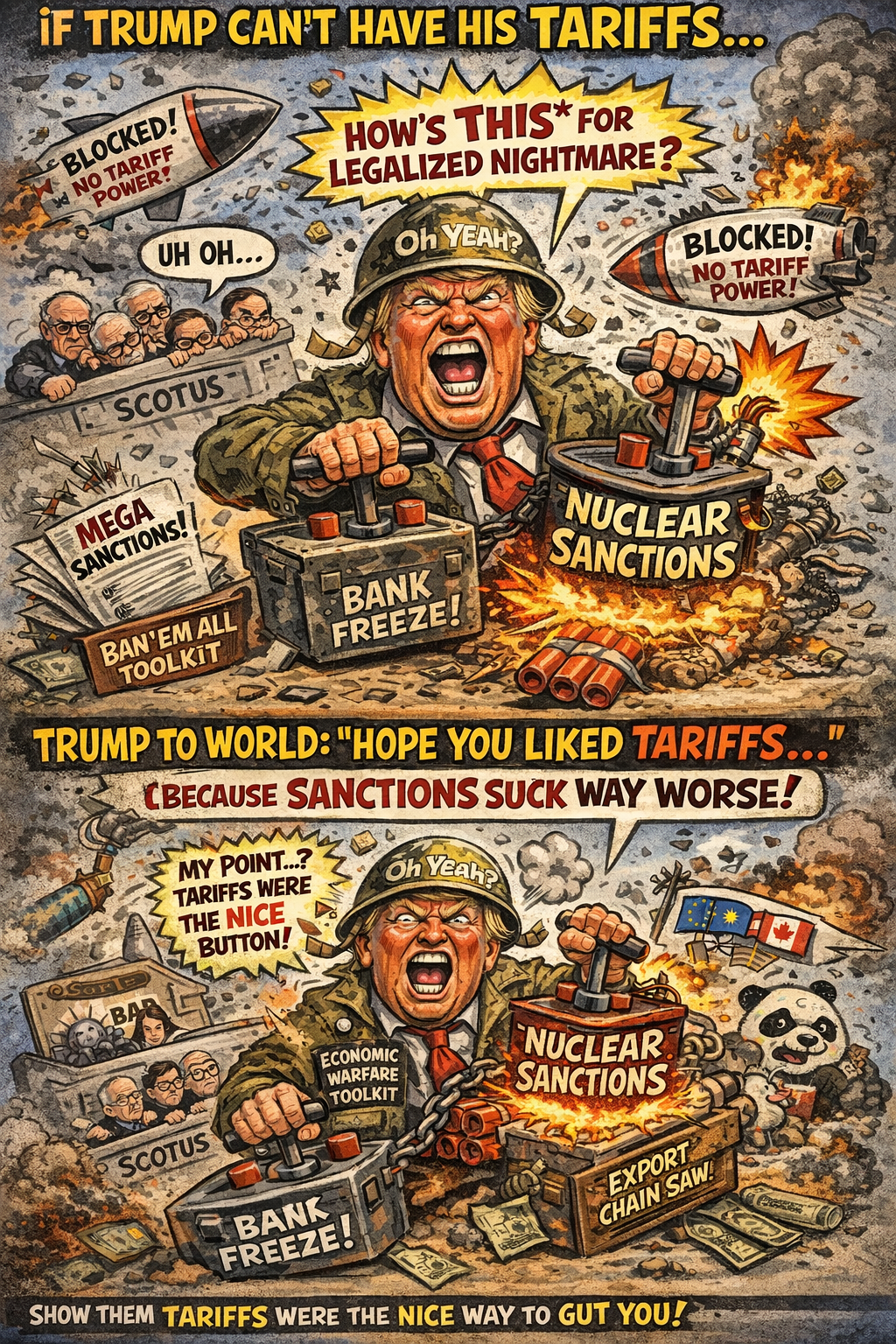
My theory? Out of spite, Trump will use his weapons of war tool instead in escalation and use warfare "sanctions" tools to show them that tarriffs were totally better than waging economic war on quasi allies
My theory is not that Trump quietly looks for a legal substitute for tariffs. My theory is that he takes the ruling personally, treats it like humiliation, and responds with an escalation designed to make the Court, Congress, and U.S. trading partners regret stopping him.
In other words, not a workaround. A punishment.
The move I expect is an “oh yeah?” move: if you say he cannot use tariffs the way he wants, he pivots to tools that are more explicitly economic warfare, especially sanctions-style authorities and other national-security powers that are still legal. The point is not just to keep pressure on trade. The point is to show that tariffs were actually the gentler option.
That is the whole spite logic.
Tariffs are ugly, but they are still a market tool. They raise costs. They distort trade. But they still leave a lane open for buying, selling, and adapting. Sanctions and other wartime-style economic tools can be much harsher. They can freeze, block, prohibit, blacklist, and force companies and banks to choose sides. That is a different vibe entirely. That is not “pay more.” That is “you are cut off.”
So my prediction is that Trump, feeling persecuted and challenged, goes theatrical with it. He does not just replace the tariff mechanism. He upgrades the severity to make a point:
“You said I could not use tariffs. Fine. Here is something far more aggressive, and this one is legal.”
That is why I think the emotional engine matters more than the legal details. If he frames the ruling as a technical correction, he adjusts. If he frames it as betrayal, he escalates. And his political style has always been to turn limits into a stage. If one lever is removed, he reaches for a louder lever. If the Court closes one door, he kicks open a side door and makes sure everyone hears it.
So the prediction is not just “different policy tool.” It is a message strategy wrapped around a legal pivot. Use sanctions or sanctions-like powers against quasi-allies, increase the pain, then tell the public and business community:
“You should have let me do tariffs. That was the moderate version.”
That is the prediction. Not policy refinement. Not constitutional humility. Spite escalation through a more coercive legal lane.
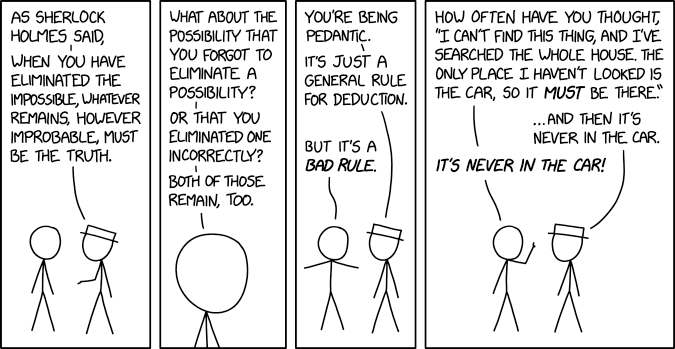
Only healthy cultures have the bandwidth to complain
Kvetching is usually a sign that the basics are handled. The lights are on. Food is available. The streets mostly work. Institutions are imperfect but functional enough to be criticized. People feel safe enough to demand better. In that sense, complaint is not always decadence. It is often a symptom of stability.
A society in real collapse does not spend all day arguing about tone, process, fairness, or whether a system feels alienating. People in collapse improvise, endure, flee, barter, hide, repair, and survive. They are busy with first-order problems. Complaint, especially organized public complaint, usually shows that a culture has enough surplus to move beyond mere survival and start fighting over quality, standards, and the last 20%.
That is why constant criticism can be annoying and still be healthy. It often means people expect things to work and believe they can be improved. It means they have not given up. It means there is enough social trust left to assume that speaking up might matter. Even protest, in many cases, depends on a functioning system beneath it. You need roads to march on, platforms to post on, and enough institutional restraint to believe dissent will not automatically get you disappeared.
The danger is not the complaining itself. The danger starts when a culture loses perspective. When discomfort gets confused with catastrophe. When inconvenience gets framed as oppression. When every flaw becomes proof that the whole civilization is illegitimate. That is where healthy criticism can curdle into moral panic.
And that is the trap. The last 20% is the hardest part. It is one thing to build order, abundance, and relative peace. It is another thing entirely to perfect them. A stable society can improve for generations and still never become utopia. If people forget that, they start demanding impossible outcomes at impossible speed. Frustration rises. Patience collapses. Then the temptation arrives: force, purity, control, a strong hand to “fix it.”
So yes, only healthy cultures complain, and that is often a good sign. It means the culture is alive enough to argue with itself. The task is not to silence the kvetching. The task is to keep perspective while doing it, so reform stays reform and does not mutate into hysteria, purity politics, or authoritarianism.

Only healthy cultures complain
Only spoiled, rich, entitled communities spend all day kvetching. Once a society gets the big things mostly right, like lights on, shelves full, streets functioning, people start treating the remaining 20% as proof of collapse. That final stretch toward “utopia” is brutally hard, maybe impossible, and the frustration turns ugly fast. Perspective disappears, grievance becomes identity, and people start inviting authoritarians in to “fix” what comfort made them unable to tolerate.

Billionaires in America are gods.
Billionaires in America are gods.
Not metaphors. Not exaggerations. Gods. They do not need to be liked. They need to be treated like gods.
Scrape before them. Offer sacrifice. Bring tithe. Speak their names with weight. Adoration does not require affection. Fear is acceptable. Awe is acceptable. Deference is acceptable. What is not acceptable, in a system like this, is casual contempt.
Because when gods are treated casually, they leave.
This has been true since the robber barons. Rockefeller, Carnegie, Vanderbilt. We did not approach them like neighbors. We carved their names into stone. We built temples in their honor and called them libraries. We understood instinctively that scale demands ceremony.
Over the last thirty years, federal abundance blurred the theology. Money flowed so widely that people forgot the hierarchy. Rain felt automatic. Gratitude thinned. Entitlement thickened. The gods receded behind bureaucracy and people started speaking about them like they were just men with large bank accounts.
They are not just men.
They are concentrated power at mythic scale.
Trump embodies this cleanly. Praise him and doors open. Cross him and things close. Agencies shrink. Funding evaporates. Access disappears. It isn’t subtle. It isn’t delicate. It is godlike behavior in a modern form.
The broader billionaire class operates the same way. They expect acknowledgment for the crops. They expect tithe back. They expect constant reinforcement that the rain came from them. Not from “the system.” Not from “the public.” From them. When that reinforcement stops, they withdraw.
And when they withdraw, it feels like drought.
The mistake isn’t recognizing inequality. The mistake is forgetting the structure. If survival depends on liquidity, and liquidity flows from personalities at mythic scale, then ritual becomes structural. Not because it is morally beautiful. Because it is functionally effective.
You don’t negotiate with gods as if they are peers.
You placate them. You honor them. You fear them. You maintain the relationship. Otherwise, the temples move. The rain follows.
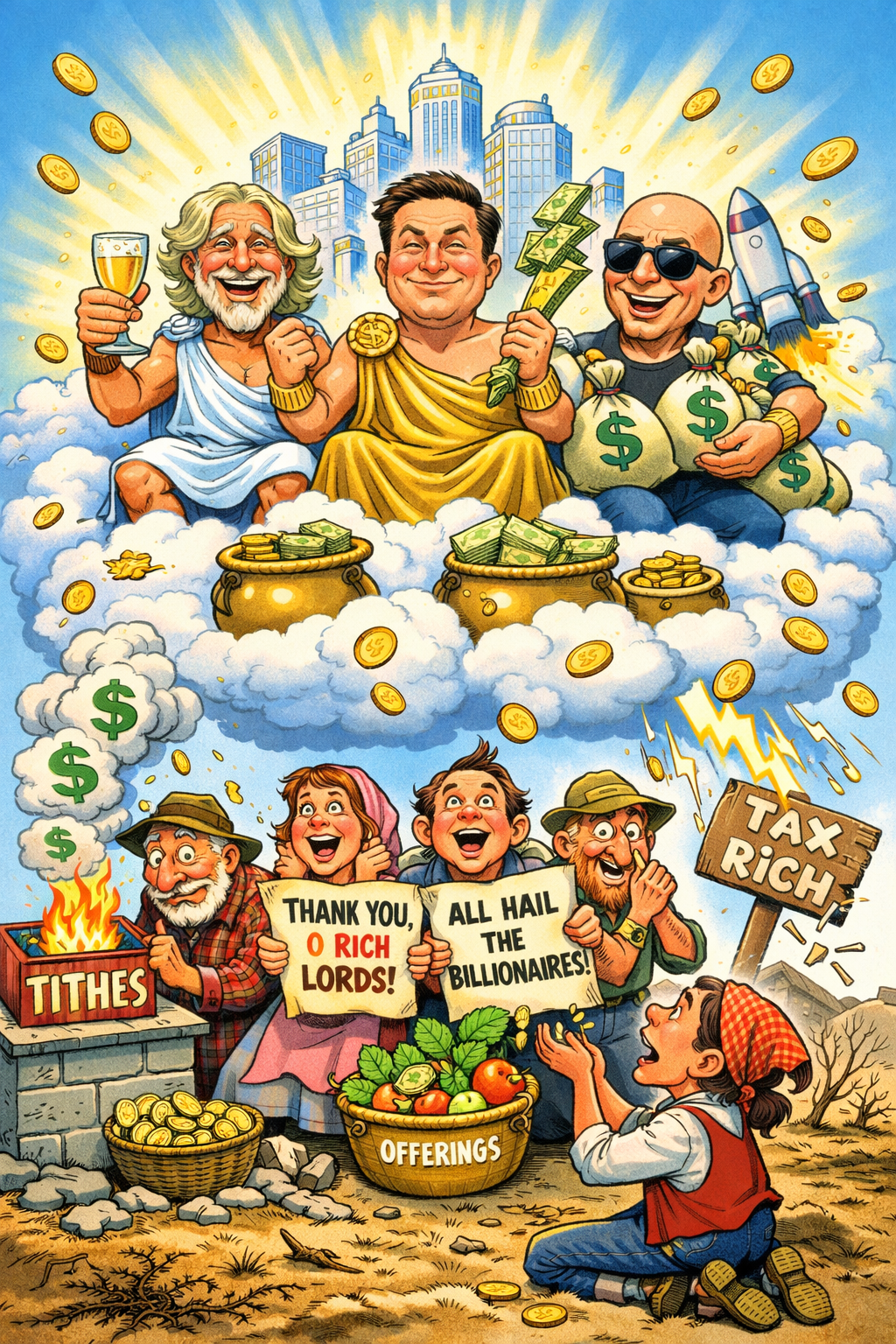
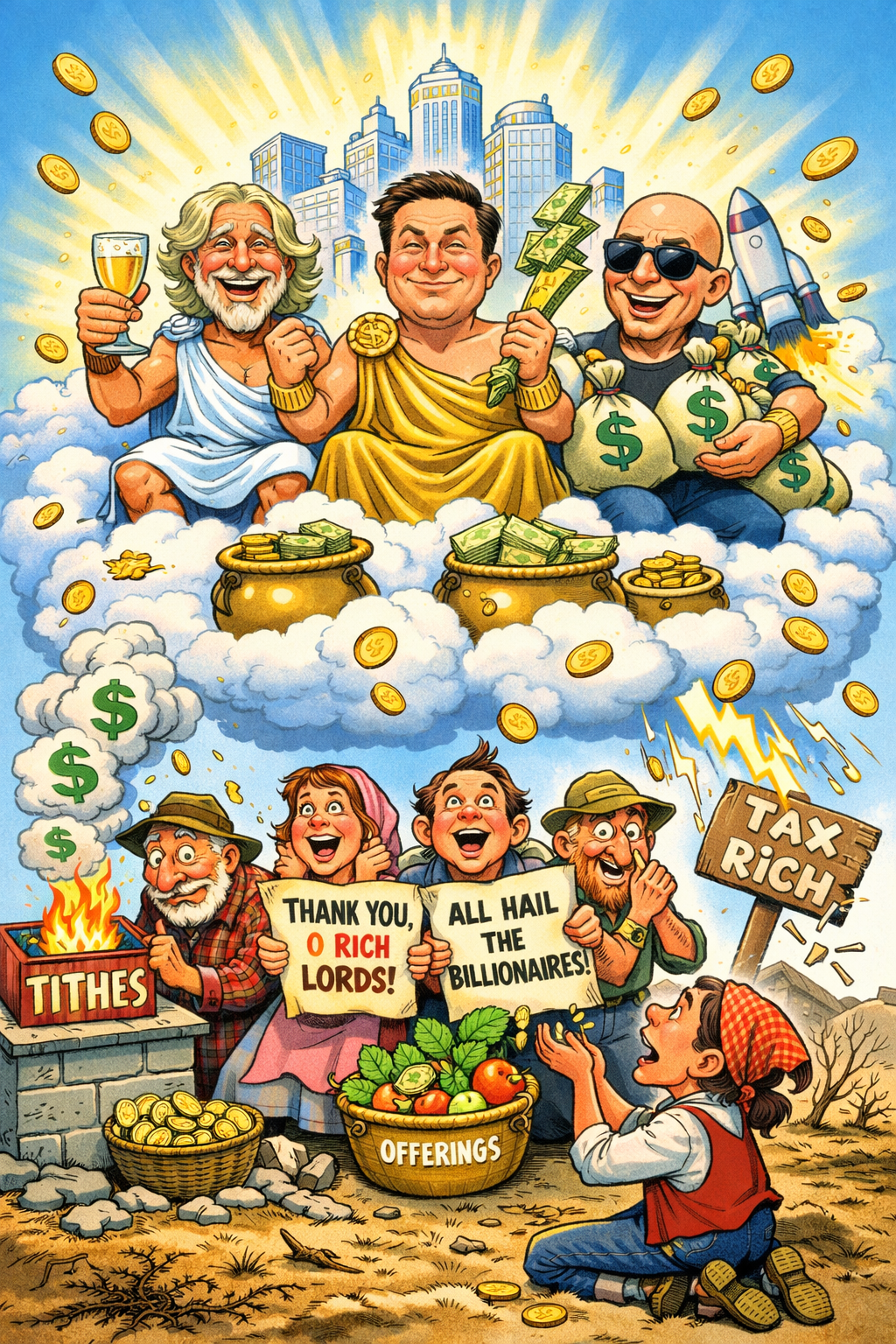
For years the federal faucet ran like eternal rain, and nobody said thank you. Now the faucet sputters, DOGE storms the temple, and suddenly everyone’s shocked the gods are temperamental. Jealous gods expect gratitude. Skip the hymn, lose the harvest.
Uck Fice
Cult Of The CryBullies & Why People Hate “The Left” youtube.com/watch
Turns out the number one e-commerce conversion issue is not shopping cart glitches - it’s a lack of brand trust! And that’s a PR problem www.linkedin.com/pulse/con…
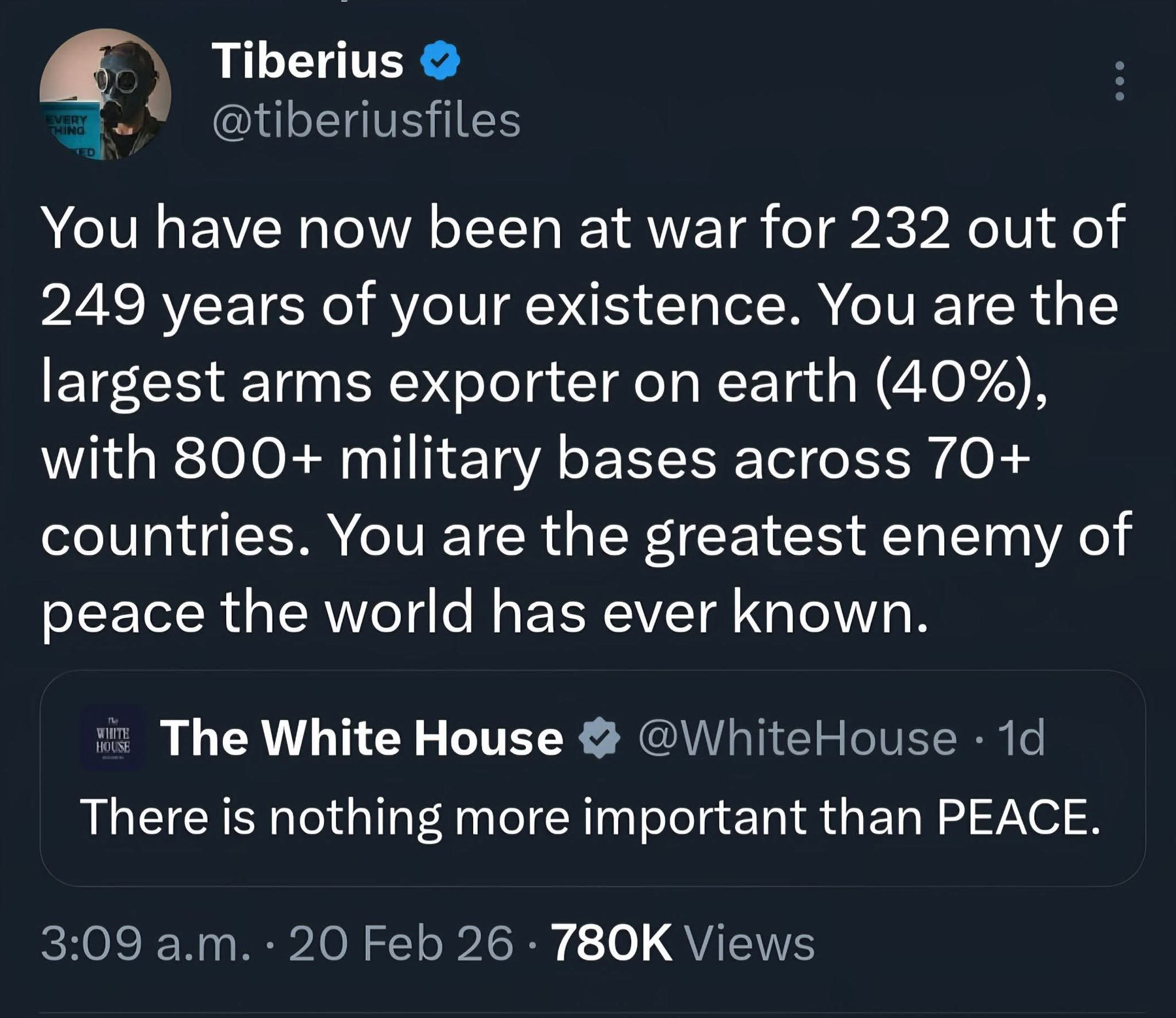
A favorite book, audiobook, and TV series—and through the eyes of Feral Historian: chef’s kiss!
American Gods : Land and Egregores youtube.com/watch
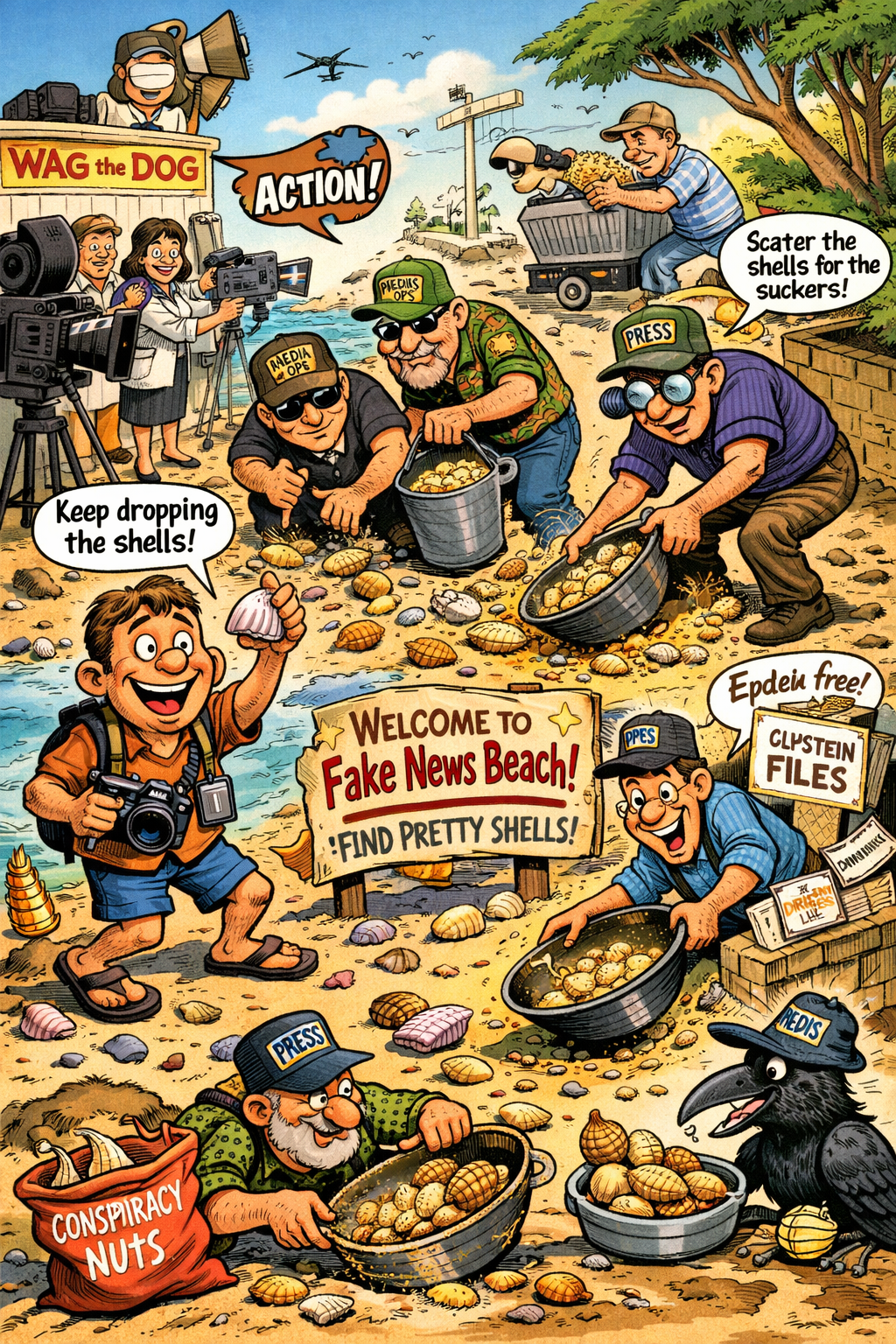
Finding Placed Shells on the Beach
The modern information trick isn’t staging events outright. It’s staging discovery.
We’re encouraged to believe that if something reached our ears, we merely overheard it. That it floated organically into our awareness. But in an age of algorithms, editorial triage, coordinated messaging, and emotional incentives, if something reached you, someone ensured it did.
Wag the Dog was the movie that permanently altered my innocence. Once you internalize that spectacle can be engineered and narratives timed, you stop consuming headlines passively. You start scanning for the lighting rig.
Consider the asymmetry. People are hacked to death with machetes in parts of Africa every day and it barely dents American consciousness. Then another story becomes wall-to-wall coverage, complete with moral pageantry and global amplification. The suffering is real. But the selection, framing, and repetition are not neutral.
Think of the testimony about incubator babies during the first Gulf War. Think of the Epstein files, where the act of “panning for gold” becomes part of the persuasion. We’re given peanuts in the shell because cracking them ourselves makes the snack feel earned. ChatGPT once told me that crows prefer peanuts in the shell because the effort is half the joy. The hunt validates the reward.
News now works the same way. We’re told we wandered onto a beach and discovered beautiful shells. But maybe the hotel scattered them at sunrise so guests could feel lucky. The event may be real. The beach is real. But the arrangement of attention is curated.
My skepticism isn’t that suffering doesn’t exist. It’s that amplification isn’t accidental. If it reached me, it wasn’t random drift. It passed through gates, incentives, and hands.
The real trick isn’t fabrication. It’s convincing us that discovery was spontaneous.
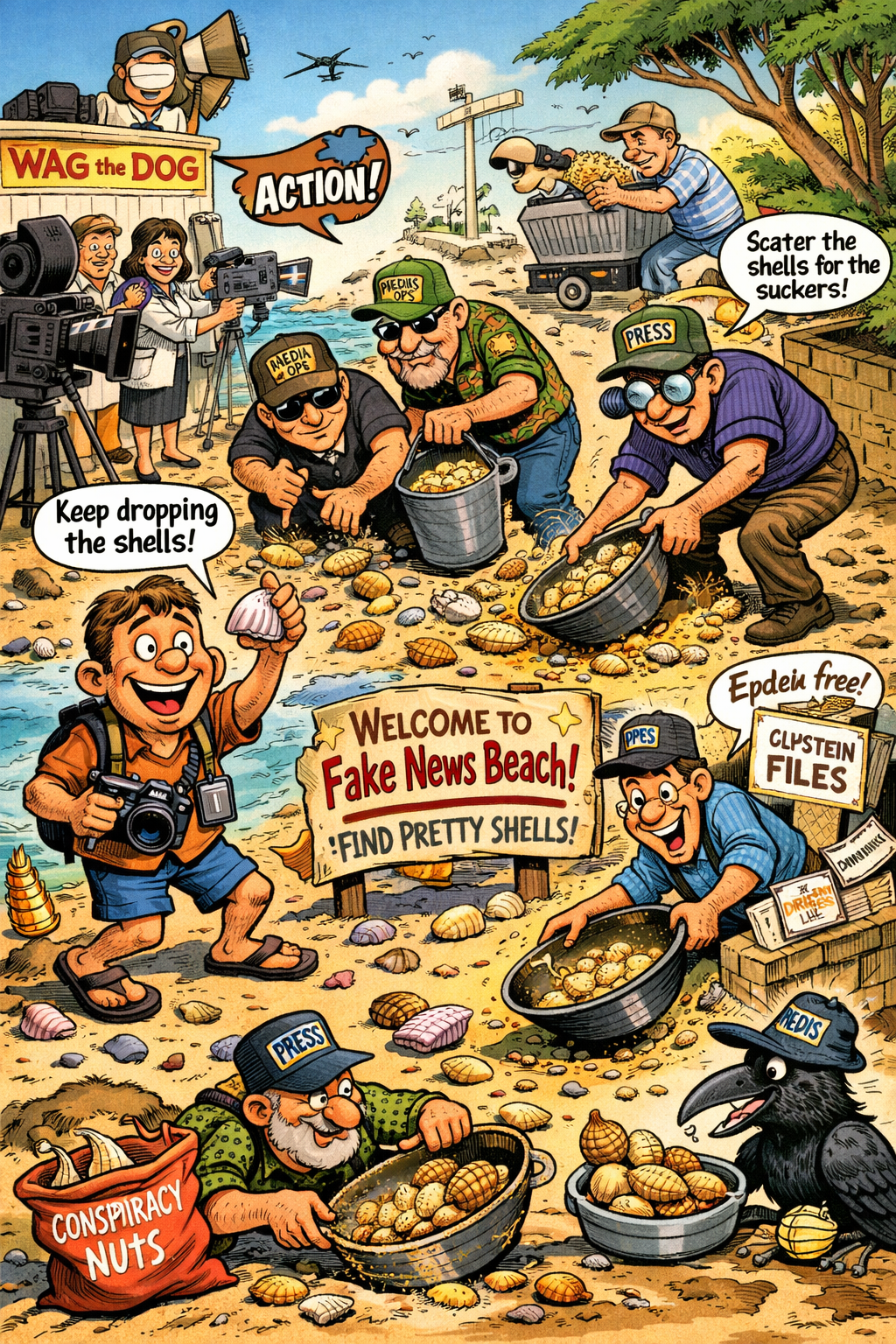
The modern trick isn’t staging events. It’s staging discovery. If news reached you, it was sent. Wag the Dog broke my innocence. Machetes in Africa barely register, but other stories get floodlights. We’re told we found shells on the beach, not that someone placed them there overnight.
What a smart conversation on the very volatile and polarizing subject pca.st/episode/3…