
In 2020 Republicans said Biden’s win was stolen. In 2024 Democrats say Musk, algorithms, or mysterious irregularities must explain Trump. If both sides think the other side’s win is illegitimate, that probably means the system is working. A real contest leaves the loser furious. Chef’s kiss.

Until this Lent, I had never heard the Litany of Humility
It appeared as the prayer of the day on the very first day of the Lenten season, and it honestly caught me by surprise. The words are disarmingly direct. Line after line asks to be freed from the desire to be praised, admired, preferred, consulted, or even noticed. Then it goes even further and asks for the grace to genuinely accept the opposite: that others might be praised while you go unnoticed, that others might be preferred, that you might decrease while someone else increases.
The first time I read it, I just sat there for a minute.
Since then I’ve been going back to it once a week, slowly, usually alongside the Serenity Prayer. Not as some dramatic spiritual exercise, just as a quiet check-in. A kind of recalibration.
What makes it feel especially meaningful right now is the environment we’re all living in. The modern information stream is basically a nonstop contest for attention, outrage, loyalty, and tribal identity. Every day there’s another narrative trying to recruit you, another argument demanding you prove you’re on the right side, another chorus telling you who to blame or despise.
The Litany of Humility quietly cuts through all of that.
It reminds me that the real struggle isn’t out there nearly as much as it’s inside the human ego. The desire to be admired. The desire to win arguments. The desire to be seen, validated, or proven right.
Pairing it with the Serenity Prayer has been surprisingly stabilizing. One prayer helps let go of the illusion that I can control the chaos of the world. The other gently challenges the ego’s constant demand to be important inside that chaos.
Taken together, they feel less like religious performance and more like maintenance for the soul. A weekly reset.
Not because I’m especially humble. Honestly, probably the opposite. But because they remind me what direction I’m supposed to be walking.
In a culture that constantly inflames pride, anger, and tribal loyalty, the aspiration becomes something much simpler: a little less ego, a little more patience, a little more charity.
Just trying to keep pointed toward becoming the kind of person I hope to be.

I had never heard the Litany of Humility before this Lent. It showed up as the opening prayer on the first day, and it stopped me in my tracks. Since then I’ve been revisiting it once a week with the Serenity Prayer. In a noisy world, it’s become a quiet way to reset my compass.

Excellent “fashionable body dysmorphia” historical primer.
Hollywood beauty standards have always shifted — but the speed of the change lately feels different youtube.com/watch
Apply for some credit cards and maybe I’ll get some money i.capitalone.com/JYwx3xOv7
Whoever humbles himself will be exalted
One thing the Lenten readings keep circling back to is pride. Not the cartoon version of pride that shows up as obvious arrogance, but the quieter form that sits underneath so many human problems. According to the tradition, the first sin in Eden wasn’t violence or cruelty. It was the belief that we could decide what is good and evil for ourselves. It was the temptation to step into God’s place.
That same pattern shows up again and again in the Gospel passages we hear during Lent. The disciples are already thinking in terms of rank, position, proximity to power. Who gets to sit at the right hand? Who gets the place of honor? It’s the most human instinct in the world. We want to be close to the throne.
And Christ calmly flips the entire idea over. “The rulers of the Gentiles lord it over them… but it shall not be so among you.”
In other words, the normal operating system of human hierarchy is not the one he’s installing.
Greatness, in the kingdom he describes, looks almost inverted. The one who wants to be first becomes the servant. The one who wants to lead becomes the one who carries burdens. Authority is not something to display, but something to spend on behalf of others.
That theme echoes in the other readings too. Don’t perform holiness for applause. Don’t judge so quickly. Reconcile before you worship. Love even your enemies. Measure generously, because the same measure comes back to you.
Taken together, it paints a picture of Christ that is easy to forget. He isn’t a warlord, a crusader, or a mythic king in armor. He moves through the Gospels almost like a quiet countercurrent to human pride. Wherever people try to climb higher, he points lower. Wherever people try to secure honor, he talks about service.
And Lent becomes a kind of mirror. Not a finger pointed at other people’s hypocrisy, but a small examination of our own reflex to climb, to judge, to be right, to be admired. The strange promise of the Gospel is that letting go of that climb isn’t humiliation. It’s freedom.
“Whoever humbles himself will be exalted.”
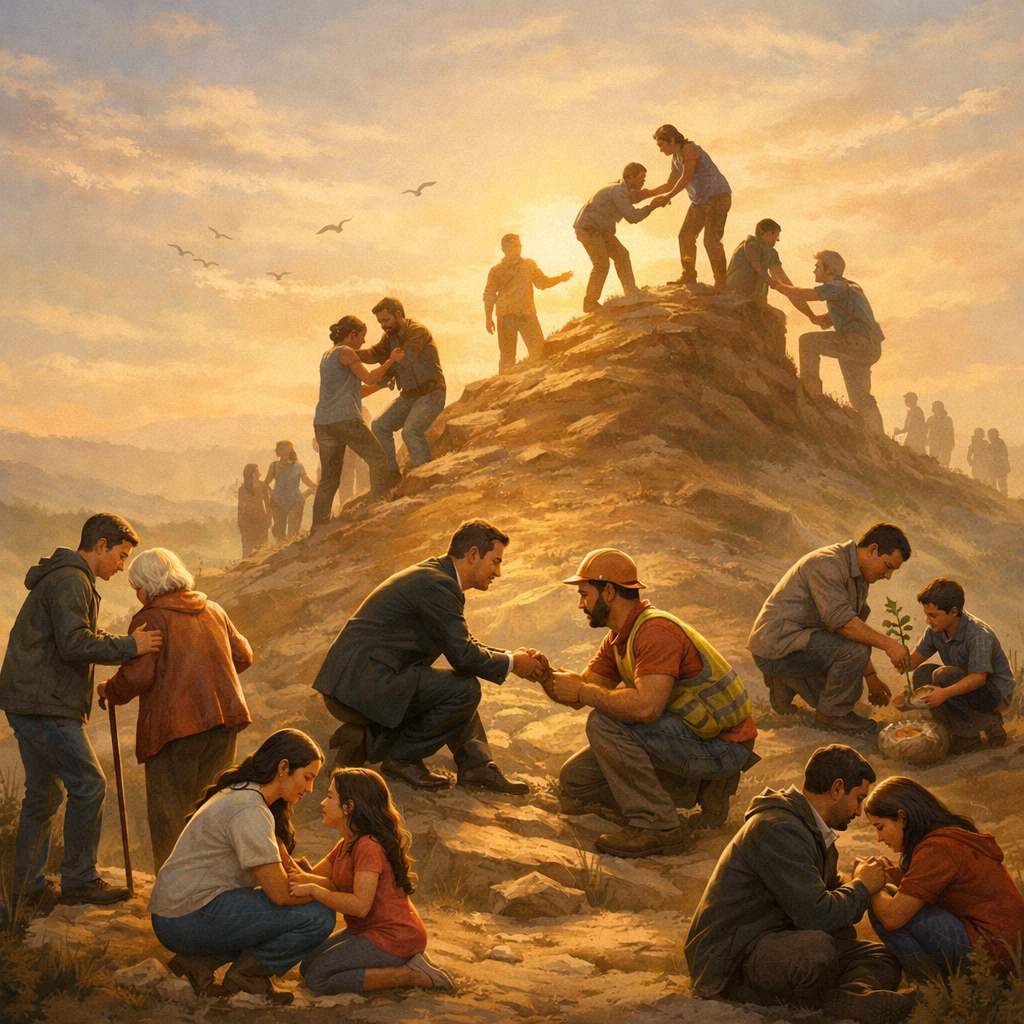
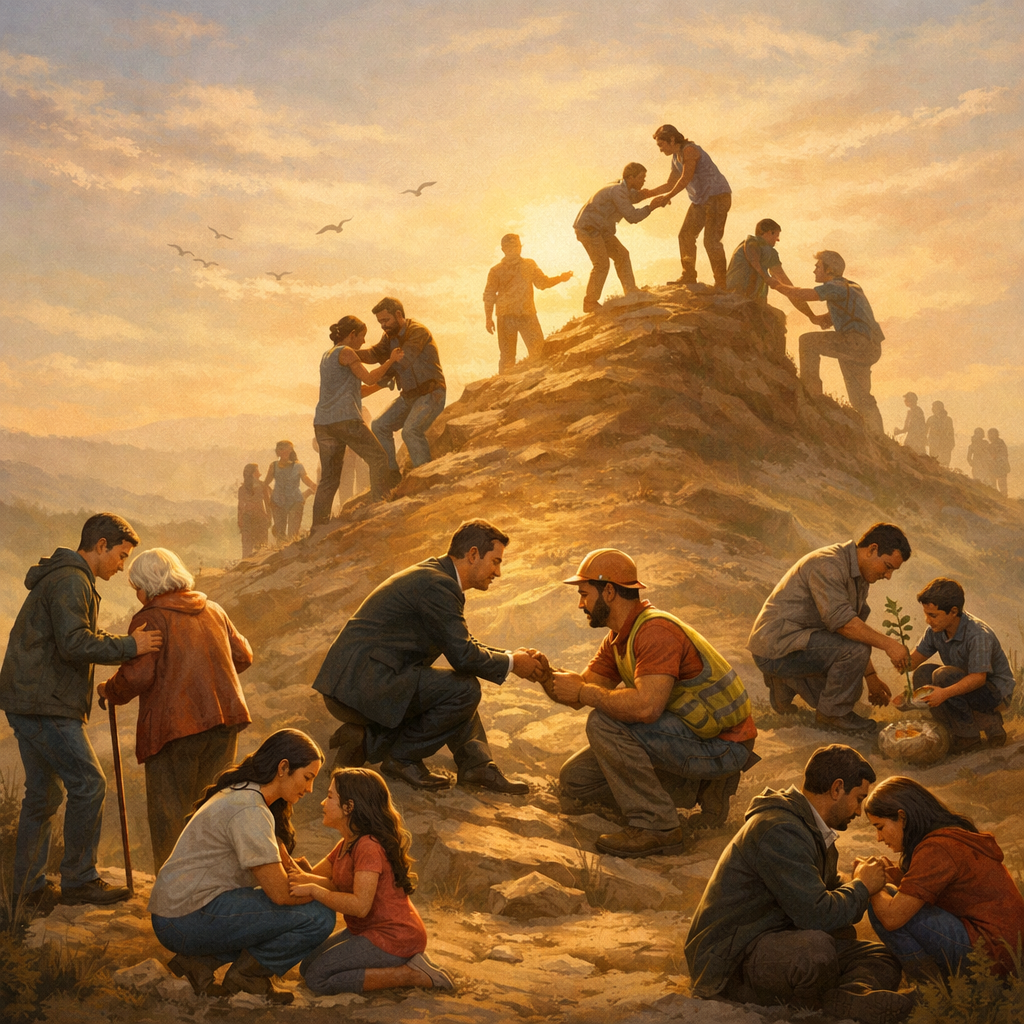
One thing the Lenten readings keep circling back to is pride. The first sin in Eden wasn’t violence or cruelty. It was the quiet belief that we knew better than God. Christ answers that impulse not with power but with humility, service, and mercy. The path upward, strangely, runs downward.
Bridget Phetasy breaks down the weekend’s military operations and the bizarre explosion of AI-generated meme warfare that followed. youtube.com/watch

America Does Not Go Abroad in Search of Monsters to Destroy
I wrote this on February 14, 2005, but it’s as true now as it’s ever been.
I want to believe! “Studying UFOs Changes You!” - Diana Pasulka youtube.com/watch
Building Guns or Handloads?
I’ve never been the person people praise for beautiful prose or a signature literary voice. That’s not my claim to fame, and it never has been.
What people actually engage with when they engage with me is the thinking: analysis, pattern recognition, connecting incentives to outcomes, and making predictions about where something is headed. Sometimes those calls are wrong. Sometimes they’re uncomfortably right. Either way, that’s the lane I’m in.
So I don’t treat writing as a sacred artifact or an identity test. I treat it as a delivery system. The goal isn’t to perform artistry for its own sake. The goal is to get the payload across: the argument, the model, the forecast, the point. If the writing is muddy, the idea arrives damaged. If the writing is clean, the idea can be evaluated on its merits.
This isn’t an either-or. I want both: stronger thinking and cleaner writing. I’ll keep improving the craft because clarity is respect. But my time goes first to the part where I actually have edge: the analysis and the call.
A metaphor that fits: I’m more interested in making good handloads than in forging a pistol from raw ore every time I want to shoot. The pistol matters, but the bullet is what hits the target. The writing is the vehicle. The thinking is the payload.

Refugees Don't Require Western Wetnursing
The West’s biggest noblesse oblige failure is confusing “refugee” with “helpless” and then patting itself on the back for a compassion cosplay that infantilizes people as fragile, needy babies or pathetic victims. And let’s be honest: there’s a special Western hubris layered on top of it, where we fancy ourselves some kind of noble wetnurse for the poor “foogees,” dispensing mercy like it’s a personal virtue project, a halo-polishing exercise, a morality play where we get to be the starring saints.
But displacement is not a vibe check. It’s a brutal filter. It doesn’t select for softness. It selects for survival.
If you made it out and made it here, you’re not a porcelain doll. You’re not a soft mascot. You’re not a morality prop. You are formidable. Adaptive. Hardened by pressure. You navigated chaos, scarcity, predation, bureaucracy, borders, and the simple physics of “don’t die today,” and you kept moving anyway.
So yeah: stop dismissing refugees as weak. The correct posture isn’t pity. It’s respect. Treat them like what they often are: concentrated capability forged under stress, people built from nerve, grit, brains, and sheer will. The sooner we drop the patronizing wetnurse fantasy, the sooner we’ll actually see what’s in front of us. Not weakness. Power that survived.
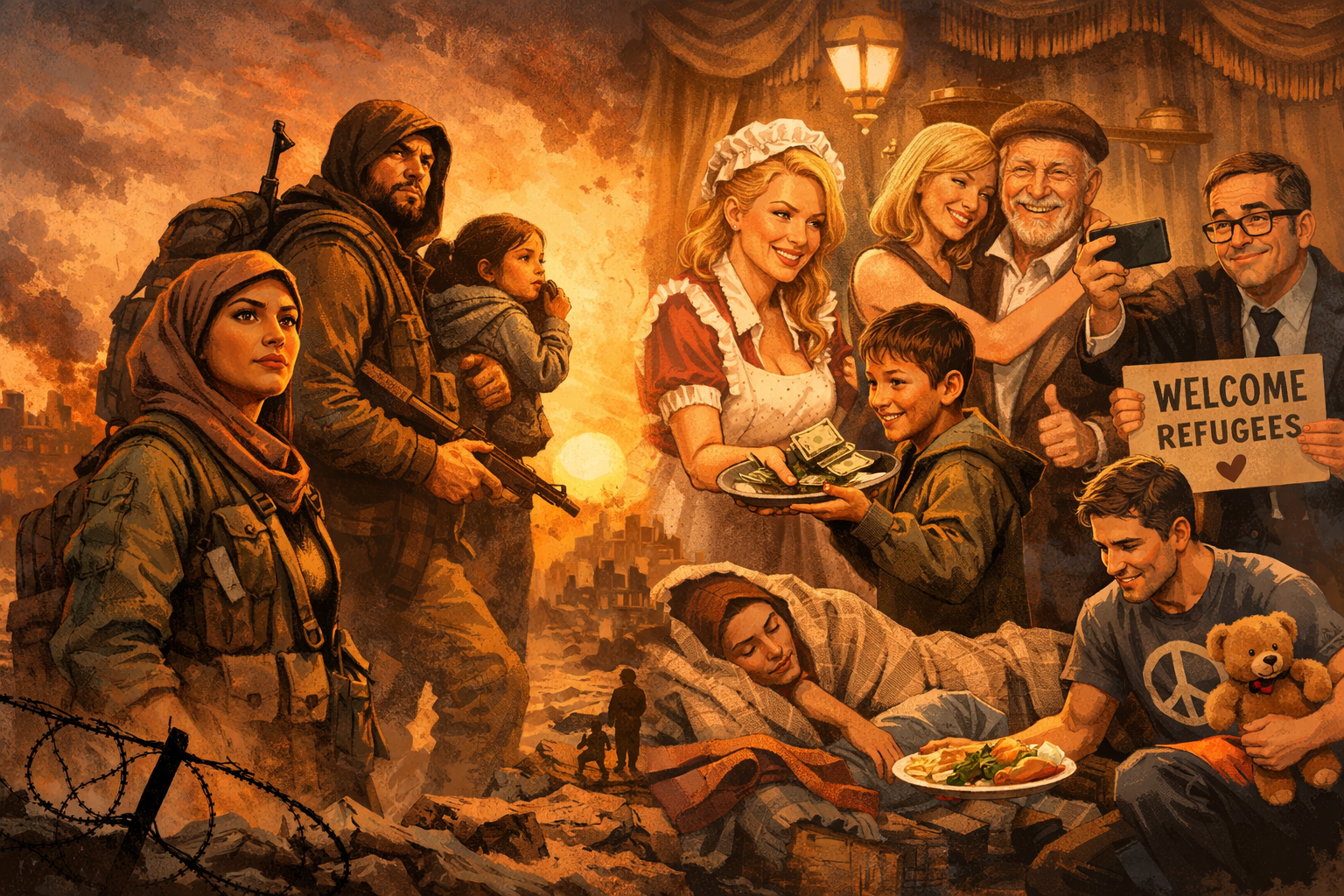
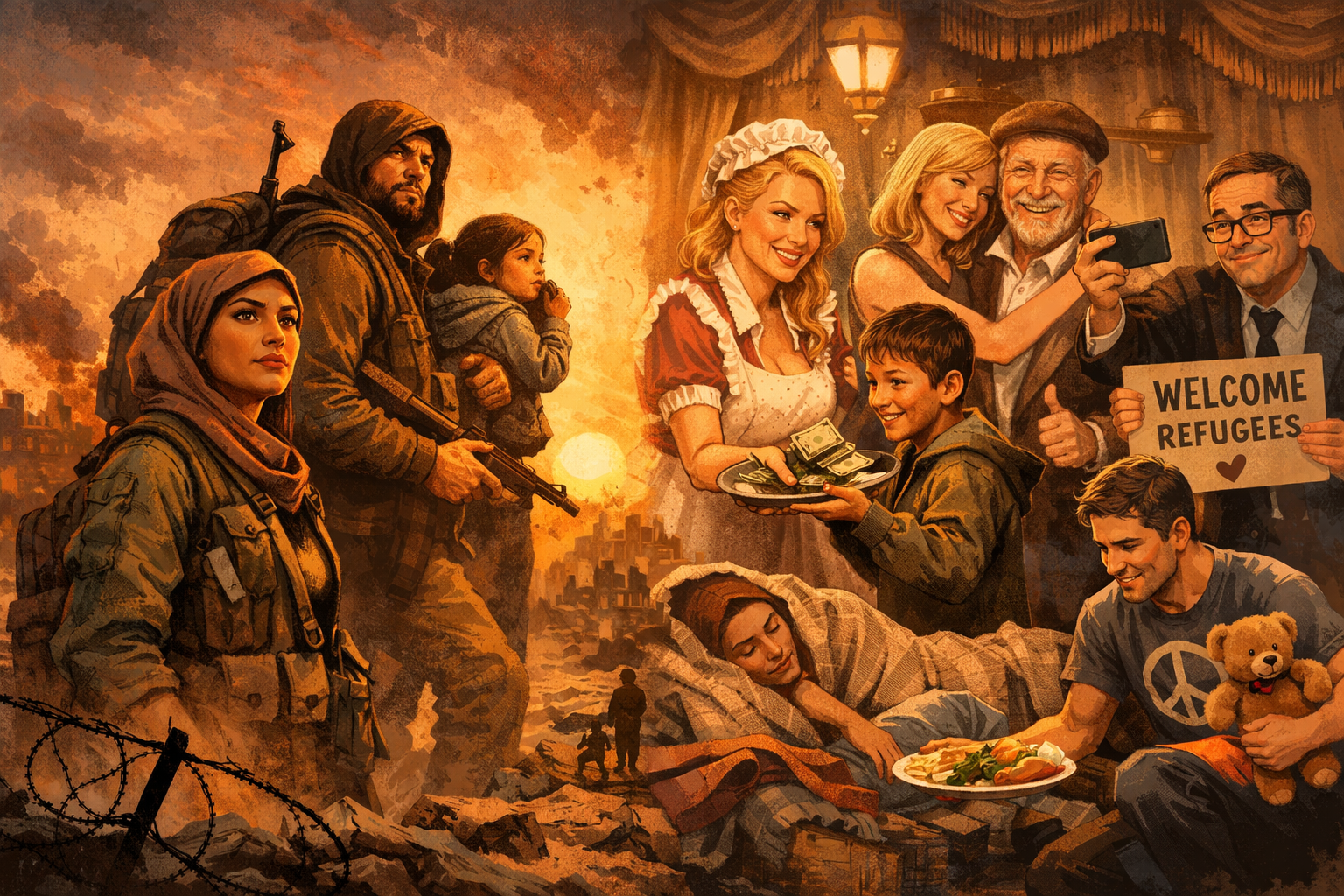
The West’s noblesse oblige failure is confusing “refugee” with “helpless” then doing compassion cosplay as the noble wetnurse for the poor “foogees.” Displacement is a brutal filter. If you made it out and made it here, you’re formidable, not a mascot.
I want to believe! “I Was Called In to Airlift a 20-Foot UFO ‘Egg’!" youtube.com/watch
Why AI answers are the new front page and what this means for your brand strategy www.linkedin.com/pulse/ai-…
Discover your Online Brand Visibility Score scorecard.meritusmedia.com/brand-vis…
Media Capture, Populism, and the NPR Trust Problem www.youtube.com/watch
The Ravenloft Dinner That Broke Everything Episode 27 28 29 www.youtube.com/watch
Trump runs on Spite and Diet Coke
Here’s the extension of my spite theory. When Trump tells reporters he “doesn’t care about polling,” I don’t hear a man liberated from public opinion. I hear a man narrowing the definition of “the people” to “the people who are loyal to me.” That’s a big difference.
Trump isn’t a doctrinal true believer in the way Clinton-era Democrats were true believers about policy, institutions, and public persuasion. He’s an opportunist who follows leverage, applause, and dominance. His deepest grievance is betrayal, especially betrayal from inside the tent.
Now you’ve got a visible schism: the “America First” flank treating him like he’s been captured (by Israel, by the security state, by the foreign-policy machine, whatever the accusation is). At the same time, the deportation industrial push that was supposed to be his domestic momentum engine has run into friction and optics. It got too real. The public didn’t react the way the pitch promised. The energy that was supposed to look like strength started to look like chaos, cruelty, or incompetence depending on the viewer.
So he does what he always does when the audience stops clapping: he changes stages. Foreign escalation is the ultimate stage change. It creates a “serious” frame, swallows the news cycle, and kicks off massive spending rhythms: munitions, replacements, logistics, contractor surge, reserve activation, intelligence churn, the whole national-security weather system. It also produces the kind of volatility that markets and insiders can surf, while letting him claim he’s acting decisively regardless of what polls say.
That “I don’t care” line is the tell. It’s not that he’s above public opinion. It’s that he’s willing to burn relationships, even with parts of his base, if they stop feeding him the only currency he respects: loyalty and deference. If his original lane no longer delivers that, he pivots hard to the lane that can.
Momentum over consent. Loyalty over popularity. Spite over stability.