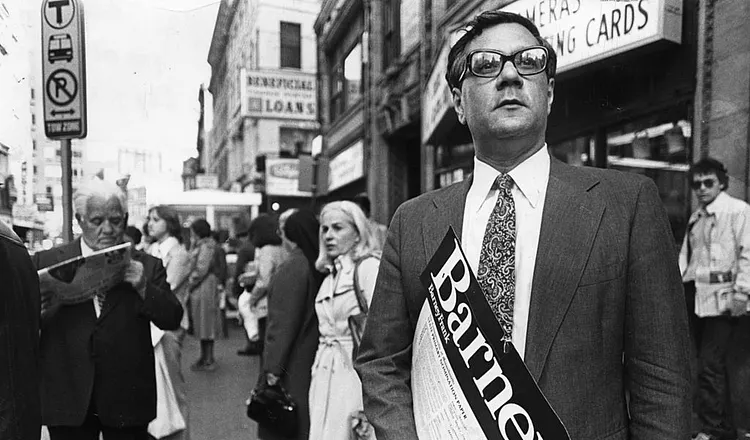
RIP Barney Frank, King and Queen of Washington, DC
Barney Frank died Tuesday at 86, at his home in Maine, with his husband Jim beside him. I didn’t know him. I want to be clear about that—I met him once, briefly, as an 18-year-old freshman at George Washington University in 1988, newly arrived in DC with a PoliSci major and a lot of hope about what this city might actually be.
He was everything I’d been told Washington wasn’t supposed to be. Warm without being performative. Accessible without being soft. Wickedly, almost carelessly smart—the kind of intelligence that doesn’t announce itself because it doesn’t need to. He was charming and generous and genuinely present in a way that powerful people in powerful cities rarely are, especially not with 18-year-olds who don’t vote in their district and can do nothing for them.
That encounter is almost 40 years old and I still remember the quality of it—the feeling that you were talking to someone who actually lived inside his own convictions, who didn’t need to manage his image in real time because the image and the man were the same thing.
His record speaks for itself: 32 years in Congress, Dodd-Frank, becoming the first member to voluntarily come out as gay in 1987, the first to marry a same-sex partner while serving. History-making by any measure. But the thing that stays with me is simpler than that. He made a young kid from Hawaii, sitting in a room in Washington DC, feel like he’d chosen the right city and the right thing to care about.
From hospice, weeks before he died, he told CNN he was trying to decide whether it was better to be an icon or an emoji—and that after 86 years, his heart was just wearing out. That’s the guy I met. Still that guy at the end.
Rest easy, Congressman.