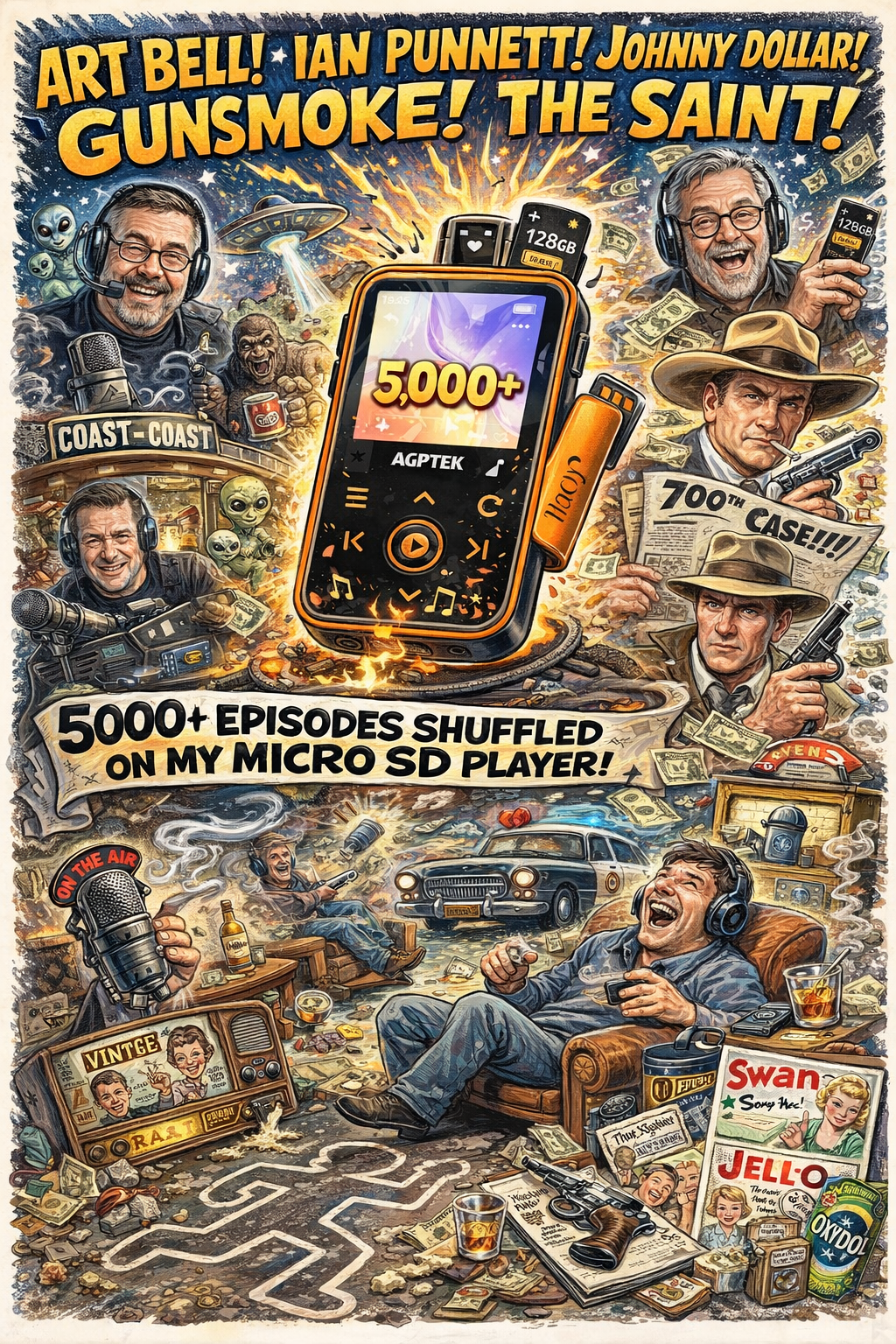
Want to understand America? Skip the history books. Dip directly into radio from the 20s through the 2000s
My micro SD player has 5,000+ episodes shuffled and cycling—Art Bell and Ian Punnett from Coast to Coast’s golden era, every Yours Truly Johnny Dollar, every Gunsmoke, The Saint, and whatever else I could pull from Archive.org. It spans the 1920s through the 2000s and it never stops.
I’ve spent more time inside American radio across eight decades than most media scholars, and I’m not a scholar. I’m just someone who figured out that dipping directly into the media of a specific moment tells you more about that moment than any history book written afterward. The history book tells you what happened. The radio show tells you what people were afraid of, what they were being sold, what their government needed them to believe, and how much persuasion it actually took to get there.
The ads are the best part. Swan soap. Oxydol. Jell-O. The host’s dog has a gimpy hip and this new kibble changed everything. It’s intimate, specific, and completely unashamed of being commercial—because the commerce and the content were never pretending to be separate things.
What strikes you listening back is how much respect those broadcasts had for ordinary Americans. Not reverence—respect. The assumption was that a regular person driving home or doing dishes was worth talking to seriously, worth entertaining properly, worth the craft. Nobody had decided yet that the audience was either a demographic to be flattered or a problem to be managed.
That shift—from audience as participant to audience as target—is traceable. You can hear it happening decade by decade if you have enough episodes shuffled and nowhere important to be at 3am.
Art Bell understood this better than almost anyone. So did Ian Punnett. I miss them both.