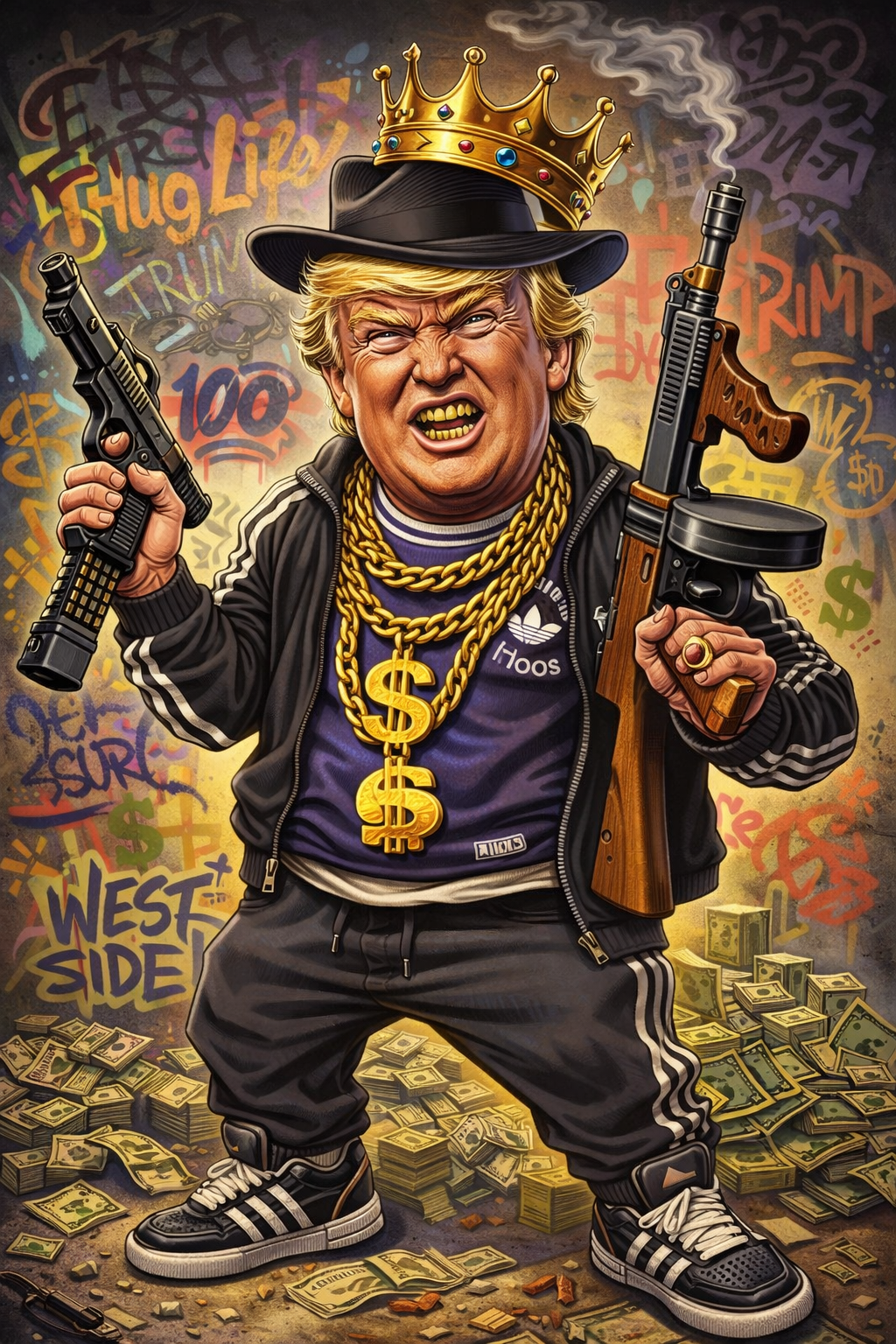
Stop calling Trump tough!
Calling Trump a “thug,” “king,” “gangster,” or even “fascist” is supposed to be disqualifying, but in practice it often does the opposite. Those words are loaded with moral judgment, but they’re also saturated with imagery of power. They evoke dominance, control, fearlessness, someone who acts instead of hesitates. In a political culture that still rewards perceived strength, that framing can backfire.
The mistake is assuming that moral condemnation automatically translates into political damage. It doesn’t. Voters don’t process language like a theology exam. They respond to signals. And the signal embedded in those labels isn’t just “bad,” it’s “powerful and unconstrained.” For supporters, that can be attractive. For opponents, it can even feel intimidating. Either way, it reinforces the idea that he’s a force, not a figure who can be dismissed.
Historically, candidates struggle when they’re perceived as weak, indecisive, or outmatched. When the narrative becomes “he’s not up to it,” that sticks. When the narrative becomes “he’s dangerous because he’s too strong,” it’s a double-edged message. You’re warning about him, but you’re also amplifying the very traits that make him compelling to his base.
If the goal is persuasion rather than signaling, the strategy has to change. Language that inflates a candidate’s sense of power tends to consolidate their support, not erode it. What actually undermines a political figure is making them look small, ineffective, erratic, or unserious—someone who can’t deliver, can’t control outcomes, or can’t hold things together.
So the real question isn’t whether the label is morally accurate. It’s whether it works. And framing someone in terms that read as strength, even negative strength, often doesn’t do what people think it does.