This War is Only About Stimulating the Economy
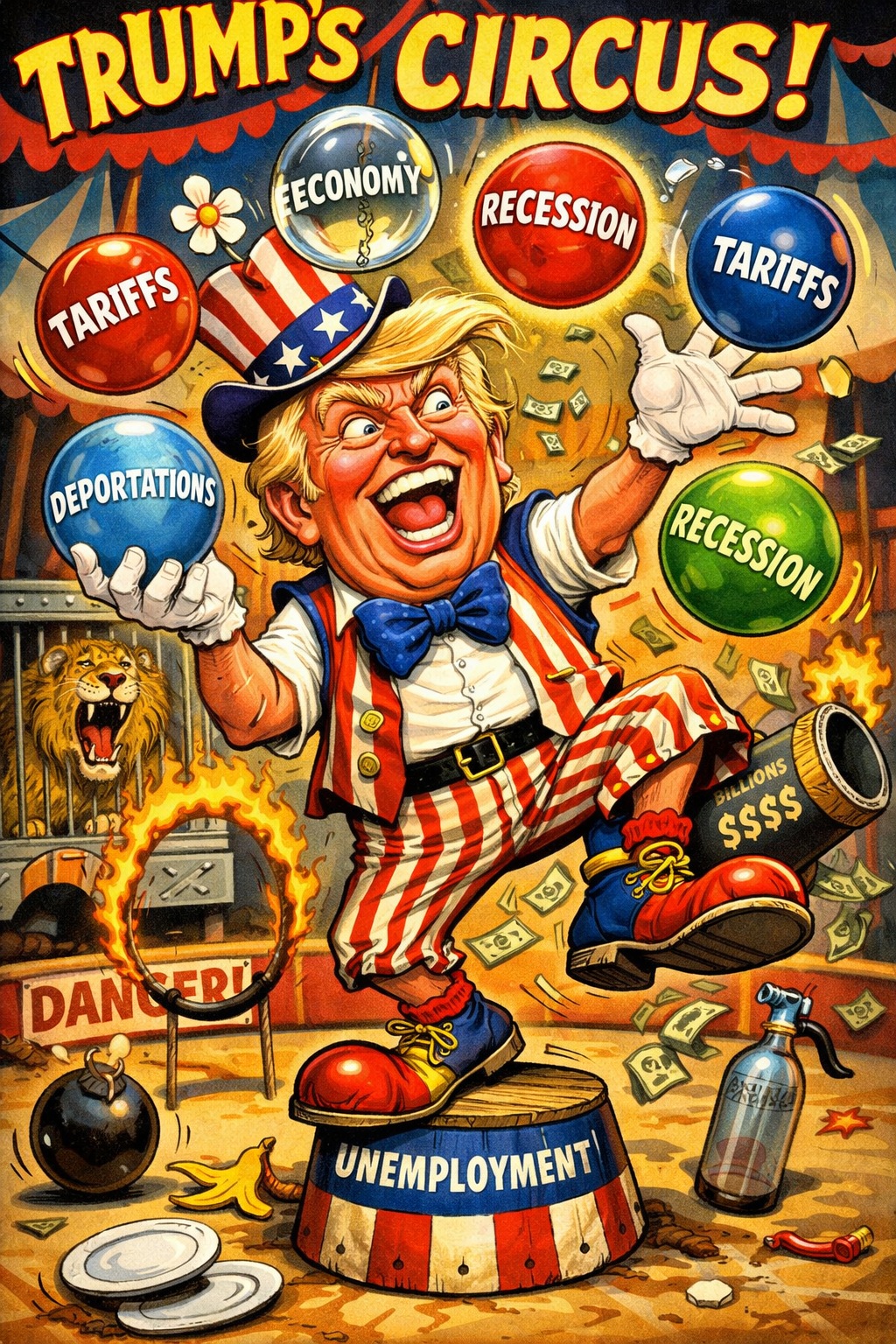
My admittedly bombastic theory is that Trump’s policy pivots aren’t random. They look like a sequence of economic levers designed to keep the U.S. economy humming long enough to avoid being the president holding the bag when the global slowdown arrives.
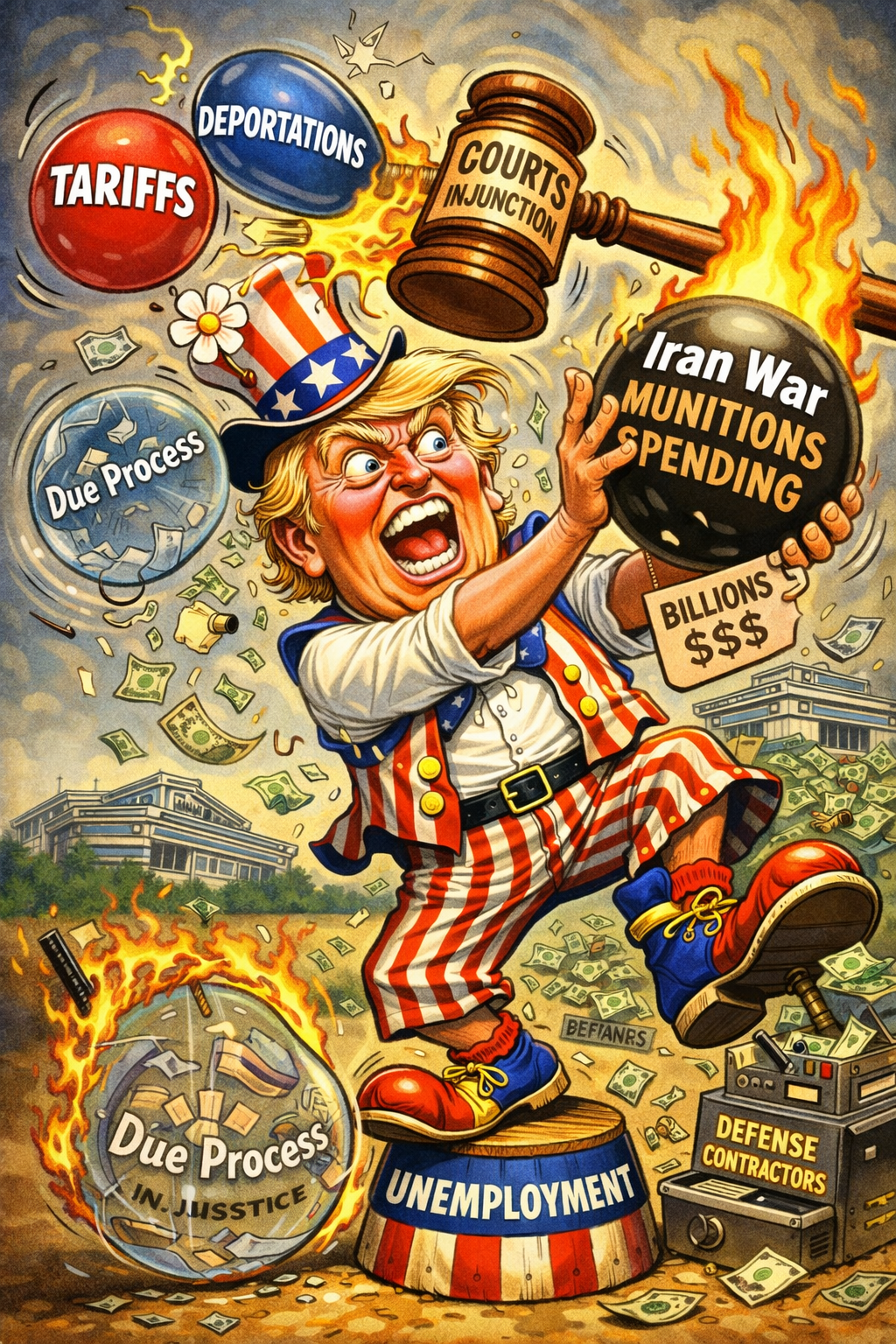
Start with tariffs. Tariffs on China, EVs, steel, electronics, and industrial inputs are effectively forced industrial policy. They push supply chains out of China and into North America. Companies start reshoring factories, expanding ports, building warehouses, hiring compliance teams, and retooling production. Even the friction creates economic activity: logistics, lawyers, consultants, subsidies, and construction.
But tariffs run into legal and political obstacles. Courts intervene. Trade partners retaliate. Congress grumbles. The lever gets partially blocked.
So the next lever becomes deportation.
Large-scale deportation isn’t just immigration policy, it’s a gigantic federal spending machine. It requires detention centers, transportation contracts, surveillance systems, immigration courts, federal marshals, border infrastructure, and private contractors. At the same time it tightens the labor market by reducing the low-wage workforce, which pushes wages upward in construction, agriculture, and services. More enforcement spending plus wage pressure equals money circulating domestically.
But deportation also runs into courts, injunctions, and bureaucratic resistance. Judges slow it down. Agencies drag their feet. The lever gets stymied.
So the pivot becomes the one lever that historically moves the fastest and faces the fewest legal obstacles: defense spending.
Modern warfare consumes extraordinarily expensive hardware. Interceptor missiles, cruise missiles, drone systems, naval deployments, precision bombs. Every missile fired has to be replaced. Every depleted stockpile requires replenishment orders. That means immediate procurement contracts for companies like Raytheon, Lockheed Martin, Boeing, and hundreds of subcontractors making electronics, metals, explosives, and guidance systems.
In economic terms, it is a rapid procurement cycle that pushes billions of dollars into manufacturing and supply chains.
Viewed through this lens, the pattern is simple. When one economic lever gets blocked, another appears.
Tariffs stimulate reshoring.
Deportation stimulates enforcement spending and wage pressure.
Defense spending stimulates procurement and industrial production.
Different policy arenas, same macro effect: factories running, contracts flowing, and money moving through the system.
The objective, in this theory, isn’t elegance. It’s survival.
Because politically the one thing Trump absolutely cannot be is the president standing at the podium the day the recession officially begins. If the downturn is inevitable, the strategy becomes stretching the American economic engine just long enough to ride out the global turbulence better than Europe or China.