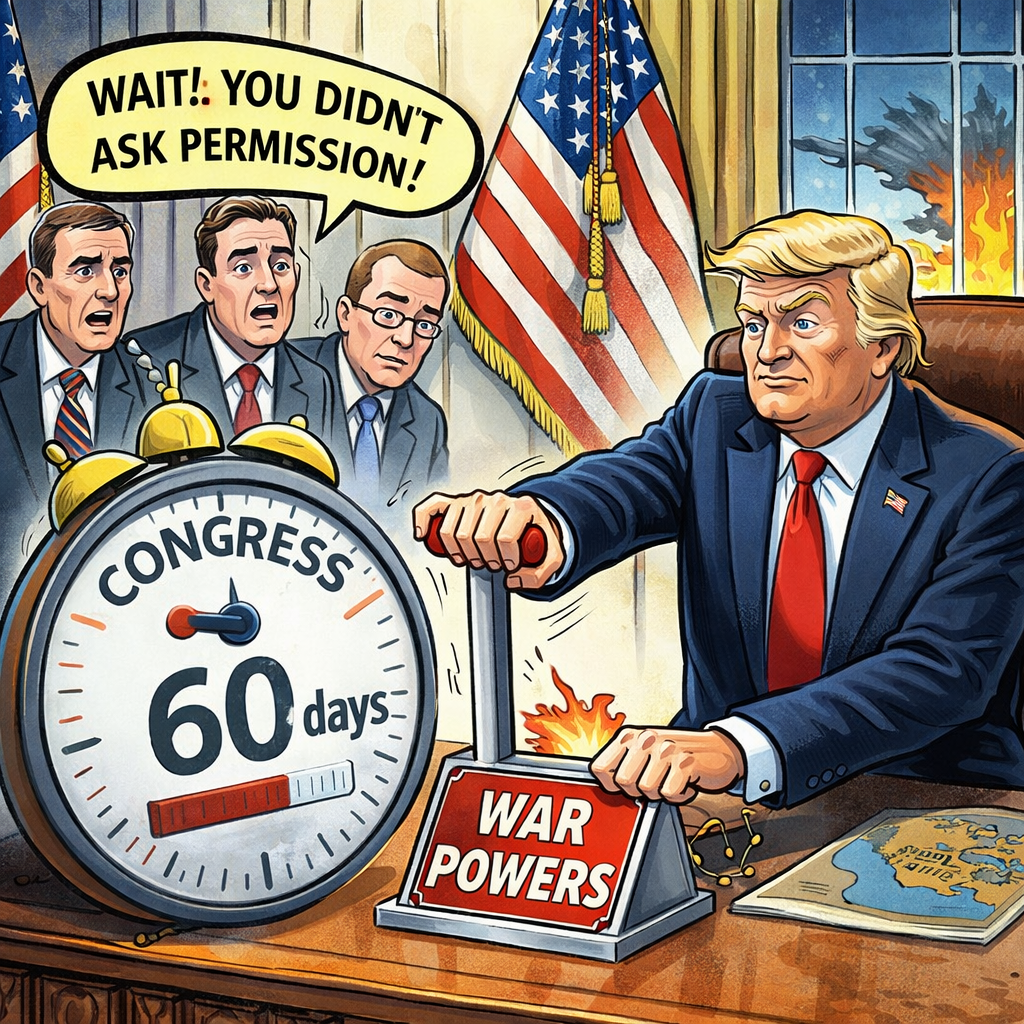
The War Powers Act and Iran Regime Change
A lot of people are talking as if a president must ask Congress for permission before using military force. That hasn’t really been how U.S. government has worked for decades.
Under the War Powers Resolution of 1973, the president can deploy U.S. armed forces without prior congressional authorization in certain circumstances. The law requires notification to Congress within 48 hours, not advance permission.
Congress then has a clock, generally understood as 60 days (plus a 30-day withdrawal period), to authorize continued military action or force its end. In practice, this means a president can initiate military operations first and political/legal fights happen afterward.
This isn’t unique to Trump. Obama used it (Libya, Syria strikes). Bush used it (post-9/11 operations). Biden used it (various airstrikes and deployments).
Presidential war-making authority has expanded steadily, especially after 9/11 and the broad Authorizations for Use of Military Force (AUMFs).
So whether someone supports or opposes a specific action, the argument usually isn’t “illegal because Congress wasn’t asked first.” The modern reality is that the presidency is an executive office with significant unilateral military authority at the outset, while Congress’s power is mostly to fund, authorize continuation, or stop it afterward.
If people want that balance changed, that’s a debate about reforming war powers law itself, not about pretending presidents currently operate on a “Congress first” permission system.