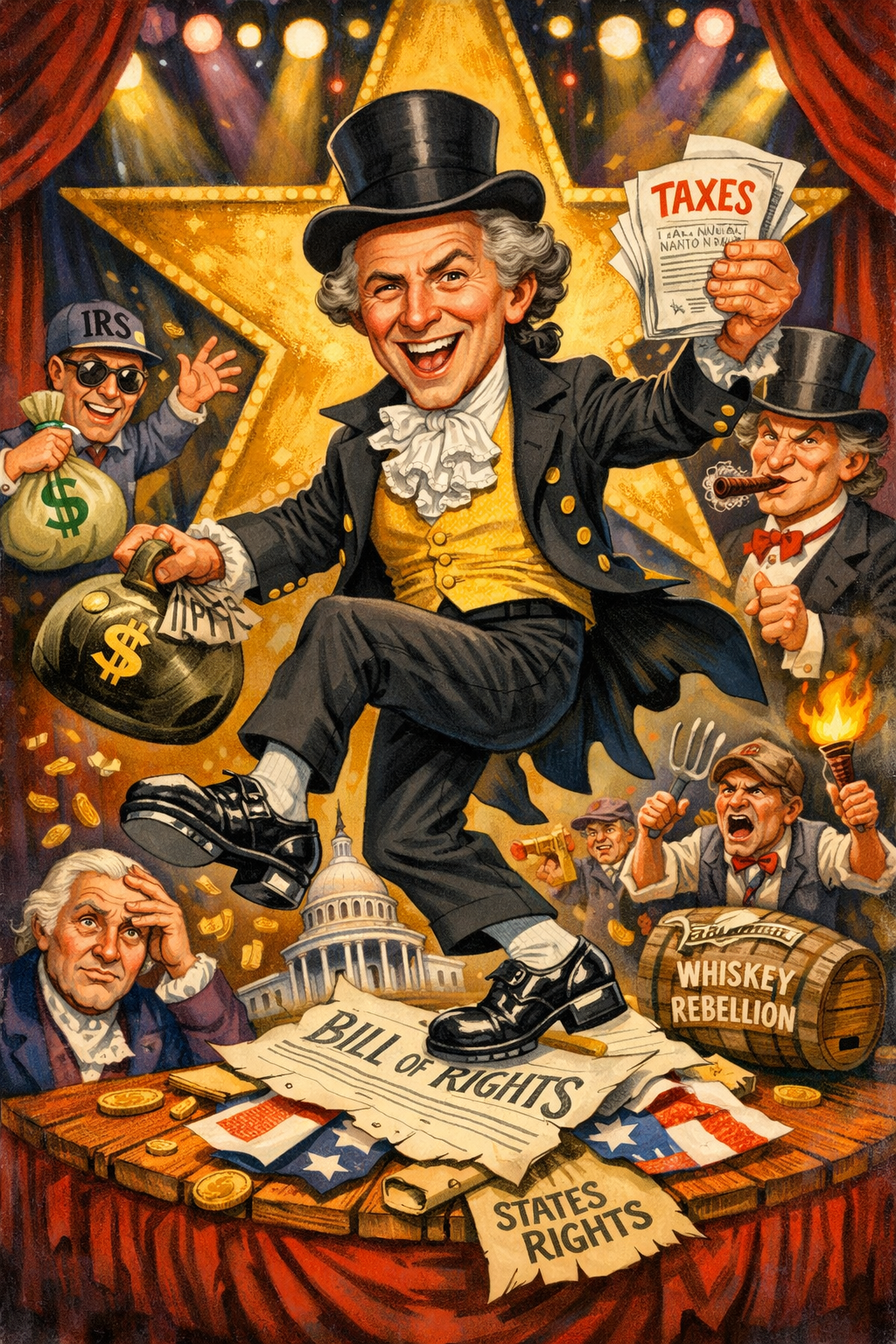
Alexander Hamilton was the villain all along!
Alexander Hamilton operated at a fragile moment when the American experiment was shifting from revolutionary democracy toward a structured constitutional republic. Many founders feared concentrated authority after breaking from monarchy, but Hamilton feared instability more than power. He believed popular passions could fracture the Union and that only a strong national government could impose order, credit, and long-term stability.
His program reflected this worldview. Hamilton promoted federal assumption of state debts, a national bank, permanent public credit, and robust taxation authority. These policies bound economic life to federal institutions and elevated national power above local independence. To supporters, this saved the republic from collapse. To critics, it marked the birth of American statism, replacing decentralized liberty with administrative and financial consolidation.
Hamilton openly distrusted pure democracy. He favored leadership by educated elites and durable institutions insulated from sudden swings in public opinion. In a nation still experimenting with self-rule, he prioritized predictability and centralized coordination over grassroots autonomy.
The Whiskey Rebellion became the defining test. Frontier farmers resisted a federal whiskey excise tax they viewed as unfair and distant. Resistance escalated into intimidation of tax officials, and Hamilton urged decisive federal action. The government mobilized militia forces to suppress the uprising, demonstrating that the new republic possessed both the authority and the will to enforce national policy by force. For advocates, this proved constitutional government worked. For skeptics, it revealed how quickly revolutionary ideals could yield to centralized coercion.
Centuries later, Hamilton’s legacy underwent an unexpected cultural revival. The Broadway musical Hamilton transformed a complex, state-building figure into a modern symbol of outsider energy and democratic aspiration. Read playfully, one could see this as history’s most successful reputation reboot: a statesman who distrusted mass democracy recast as its poetic champion, complete with choreography and applause.
From a libertarian or small-government perspective, Hamilton’s true legacy is not rebellion but institution-building. He helped design a republic strong enough to discipline democracy itself, ensuring national authority would outlast revolutionary enthusiasm. Whether viewed as visionary or statist depends largely on whether one values stability over decentralization, and order over radical freedom.