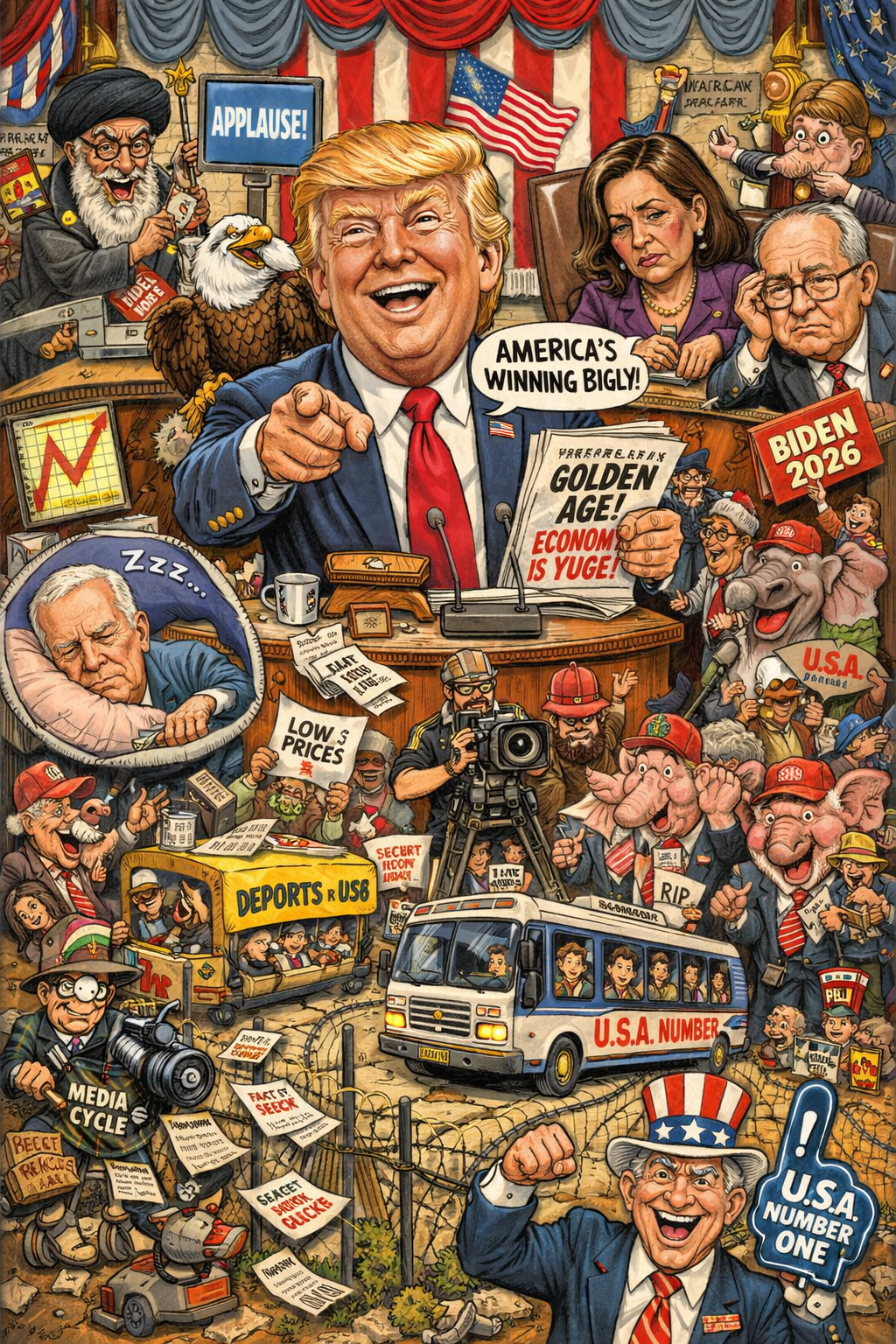
What an Entertainer
I watched most of the State of the Union without commentary—no panel, no fact-check crawl, just the podium and the room. And what struck me wasn’t policy detail. It was structure.
It felt less like a legislative address and more like a long-form roast. Not “haha” funny, not loose, not chaotic. Controlled. He handled interruptions the way a seasoned comic handles a tense crowd—turning toward hecklers, using them, keeping rhythm. Democrats became the foil. His own side got warmth and affirmation.
The patriotic beats were deliberate and heavy. Olympic victories still fresh. Hockey wins. FIFA coming. The 250th anniversary approaching. The 2028 Olympics on deck. The speech leaned hard into pride and national momentum. No language of shame. No historical apology. Just forward-facing confidence.
At certain moments he softened—especially when highlighting victims or Americans framed as heroic. Then the tone hardened sharply on immigration. The language narrowed to “killers” and “murderers.” The empathy had edges. It wasn’t universal; it was bounded.
The camera did its part. Spotlight a guest. Cue applause. Cut to Democrats sitting. Whether fair or not, that visual contrast is brutal on television. The person standing looks expansive. The people seated look small. He understands that dynamic.
It wasn’t vulnerability. It wasn’t “I feel your pain.” It was projection—strength, inevitability, control. And watching it raw, I could feel how it works on people who aren’t living inside political commentary all day.
The only thing I posted afterward—on a channel where I don’t do politics—was three words:
“What an entertainer.”