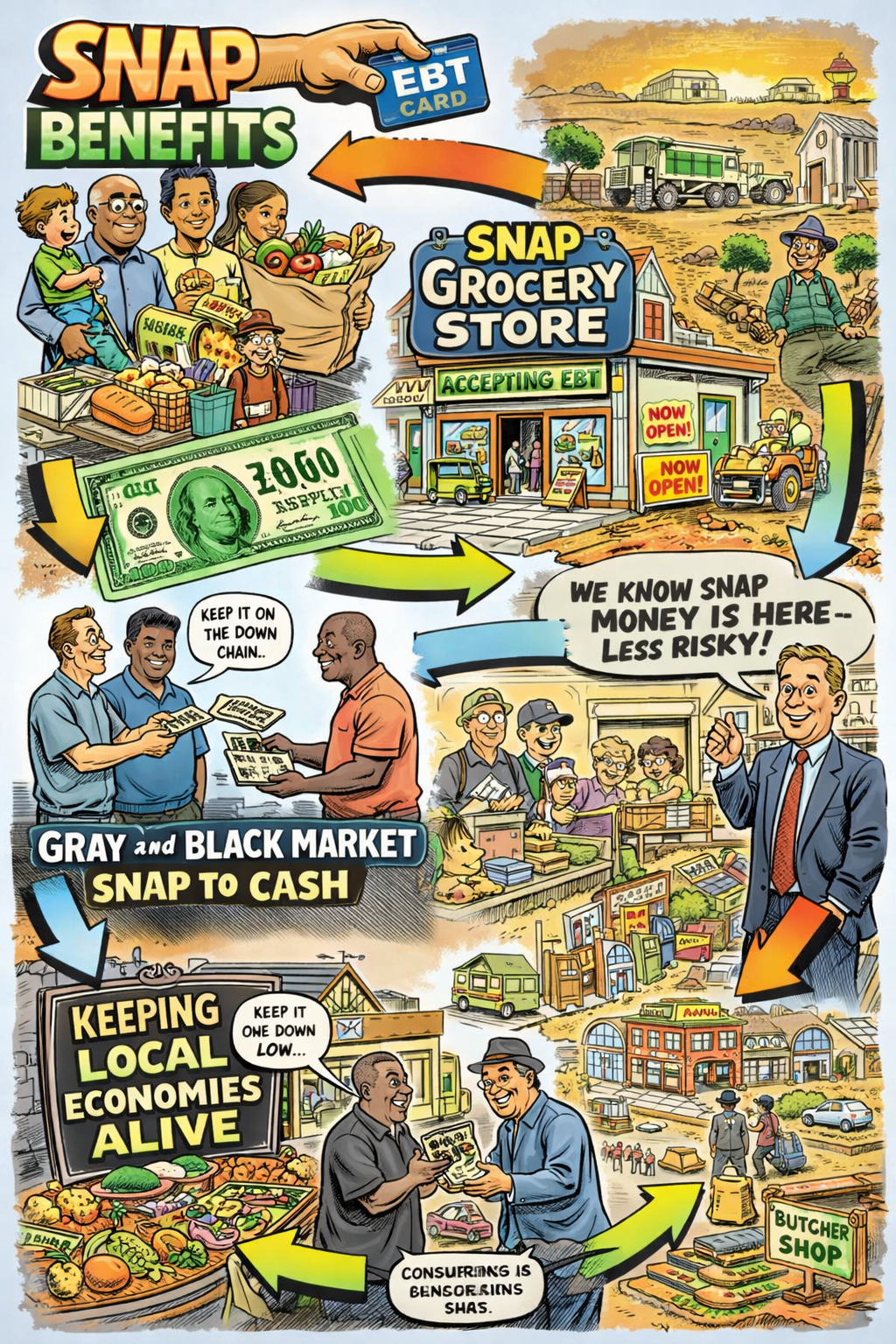
Why does SNAP really exist in America?
Here’s what I actually think. SNAP isn’t some Hallmark Channel compassion program. It survives because it moves money. Fast. Direct. Predictably.
Benefits can only be spent on food, and they get spent immediately. That’s straight pass-through revenue to grocery stores — Kroger, regional chains, independents, convenience stores. In low-income or rural areas where margins are thin, predictable monthly demand changes the math. If you know a certain volume of food spending is federally backed, opening or staying open becomes less risky. That’s not charity. That’s revenue certainty.
Food deserts don’t disappear because people care. They disappear when the numbers work. SNAP makes the numbers work more often.
Same logic with remittances. I’m not saying immigration policy is secretly designed as a master plan to stabilize Latin America. I’m saying the effect is real. Remittances often exceed foreign aid and flow directly to households. That stabilizes local economies without IMF bureaucracy. Whether intentional or not, it functions as decentralized economic support.
My broader point is about incentives. Programs endure when they align with economic throughput. SNAP pushes money through retail food infrastructure. Remittances push money into origin economies. These are structural effects.
You don’t have to romanticize it. You don’t have to demonize it either. Just follow the money.