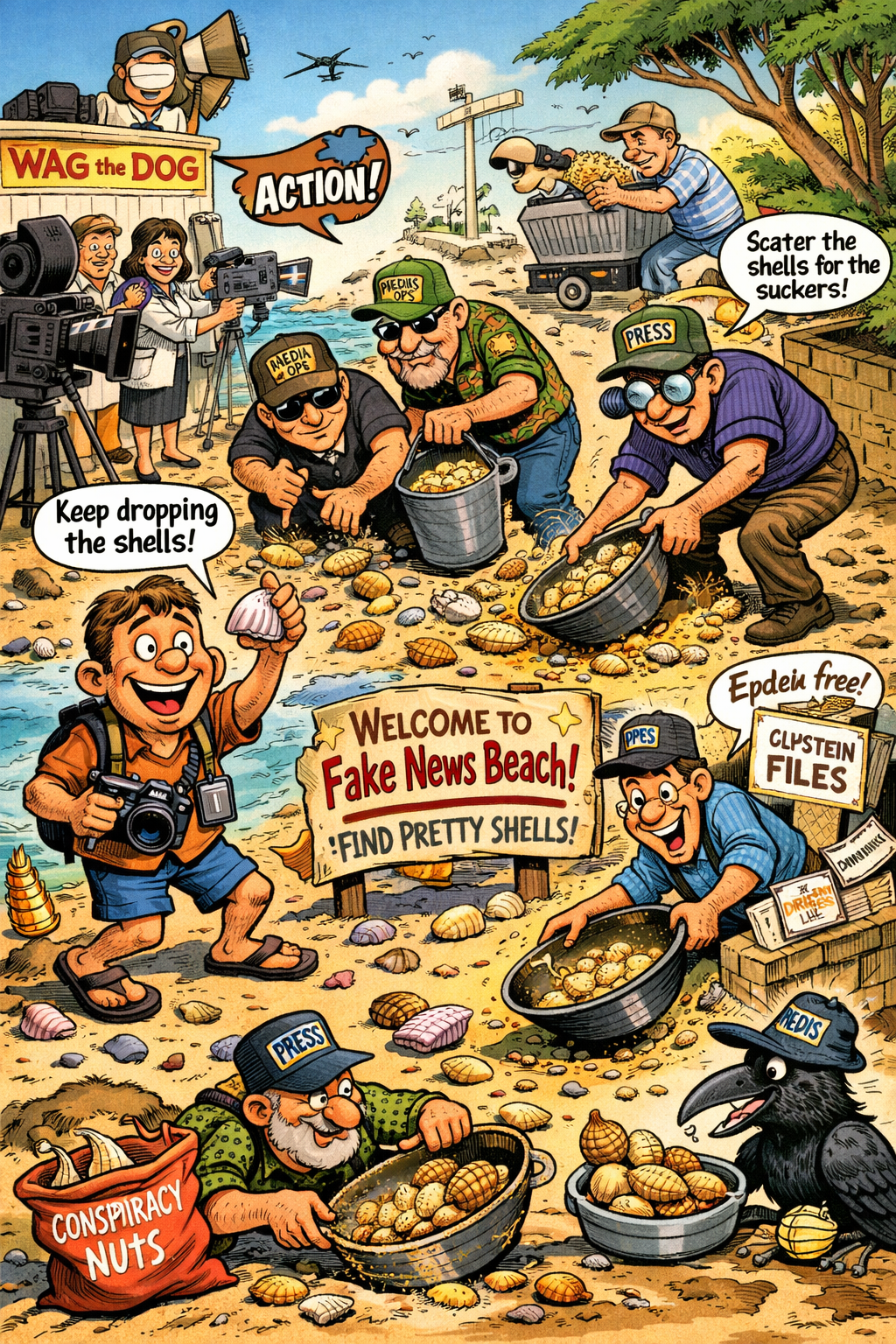
Finding Placed Shells on the Beach
The modern information trick isn’t staging events outright. It’s staging discovery.
We’re encouraged to believe that if something reached our ears, we merely overheard it. That it floated organically into our awareness. But in an age of algorithms, editorial triage, coordinated messaging, and emotional incentives, if something reached you, someone ensured it did.
Wag the Dog was the movie that permanently altered my innocence. Once you internalize that spectacle can be engineered and narratives timed, you stop consuming headlines passively. You start scanning for the lighting rig.
Consider the asymmetry. People are hacked to death with machetes in parts of Africa every day and it barely dents American consciousness. Then another story becomes wall-to-wall coverage, complete with moral pageantry and global amplification. The suffering is real. But the selection, framing, and repetition are not neutral.
Think of the testimony about incubator babies during the first Gulf War. Think of the Epstein files, where the act of “panning for gold” becomes part of the persuasion. We’re given peanuts in the shell because cracking them ourselves makes the snack feel earned. ChatGPT once told me that crows prefer peanuts in the shell because the effort is half the joy. The hunt validates the reward.
News now works the same way. We’re told we wandered onto a beach and discovered beautiful shells. But maybe the hotel scattered them at sunrise so guests could feel lucky. The event may be real. The beach is real. But the arrangement of attention is curated.
My skepticism isn’t that suffering doesn’t exist. It’s that amplification isn’t accidental. If it reached me, it wasn’t random drift. It passed through gates, incentives, and hands.
The real trick isn’t fabrication. It’s convincing us that discovery was spontaneous.