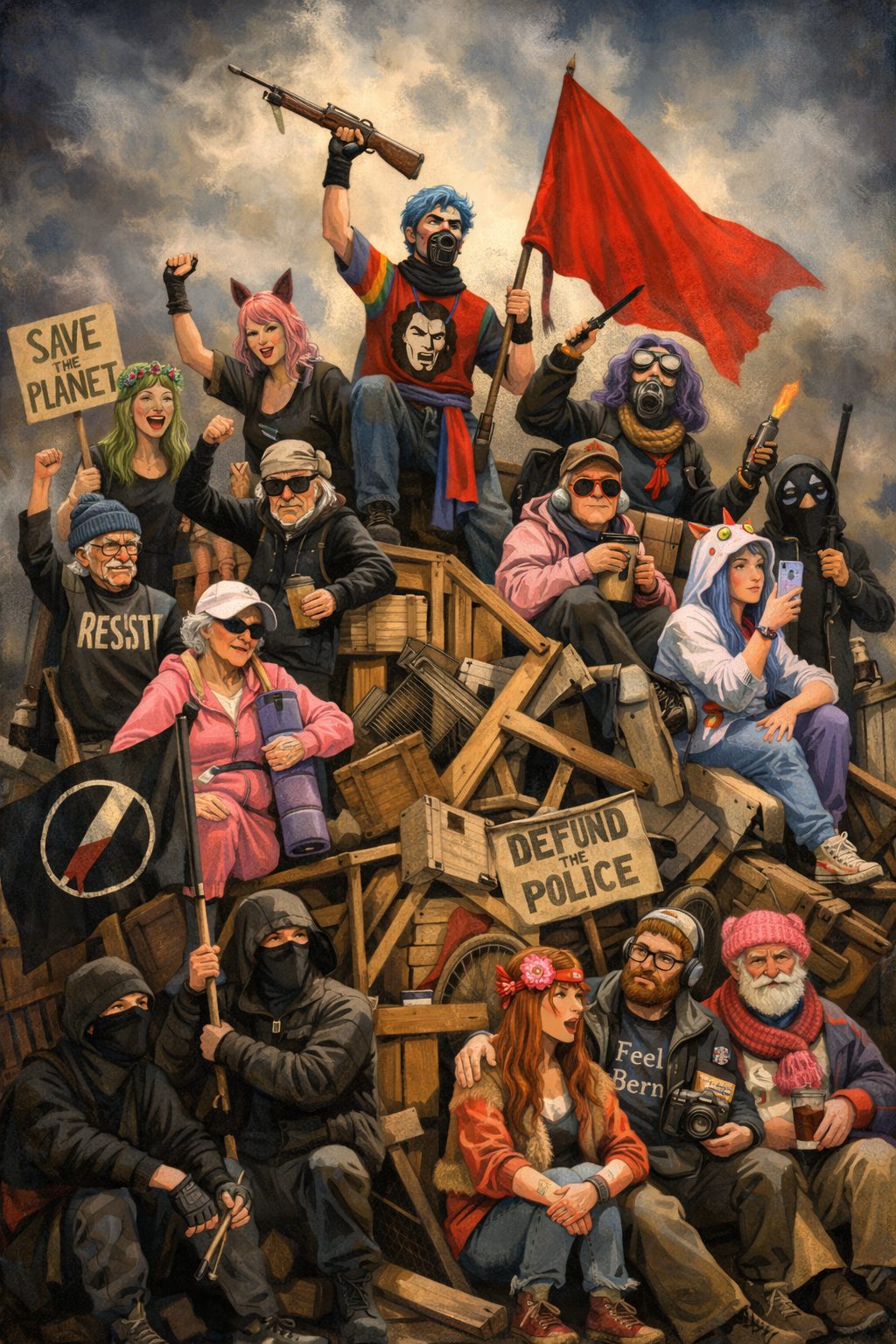
Revolution not Civil War
I don’t believe the United States in 2026 is on the brink of civil war, national collapse, or mass armed conflict. That framing misunderstands how revolutions historically develop. Based on my reading of Red Star Over China by Edgar Snow, a far more accurate model is a skirmish-based, vanguard-led revolutionary process—and even then, only in its early, non-violent phase.
Snow’s account of the Chinese Communist movement shows that revolution did not begin with open warfare or nationwide uprising. It began with scattered skirmishes, localized unrest, and small cadre actions in specific towns and regions. When Snow sought to meet Mao Zedong, he didn’t travel to a capital or a battlefield—he rode trains through contested areas to reach a remote town where Mao was holed up amid ongoing skirmishes. The revolution existed in fragments long before it became a “civil war.”
Crucially, Snow documents how discipline and moral positioning mattered. The revolutionary vanguard avoided drawing first blood. Initiating lethal violence too early would have destroyed legitimacy and reframed the movement as criminal or terrorist. Provocation, restraint, and narrative control were essential. The goal was to force the state to overreact—to be seen as the initiator of violence—because moral high ground was the prerequisite for any later escalation.
That historical pattern matters. Revolution is the objective, but it unfolds slowly. It does not begin with firefights or declarations. It begins with pressure, symbolism, selective confrontation, and carefully managed unrest. Open violence comes later, if at all, and only after legitimacy has been secured.
This is why modern unrest often appears “mostly peaceful,” why intent is denied, and why restraint is emphasized even amid confrontation. It is not chaos for its own sake. As Snow’s reporting makes clear, successful revolutions are patient, disciplined, and acutely aware that drawing first blood too soon ends the story before it begins.