Motorcades in DC and Force Doctrine
I understand why people are saying “that’s not fair,” and I don’t dismiss that reaction at all. A person is dead, and that matters.
What I’m trying to do isn’t argue what should have happened, but explain how these situations are often interpreted in real time.
Federal agents who are visibly armed aren’t doing so symbolically. It signals that the environment is already considered high risk. In this case, they were outnumbered, blocked in, exposed, and vulnerable.
That shifts the mindset away from something like a routine traffic stop and toward a convoy or column mindset, where unexpected movement or defiance is filtered through a threat lens.
In those moments, responses aren’t calibrated around hindsight, proportionality debates, or future paperwork. They’re driven by immediate control and compliance. Historically, perceived defiance tends to escalate force rather than invite negotiation.
Saying that doesn’t mean the outcome was right or justified. It means this is how enforcement power often functions, and that reality can be tragic while still being real.
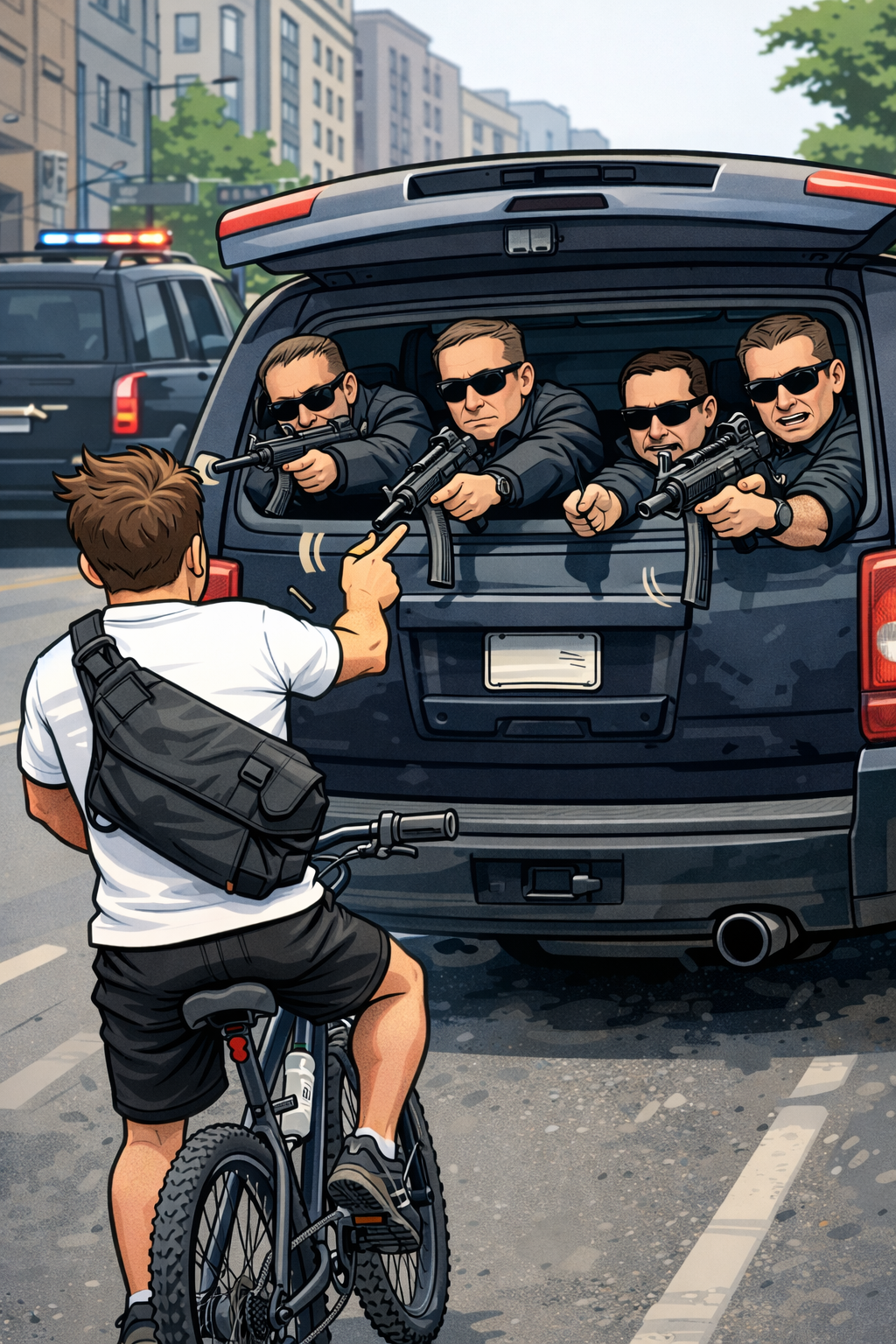
I’m sensitive to this because I’ve personally seen how quickly that threat lens snaps into place. Years ago, when I was a bike courier in DC, I accidentally merged into a motorcade.
Within seconds, weapons were trained on me and I was told, very plainly, that if I didn’t disengage immediately, I could be shot. Nothing had happened yet. But the posture alone made the stakes unmistakably clear.
In DC especially, people tend to understand just how mortal it can be to unintentionally interfere with federal agents who believe they’re in the middle of protecting an operation.