Which Venezuela Propaganda is Truest?
With this much propaganda everywhere, it’s honestly hard to tell which propaganda is closest to reality.
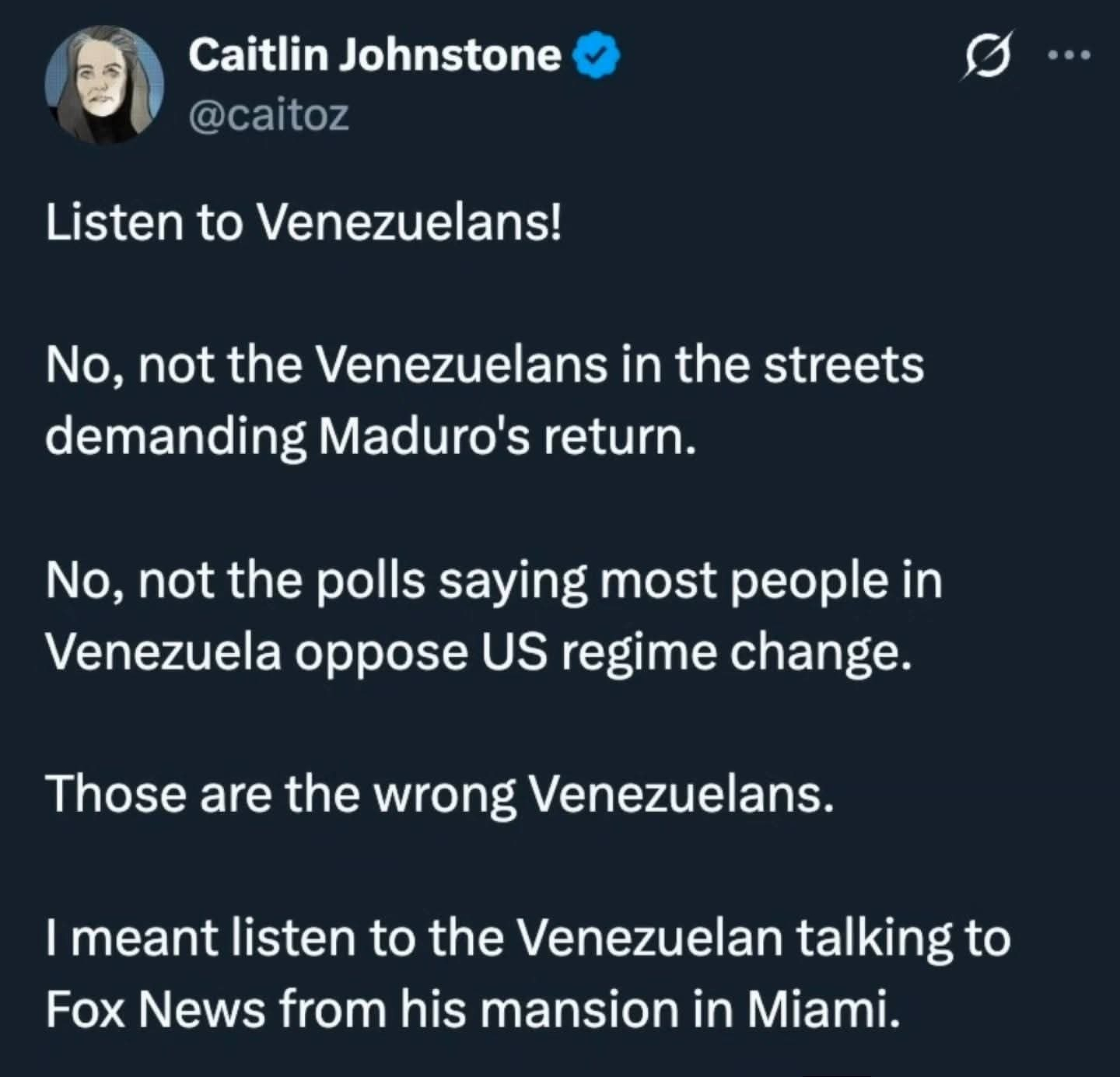
Some of the people we constantly hear from really may be plants, or at least carefully curated voices. Anyone who watches international media long enough knows that a lot of “random” interviewees are selected, coached, or elevated because they say the right things for the narrative being pushed. That’s not paranoia. That’s how modern media works. But the deeper issue is class.
The Venezuelans we’re told to “listen to” are usually elite exiles: English-speaking, media-savvy, often wealthy, often living comfortably abroad. Their resentment is real, but it’s the resentment of people whose ceiling was crushed, not necessarily people who were living near the floor.
When people support systems like socialism or communism, it’s often not because they want luxury or upside. It’s because they want a floor: a floor on how poor they can get, a floor on how vulnerable they are, a floor on how unpredictable life becomes. Removing Maduro may raise the ceiling, but it also risks dropping the floor, and history suggests the first people to benefit from that are usually the already rich.
You see the same dynamic with Cuba. That society holds together because many people long ago accepted ubiquitous education and healthcare over consumer abundance. Literacy and medicine over a capitalist rat race. On a tropical island, a lot of people prefer stability, predictability, and some basic joy in daily life over chasing wealth with no guarantees.
None of this denies suffering. It questions whose suffering gets amplified.
So when someone says “listen to Venezuelans,” the real question isn’t whether Venezuelans are speaking. It’s which Venezuelans, filtered through which incentives, and for whose benefit.